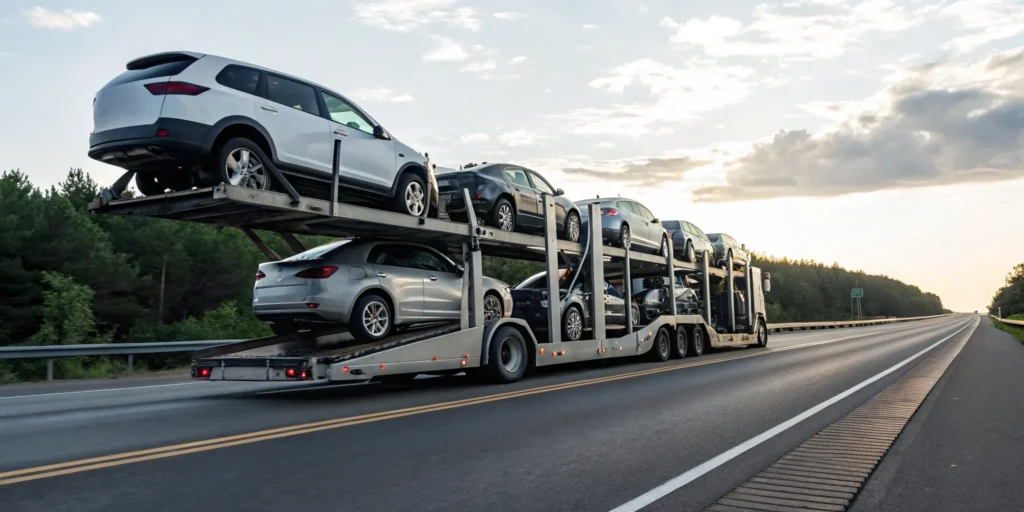
You’ve seen them on the highway: those massive, two-level trucks carrying a full load of cars, heading off to destinations across the country. This is the most visible and common form of vehicle shipping, and it has a name: open transport car shipping. It’s the standard method used by everyone from major car manufacturers to families moving to a new state. But how does it actually work? Is it safe for your car? And is it the right choice for your specific needs? This guide will walk you through everything you need to know, from the benefits and potential downsides to how to prepare your car for its journey.
Key Takeaways
- Opt for open transport to save money and time: It’s the most cost-effective option because shipping costs are shared among multiple vehicles on one truck. The high number of open carriers on the road also means more scheduling flexibility and faster pickup times.
- It’s the ideal choice for standard vehicles: Your car is exposed to weather and road conditions, just like a normal road trip. This makes open transport a practical and safe choice for daily drivers, while high-value or classic cars are better suited for an enclosed carrier.
- Do your homework and prep your car: Always choose a licensed and insured company with positive customer reviews. Before pickup, wash your car for a clear inspection, remove all personal items, and leave only about a quarter tank of gas.
What is Open Transport Car Shipping?
If you’ve ever seen a multi-level truck hauling cars down the highway, you’ve seen open transport car shipping in action. It’s the most common and budget-friendly way to move a vehicle from one place to another. With this method, your car is loaded onto a trailer that is open to the elements, along with several other vehicles. This efficiency is the main reason it’s such a popular choice for all kinds of vehicle shipping needs.
Because carriers can transport multiple cars at once, it significantly cuts down on costs, and those savings are passed directly to you. It’s the standard for the industry and the go-to option for daily drivers, dealership inventory, and family cars. While it doesn’t offer the same level of protection from the weather as an enclosed trailer, it’s a secure and reliable way to get your car where it needs to go. Think of it as the economy class of car shipping: practical, affordable, and perfectly suited for the majority of travelers. We’ll get into the specifics of how it works and how it compares to other options.
How Does Open Transport Work?
The process for open transport is refreshingly simple. It all starts with getting a quote and booking your shipment. Once everything is scheduled, a professional driver will arrive at your location with a multi-level open carrier. Your vehicle will be carefully loaded and secured onto the trailer. Most companies, including us, offer a convenient door-to-door service, which means we pick up your car from your home and deliver it directly to your destination. You don’t have to worry about dropping it off at a terminal. Your car will share the ride with other vehicles heading in the same direction, which is what makes this method so efficient and affordable.
Open vs. Enclosed: What’s the Difference?
The main difference between open and enclosed auto transport comes down to one thing: exposure. Open transport exposes your vehicle to the outside world, just like it would be if you were driving it yourself. This means it will face weather like rain or sun, as well as road dust and debris. While significant damage is very uncommon, this exposure is part of the package. In contrast, enclosed transport places your car inside a fully covered trailer, protecting it from every external element. This makes it the preferred choice for luxury, classic, or high-value cars that need an extra layer of security.
Why Choose Open Transport?
When you need to ship your car, you’ll find that open transport is the most popular and widely used method available. There’s a good reason for its popularity: it strikes the perfect balance between reliability, speed, and cost. For most people, it’s the most practical and efficient way to get a vehicle from point A to point B. If you’re looking for a straightforward shipping solution that delivers on its promises without breaking the bank, open transport is likely the right fit for you. Let’s look at the key benefits that make it the go-to choice for millions of car owners every year.
It’s the Most Affordable Option
Let’s be honest, budget is a big factor for most of us. Open car transport is the most common and cheapest way to ship a car, making it an excellent choice if you want to save money. The reason for the lower cost is simple: open carriers can transport about 8 to 10 vehicles at once. By sharing the truck space with other cars, you also share the cost of fuel and labor, which brings your individual price down significantly. This efficiency allows companies to offer a high-quality shipping service at a much more accessible price point compared to other methods.
Enjoy Faster and More Flexible Scheduling
If you’re working with a tight deadline, open transport offers a major advantage. Because open carriers are the most common type of vehicle transport on the road, there are far more of them available at any given time. This high availability translates into more scheduling options for you. You’ll find more frequent pickup and delivery windows, which makes it easier to arrange a shipment that fits your specific timeline. This flexibility is perfect whether you’re planning a move weeks in advance or need to ship your car on shorter notice.
The Best Choice for Standard Vehicles
Open transport is a good choice for regular cars, from family sedans and SUVs to the commuter car you drive every day. These vehicles are built to handle normal road and weather conditions, so exposure to the elements during transit isn’t a significant risk. It’s the industry-standard method trusted by dealerships and manufacturers to move their inventory across the country. For any standard vehicle, open transport provides a secure and reliable ride without the extra cost of an enclosed carrier. It’s the practical solution for getting your daily driver where it needs to go safely.
Are There Any Downsides to Open Transport?
Open transport is the most popular and practical choice for a reason, but it’s smart to look at the full picture before making a decision. Understanding the potential downsides helps you confirm if it’s the right fit for your specific vehicle and needs. Being transparent about the process is important to us, so let’s walk through the considerations together.
Exposure to Weather and Road Debris
The most significant difference with open transport is that your vehicle is exposed to the elements. Since the carrier is not covered, your car will face the same conditions as any other vehicle on the road, including rain, sun, dust, and potential road debris. Think of it as the equivalent of driving your car across the country yourself, just without adding the mileage. While the risk of any significant damage is very low, your car will likely arrive needing a good wash. For standard vehicles, this is a perfectly acceptable trade-off for the cost savings.
Less Privacy on the Road
Because your vehicle is transported on an open trailer, it will be visible to others on the highway. This isn’t a problem for most cars, trucks, and SUVs. In fact, it’s the standard method used for moving inventory between dealerships. However, if you own a high-value luxury, exotic, or classic car, you might prefer the discretion and privacy that an enclosed carrier provides. For most daily drivers, the lack of privacy is a minor point that doesn’t impact the safety or quality of the transport service.
Let’s Talk About Common Safety Concerns
It’s a common myth that open transport is inherently risky. In reality, it is an incredibly safe and reliable shipping method. The industry has developed proven techniques for securing vehicles to ensure they don’t move or shift during transit. At Roadrunner, our entire process is built around safety, from the equipment we use to the experienced drivers we partner with. Every car is carefully loaded, secured at multiple points, and inspected before the journey begins. While enclosed shipping offers an extra layer of protection, open transport remains the industry standard due to its excellent safety record and efficiency.
How Much Does Open Transport Cost?
One of the first questions on everyone’s mind is, “What’s this going to cost me?” When it comes to open transport, the good news is that it’s the most budget-friendly way to ship your car. The final price tag, however, isn’t a one-size-fits-all number. It’s a mix of several key factors, including how far your car is traveling, its size, and even the time of year. Think of it like booking a flight; different variables come together to create your final quote. Understanding these elements will help you see exactly what you’re paying for and why. Let’s break down the typical costs and the details that influence your specific price.
A Look at Average Prices
Generally, you can expect to pay between $500 and $1,700 to ship a standard car within the United States. A major factor in that price is distance. Interestingly, the cost per mile actually goes down the farther your car travels. For example, a shorter trip of about 250 miles might cost around $0.80 per mile, while a cross-country journey of 2,700 miles could drop to about $0.35 per mile. These are just ballpark figures, of course. Your final cost will depend on the specifics of your shipment, so it’s always best to get a custom quote for an accurate price.
Open vs. Enclosed: A Cost Breakdown
Open transport is the most common and affordable shipping method, which is why it’s such a popular choice. The carriers are designed to hold multiple vehicles at once, making the process more efficient and cost-effective. On the other hand, enclosed transport is a premium service. It costs more because it offers complete protection from weather and road debris, making it the ideal choice for luxury, classic, or high-value cars. While an open carrier leaves your vehicle exposed to the elements, it’s a perfectly safe and reliable option for most standard cars, and it will always be the more economical shipping service.
What Factors Influence Your Final Quote?
Beyond distance and transport type, several other details will shape your final quote. The specific route matters; routes along major highways are typically less expensive than those heading to rural or remote areas. The time of year also plays a role, as demand can spike during certain seasons, affecting carrier availability. The size and condition of your vehicle are important too, since larger or non-running vehicles require more space and effort. All these elements, from your car’s make and model to your pickup and delivery locations, are considered to give you the most accurate price possible.
Is Open Transport Right for Your Vehicle?
Deciding between open and enclosed transport comes down to your specific car, budget, and peace of mind. While open transport is a safe and reliable method used for millions of shipments every year, it’s helpful to know when it’s the perfect fit and when another option might be better suited for your needs.
Think about the type of car you’re shipping. Is it your daily commuter, a family SUV, or a standard sedan? Or is it a one-of-a-kind classic or a high-end luxury vehicle? Answering this simple question is the first step in choosing the right shipping service for you. Let’s walk through the scenarios where open transport shines and when you might want to consider an enclosed carrier.
Perfect for Daily Drivers and Family Cars
If you’re shipping a standard vehicle, like a sedan, SUV, or minivan, open transport is almost always the most practical and sensible choice. It’s the industry standard for a reason: it’s efficient, widely available, and budget-friendly. This is the method dealerships use to move their inventory and the one most people choose for their everyday cars during a move.
Choosing open transport means you get a safe, reliable shipment without paying for extra features you may not need. Because there are so many open carriers on the road, you’ll also find more flexible scheduling options, making it easier to arrange pickup and delivery times that work for you. For the vast majority of cars, open transport offers the ideal balance of affordability and security.
When to Consider an Enclosed Carrier Instead
On the other hand, if your vehicle is a classic, luxury, exotic, or custom-built car, you should think about using an enclosed carrier. While open transport is very safe, it does leave your vehicle exposed to the elements and road debris. For a standard car, a little dust or rain is no big deal, but for a vehicle with a high-value or custom paint job, that exposure presents an unnecessary risk.
An enclosed carrier provides complete protection from weather, dirt, and potential dings from flying pebbles. It’s the smarter choice for any car that is difficult or expensive to replace. Think of it as first-class travel for your vehicle. While it costs more, the added protection provides invaluable peace of mind when shipping a high-value car.
How to Choose a Reliable Open Transport Company
Choosing a company to ship your car feels like a big decision, because it is. You’re handing over the keys to a valuable asset, and you want to know it’s in good hands. The good news is that a little research goes a long way in finding a trustworthy partner. By focusing on a few key areas like insurance, credentials, and customer feedback, you can confidently pick a company that will get your car to its destination safely and without any surprises. Let’s walk through exactly what to look for.
Verify Insurance and Protection Policies
Your vehicle should be protected from the moment it leaves your hands to the moment it arrives. A reliable company will always include basic liability and cargo insurance in their service, but the details matter. Before you commit, ask for a copy of their insurance certificate and take a moment to understand what it covers. Find out the coverage limits and if there’s a deductible in case of a claim. A transparent company will have no problem explaining its protection policies and may even offer supplemental insurance if you want extra peace of mind for your vehicle during its journey.
Check for Proper Licensing and Credentials
This step is a simple but crucial background check. Any legitimate auto transport company operating across state lines must be registered with the U.S. Department of Transportation and have an active Motor Carrier (MC) number. You can, and should, verify this information yourself. The Federal Motor Carrier Safety Administration (FMCSA) has a public database where you can look up a company by name or number. If a company can’t provide this information or if their license isn’t active, that’s a major red flag. Working with a fully licensed and bonded carrier is your best guarantee of a professional and secure shipping experience.
Read Customer Reviews and Research Their Reputation
A company’s website will always show glowing testimonials, but independent reviews tell the real story. Spend some time on sites like the Better Business Bureau (BBB), Google Reviews, and Trustpilot to see what past customers are saying. Look for patterns. Are reviews consistently positive about communication and on-time delivery? When issues do arise, how does the company handle them? A high star rating is great, but reading a few detailed reviews gives you a much clearer picture of what to expect. A strong public reputation is one of the best indicators of a company you can trust with your vehicle.
Red Flags to Watch Out For
When getting quotes, trust your gut. A price that’s dramatically lower than all the others is often a warning sign of a bait-and-switch tactic or a broker with a poor carrier network. Another red flag is a company that demands full payment upfront; a reputable service will typically ask for a small deposit to secure your booking. Always insist on a detailed, written contract that outlines all the terms, including costs, insurance, and delivery windows. If a company is hesitant to provide proof of insurance or their MC number, or if they pressure you into making a quick decision, it’s best to walk away.
What to Expect During the Shipping Process
Once you’ve booked your shipment, you can sit back and let us handle the heavy lifting. The vehicle transport process is straightforward, and we make sure you know what’s happening every step of the way. From scheduling your pickup to the final inspection, here’s a clear look at what you can expect.
Your Pickup and Delivery Timeline
We work with you to set a convenient pickup window. Our drivers always aim for door-to-door service, but safety and accessibility come first. If your street is too narrow for a large carrier or has obstacles like low-hanging trees, your driver will contact you to arrange a meeting at a nearby safe and accessible location, like a large parking lot. This flexibility ensures we can complete your vehicle transport safely and on schedule. We’ll communicate with you directly to coordinate the exact time and place for both pickup and delivery.
The Vehicle Inspection Process
A thorough inspection is a crucial step at both the beginning and end of the journey. You or a trusted adult will need to be present for pickup and delivery to join the driver in examining your vehicle. Together, you’ll note its condition on a document called the Bill of Lading. This is your opportunity to confirm the state of your car before it’s loaded onto the truck and after it arrives. Signing this document ensures everyone is on the same page and protects both you and the carrier.
How We Keep You Updated
We believe in keeping you informed. Once your car is on its way, you can follow its journey with our 24/7 online tracking system. You’ll never have to wonder where your vehicle is or when it will arrive. For your peace of mind, every shipment includes basic insurance coverage, and we offer options for additional protection if you need it. Our goal is to provide a transparent and worry-free experience, which is a core part of our commitment to exceptional customer care.
How to Prepare Your Car for Open Transport
A little prep work before pickup day makes the entire shipping process smoother for everyone. Think of it as getting your car ready for its road trip, even though it will be on the back of a truck. Following a few simple steps ensures your vehicle is set for a safe and seamless journey.
A Pre-Shipment Checklist for Your Vehicle
Running through this simple checklist will get your car ready for its close-up with the carrier.
- Give it a good wash: Cleaning your car isn’t just for looks. A clean exterior makes it easy for you and the driver to spot any existing dings, dents, or scratches during the vehicle inspection.
- Empty it out: Remove all personal items from the cabin and trunk. This includes everything from phone chargers and sunglasses to gym bags. Carrier insurance doesn’t cover personal belongings, so it’s best to ship them separately.
- Check for leaks: Do a quick check underneath your car for any noticeable fluid leaks. Informing the transport company of any issues beforehand is always a good idea.
- Secure loose parts: Retract or remove antennas and fold in your side mirrors. If you have any custom parts like spoilers or a roof rack, make sure they are secure.
- Don’t fill the tank: Your car only needs about a quarter tank of gas. This helps reduce the overall weight and is a standard safety measure for auto transport.
- Prepare a key: The driver will need a key to load and unload your vehicle, so be sure to have one ready to hand over.
What to Do with Paperwork and Personal Items
Getting your documents in order is just as important as prepping the car itself. You’ll want to have your vehicle’s registration and proof of insurance handy, though you typically don’t need to hand over the original copies. We’ll walk you through exactly what’s needed when you book your shipment. Our goal is to make our process as straightforward as possible.
As for personal items, it’s worth saying again: it’s best to clear them out completely. While some carriers might allow you to pack a small number of items in the trunk, this is generally not recommended. These belongings won’t be insured against loss or damage during transit. Finally, be ready with your payment method. We’ll clarify all the details when your carrier is assigned, but you can find answers to common questions on our FAQ page.
Is Open Transport the Right Move for You?
Choosing the right way to ship your car is a big decision, but it doesn’t have to be a stressful one. By weighing the benefits of each option, you can find the perfect fit for your vehicle and your budget. Open transport is the most popular method for a reason, offering a blend of affordability, efficiency, and reliability that works for most people. If you’re shipping a standard vehicle and want a straightforward, cost-effective solution, it’s likely the ideal choice for you.
Making the Best Decision for Your Needs
If you’re looking for the most budget-friendly solution, open transport is almost always the answer. This method is a perfect match for daily drivers, family SUVs, and standard trucks. Think of it this way: if your car is used to being out on the open road, it will be perfectly safe on an open carrier. Because there are so many open carriers available, you’ll also benefit from more flexible scheduling and often faster pickup times. It’s the most common vehicle shipping service because it’s efficient, reliable, and easy on your wallet.
Get Your Free Quote from Roadrunner Vehicle Transports
If open transport sounds like the right fit for your car, the next step is simple. You can find out exactly what it will cost with a free, no-obligation quote. At Roadrunner Vehicle Transports, we make the process transparent and easy to understand. We’re here to answer your questions and provide a competitive price for shipping your vehicle safely and on time. Our team is committed to providing exceptional care from start to finish, so you can feel confident in your choice. Ready to see how affordable it can be? Contact us today to get your personalized quote.
Frequently Asked Questions
Is my car insured during open transport? Yes, your vehicle is protected. Every reputable transport company, including us, provides carrier insurance that covers your car for the entire time it is in transit. We are always happy to provide a copy of the insurance certificate so you can see exactly what is covered before you book.
How long will it take to ship my car? The total transit time really depends on the distance. For example, a cross-country shipment from coast to coast typically takes between 7 and 10 days. Shorter, regional moves might only take a few days. When you schedule your shipment, we will give you a clear and reliable delivery window for your specific route.
Can I pack personal items in my car for shipping? We strongly recommend shipping your car completely empty. Carrier insurance does not cover any personal belongings left inside, and federal regulations actually prohibit shipping household goods in a vehicle being transported. The best way to keep your items safe is to ship them separately.
What if my car doesn’t run? Can it still be shipped on an open carrier? Absolutely. We can transport non-running vehicles, but it is very important that you let us know this when you request your quote. An inoperable car requires a truck with special equipment, like a winch, to load and unload it safely. Informing us ahead of time ensures we send the right carrier for the job and give you an accurate price.
My car arrived a little dirty. Is that normal? It is completely normal for a car to get a bit dirty during open transport. Because the carrier is open, your vehicle is exposed to the same road conditions it would be if you were driving it, so expect some dust or water spots. This is a minor trade-off for the cost savings, and a quick car wash is usually all it needs to look great again.