
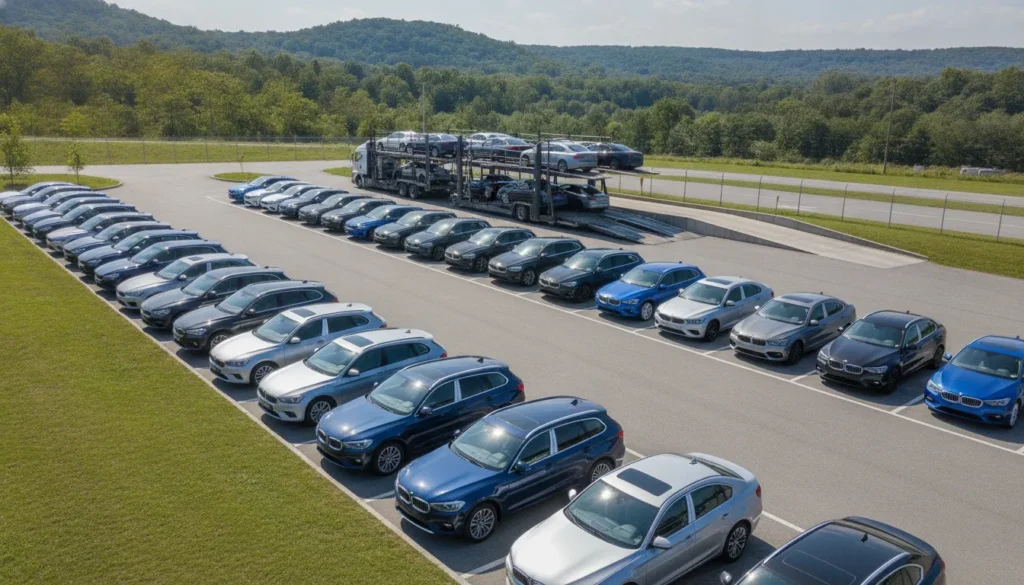
Terminal to terminal car shipping can sound like the cheapest way to move a vehicle, but the real decision is not only about the base quote. You also need to account for travel time, storage fees, facility hours, pickup windows, and who is responsible for the vehicle while it waits.
Need a route-specific vehicle transport quote? Call Road Runner Vehicle Transports at 888-430-5866 to compare terminal pickup with door-to-door service before you book.
Terminal to terminal car shipping means you drop off your vehicle at one shipping hub and pick it up at another, instead of having a carrier meet you near your home. It may lower the base transport price on some routes, but it can add storage fees, extra rides, more scheduling work, and less convenience.
Road Runner Vehicle Transports helps customers compare those trade-offs with a quote-based approach. Because most customers want a simpler handoff, Road Runner emphasizes door-to-door vehicle transport when the pickup and delivery streets are accessible. Terminal service can still make sense in certain situations, but it should be chosen with a clear view of the full cost.
What does terminal to terminal car shipping mean?
Terminal to terminal car shipping is an auto transport method where the vehicle moves between two designated storage or staging locations. The customer handles the first and last legs of the trip, while the carrier handles the highway transport between regions.
In a terminal shipment, you drive the car to a designated terminal near the origin city. A carrier later loads it onto a trailer and transports it to a terminal near the destination city. Once it arrives, you travel to that facility, inspect the car, sign the delivery paperwork, and drive it away.
This differs from state-to-state car transport that is arranged as door-to-door service. With door-to-door transport, the driver meets you as close as safely possible to your home, workplace, or another agreed location. If a large truck cannot access the exact address, the driver may meet you at a nearby wide road, shopping center, or open parking lot.
Why some customers consider terminal shipping
The main appeal is price. Terminal pickup can reduce the carrier’s local driving time, especially when a route already runs between major metro areas. If you live close to both terminals and can manage the drop-off and pickup yourself, the base quote may be lower than a door-to-door option.
The trade-off is effort. You may need a ride home after drop-off, a ride to the destination terminal, and flexibility if the vehicle waits for the next available carrier. If the terminal is far away, those extra steps can erase the savings.
How does terminal-to-terminal auto transport work?
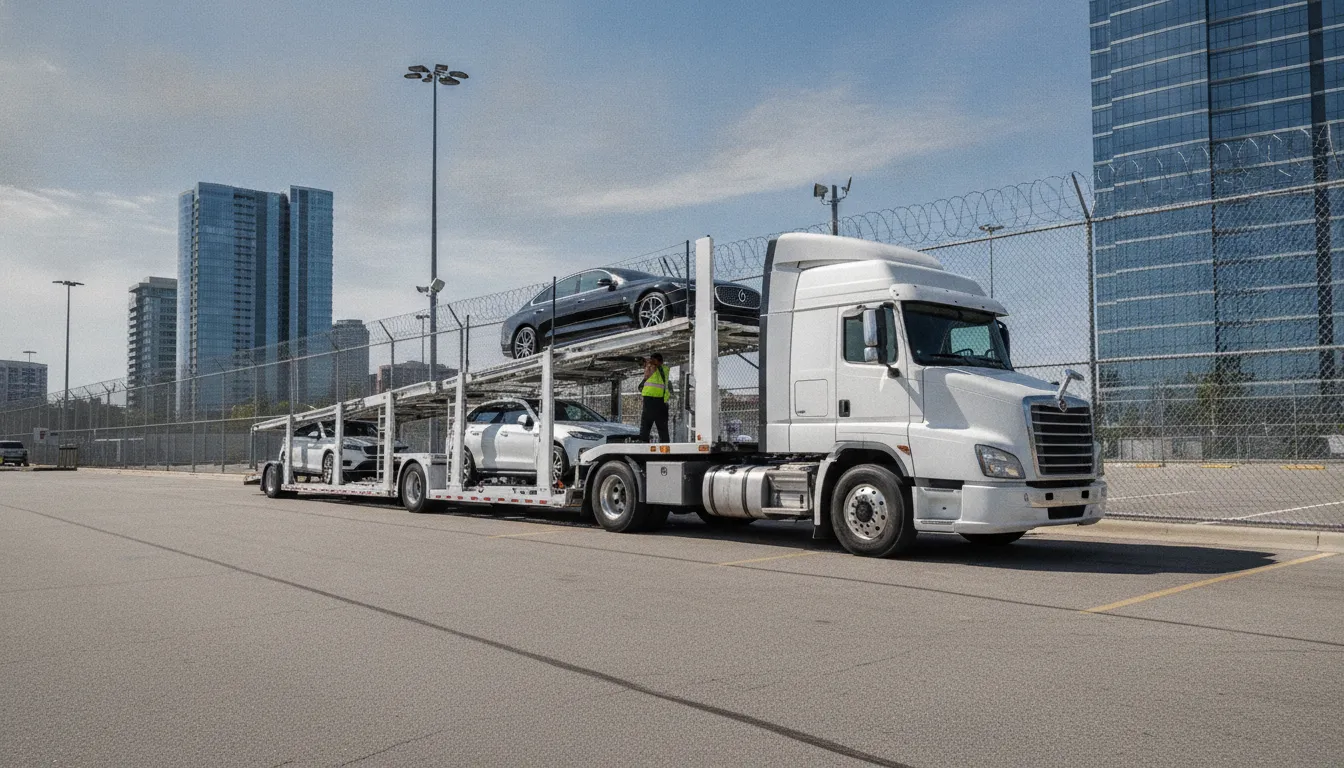
Terminal-to-terminal auto transport follows a sequence: request a quote, choose terminal locations, prepare the vehicle, document its condition, drop it off, wait for carrier loading, receive arrival notice, then inspect and pick up the car at the destination terminal.
The process starts with a car shipping quote request. You provide the pickup region, delivery region, vehicle details, timing needs, and whether the car runs. Road Runner Vehicle Transports then helps match the shipment with a carrier through its broker model. As a federally licensed transportation broker, Road Runner does not own the trucks; it connects customers with vetted independent carriers.
- Request a quote for your origin, destination, timing, and vehicle type.
- Ask whether terminal pickup, door-to-door pickup, or a nearby meeting point is best for the route.
- Confirm terminal addresses, facility hours, storage rules, and pickup deadlines.
- Remove personal items and take clear photos of the vehicle before drop-off.
- Review the condition report before the carrier loads the car.
- Pick up the vehicle promptly when the destination terminal notifies you.
- Inspect the vehicle again before signing final delivery paperwork.
What happens while the car waits at a terminal?
The vehicle may sit at a staging facility until the assigned carrier has the right route, trailer space, and timing. That waiting period might be short, but it can also stretch longer when demand is high, weather disrupts schedules, or the route is less common.
Ask who controls the facility, whether the lot is fenced, what hours it operates, and how quickly you must pick up the vehicle after arrival. These questions matter because many terminals charge storage fees once a grace period ends.
Terminal vs door-to-door car shipping: which is better?
Terminal shipping is better when you live near terminals, have flexible timing, and want to test every cost-saving option. Door-to-door shipping is better when convenience, fewer handoffs, schedule control, and direct driver communication matter more than the lowest base price.
For most customers, door-to-door shipping is the smoother choice. The carrier meets you near your requested address, you inspect the vehicle with the driver, and you avoid arranging extra rides to and from a storage lot. Road Runner Vehicle Transports focuses on door-to-door delivery because it removes unnecessary handoffs for customers who are moving, buying a car, sending a vehicle to family, or relocating for work.
Terminal shipping can still be useful when a street is too narrow for a carrier, local truck restrictions make residential pickup difficult, or the customer is already near a major transport hub. The key is to compare the full trip, not just the first number on the quote.
| Factor | Door-to-door service | Terminal-to-terminal service |
|---|---|---|
| Customer effort | Lower, because the driver meets you nearby | Higher, because you handle terminal travel |
| Storage fees | Usually not part of the handoff | Possible if the car waits too long |
| Best fit | Moves, families, busy schedules, rural areas | Flexible drivers near major metro hubs |
| Inspection | Directly with the driver at pickup and delivery | May involve facility staff and carrier timing |
| Convenience | Highest | Lower, but sometimes cheaper |
Want to compare both options on your exact lane? Call 888-430-5866 for a Road Runner Vehicle Transports quote that weighs terminal pickup against door-to-door delivery.
How much does terminal to terminal car shipping cost?
Terminal to terminal car shipping cost depends on route length, vehicle size, demand, season, pickup timing, carrier availability, and facility fees. A lower base quote can become less attractive if you add daily storage, rideshare costs, fuel, parking, or time away from work.
Auto transport pricing is dynamic. A small sedan moving on a common route usually costs less than a large SUV moving on a low-volume route. Open transport is usually more affordable than enclosed carrier car shipping. Expedited timing costs more because it requires faster carrier assignment.
Road Runner Vehicle Transports uses quote-based pricing because carrier availability and market conditions change. The safest way to compare options is to ask for a quote that breaks down the likely carrier charge, broker fee timing, and any terminal-related fees. Road Runner’s customer context also notes that broker fees are charged after carrier assignment, so customers should ask when each part of the payment is due.
Costs that can change the final number
Storage is the most common missed cost. Many facilities charge a daily fee if a vehicle is not picked up quickly. Common estimates run about $15 to $35 per day, but the exact amount depends on the location and facility policy. A week of storage can turn a cheaper terminal quote into the more expensive choice.
You should also include the cost of getting to and from each terminal. If you need a rideshare, rental car, friend, or extra fuel, add that to the comparison. For more context on budget planning, review Road Runner’s guide to the cheapest way to ship a car.
When does terminal pickup make sense?
Terminal pickup may make sense when you are close to a major terminal, your schedule is flexible, a carrier cannot safely access your street, or you are trying to minimize the base shipping quote. It works best when the terminal is convenient and storage fees are clearly understood.
Some streets are not practical for a multi-car hauler. Low tree limbs, tight turns, gated entries, apartment complexes, steep roads, and local truck rules can make a residential pickup difficult. In those cases, a terminal or nearby meeting point can solve an access problem.
Terminal pickup can also work for customers who live in dense metro areas and can easily reach a hub. If you can drop the car off during facility hours and pick it up quickly after arrival, the added effort may be manageable.
When door-to-door is usually the better value
Door-to-door transport is usually better when you are moving on a tight timeline, shipping from a suburban or rural area, coordinating with family, or trying to avoid extra logistics. It also gives you a direct handoff with the driver, which makes the condition report easier to manage.
If you care about convenience, direct communication, and fewer moving parts, door-to-door service is often worth the difference. Road Runner Vehicle Transports can also arrange a safe nearby meeting point when the exact address is not accessible.
What should you ask before booking terminal car shipping?
Before booking terminal car shipping, ask about exact terminal addresses, storage fees, facility security, pickup deadlines, carrier insurance, condition reports, broker authority, and payment timing. Clear answers protect you from surprise costs and help you compare terminal service with door-to-door transport.
Start with the terminal details. Ask for the address, hours, contact process, parking rules, and after-hours policy. Then ask how long the vehicle can sit before storage fees begin. If a facility cannot give clear answers, that is a warning sign.
Next, ask about the carrier and broker. The FMCSA advises consumers to verify auto transport companies and understand the role of brokers and carriers. You can also review federal guidance on valuation and insurance options before shipping a vehicle.
Documentation questions to ask
Ask who completes the condition report at drop-off and who signs it at pickup. Take your own photos from every angle before leaving the vehicle. At delivery, compare the car to those photos before signing the final paperwork.
Also ask what happens if a pickup or delivery window changes. A clear answer helps you plan around work, travel, and storage deadlines. If the plan feels uncertain, door-to-door transport may be the safer and easier choice.
Frequently Asked Questions
How much does terminal to terminal car shipping cost?
Terminal to terminal car shipping can cost less than door-to-door service on some routes, but the final price depends on distance, vehicle size, route demand, timing, carrier availability, and terminal fees. Always compare the total cost, including storage and travel to each terminal.
Are there daily storage fees at auto transport terminals?
Yes. Many terminals charge daily storage if a vehicle waits too long before pickup or after arrival. Common estimates run about $15 to $35 per day, but every facility can set its own rules. Ask how much storage is included before booking.
Is terminal shipping safer than door-to-door transport?
Not necessarily. Terminal shipping adds a storage handoff, while door-to-door service lets you inspect the car directly with the driver. Safety depends on carrier quality, facility security, documentation, and insurance coverage.
When should I choose door-to-door vehicle transport instead?
Choose door-to-door transport when you want fewer handoffs, easier scheduling, direct driver communication, and less travel to storage lots. It is usually the better choice when you live outside a major metro area or have limited time.
Request a terminal to terminal car shipping quote
The best shipping choice is the one that fits your route, budget, timing, and comfort level. Terminal service may reduce the base quote in some situations, but door-to-door transport often saves time and avoids surprise storage costs.
Road Runner Vehicle Transports can help you compare both options before you commit. Call 888-430-5866 to request a quote and ask whether terminal pickup or door-to-door vehicle transport is the better fit for your shipment.