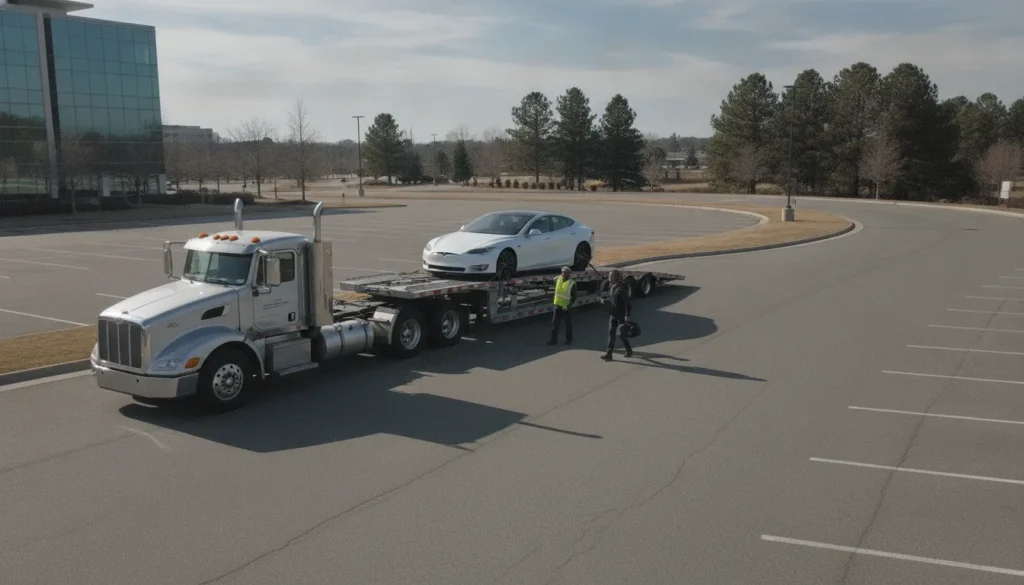
Door to door auto transport pickup is meant to make car shipping easier. But it does not always mean a large carrier can stop in front of your house. The truck still needs a safe, legal place to load. Narrow streets, low trees, power lines, tight turns, gated entries, and local rules can change the exact pickup spot.
The best plan is simple: confirm access early, prepare the car before the driver arrives, take clear inspection photos, and review the Bill of Lading before you sign. If your street is not safe for a transport truck, a nearby wide lot or truck-friendly road can keep pickup on track.
This checklist explains what to check before pickup day, how to choose a better meeting point, and what paperwork matters when the carrier arrives.
Door to door auto transport pickup: what access really means
When you book door to door auto transport pickup, the goal is simple. The carrier tries to pick up the vehicle as close to your address as safe road access allows. That last part matters. Door-to-door service is not a promise that a long carrier can fit into every driveway, cul-de-sac, or private lane.
As close as safe and legal
A carrier driver must think about truck length, overhead space, traffic flow, and local rules. A street that feels easy in a car may be too tight for a loaded transport truck. Low limbs, power lines, parked cars, speed humps, steep driveways, and posted truck limits can all affect the final pickup point.
This is why Road Runner Vehicle Transports explains that door-to-door auto transport convenience depends on access. The driver will aim for the requested address, but safety comes first for your vehicle, the truck, and nearby property.
Why carriers may ask to meet nearby
If the truck cannot reach the address, the driver may ask you to meet at a wider nearby spot. That is still normal for door-to-door service. It means the pickup stays close while avoiding a risky load in a narrow or blocked area.
Good meeting spots include wide commercial lots, open side streets, or other legal places where the truck can stop without blocking traffic. A short move to a safe loading area can prevent delays and reduce the chance of damage during loading.
What to check before pickup
Look at your street before the pickup window. Check for low trees, low wires, tight turns, no-truck signs, gated entries, security desks, and areas where parked cars narrow the lane. If you see a problem, tell Road Runner Vehicle Transports or the carrier before the driver arrives.
Clear access details help the carrier plan the route. They also help you avoid last-minute stress when the driver is already nearby.
Car shipping pickup checklist before the carrier arrives
A strong car shipping pickup checklist covers two things: the vehicle and the pickup location. Preparing both helps the inspection move faster and gives the driver a better chance of loading on time.
Prepare the vehicle
Wash the outside of the car before pickup. A clean car makes dents, scratches, chips, and old marks easier to see during the walk-around. Remove personal items from the cabin and trunk unless the carrier has clearly approved them. Loose items can shift during transport, add weight, or create confusion during handoff.
Check that the car starts, rolls, steers, and brakes. Look for obvious leaks. Keep enough fuel for loading and unloading, but do not leave a full tank if it is not needed. Disable alarms, remove toll tags, and have a working key ready for the driver.
Use this pickup checklist
- Confirm the address. Make sure the pickup address, contact name, and phone number are correct.
- Check truck access. Look for narrow roads, low trees, low wires, weight limits, and tight turns.
- Pick a backup meeting point. Choose a nearby wide lot or truck-friendly street in case access is limited.
- Clean the vehicle. Wash the outside so the driver can note existing marks clearly.
- Remove personal items. Clear the seats, floor, trunk, glove box, toll tags, and loose devices.
- Check basic function. Confirm the battery is charged and the vehicle can be safely moved.
- Prepare keys and paperwork. Have the keys ready and plan time to review the Bill of Lading.
Plan the pickup spot
Do not wait until the driver arrives to think about space. The carrier needs room to park, lower ramps, inspect the car, and load safely. If your street is tight, crowded, or blocked by low branches, choose a safe nearby location before pickup day.
You can also use Road Runner Vehicle Transports’ quote page when planning your shipment details.
How to choose a safe meeting point for pickup
A backup meeting point is not a downgrade. It is often the safest way to keep door-to-door pickup moving when a large carrier cannot use the exact address. The best spot is close, easy to find, and wide enough for the truck to load without blocking traffic.
Look for space and clear access
Start with large commercial lots, shopping centers, wide business parks, or broad side streets. The area should have a wide entrance, enough room for turns, and space for ramps. Avoid tight apartment garages, steep driveways, private lanes, busy downtown curbs, and streets lined with low branches.
Make sure the place allows safe stopping. Do not choose a spot where the truck would block a fire lane, loading dock, bus stop, or high-traffic turn lane. If the location is private, follow posted rules and stay clear of restricted areas.
Make the spot easy to find
Give the driver a clear address, landmark, or map pin. A simple note such as “north side of the grocery store lot near the wide entrance” can help. Daylight is best when possible because it makes inspection photos easier and helps both parties see the vehicle condition.
Keep your phone nearby as the driver gets close. If traffic, parking, or local rules change the plan, quick contact helps you choose another safe spot.
Coordinate with the driver
The driver knows the truck size and turning limits better than anyone. If they suggest a nearby alternative, listen to the reason. The request is usually about safety, not convenience.
When you work with the driver, you protect the vehicle and help the handoff stay on schedule. That is the practical side of a smooth door-to-door transport pickup.
Inspection photos and Bill of Lading basics
The pickup inspection is one of the most important parts of auto transport. It creates a record of the vehicle condition before loading. Take your time here, even if the pickup window has been busy.
Take clear photos before loading
Take photos of all four sides, each corner, the roof if visible, the bumpers, wheels, glass, and any existing damage. Step back for full-car shots, then move closer for dents, chips, scratches, or paint marks. Photos should be clear enough to compare with the vehicle at delivery.
Good photos help support the written inspection. They also reduce confusion if a mark is hard to describe. Keep the images until the vehicle is delivered and the final inspection is complete.
Review the Bill of Lading
The Bill of Lading is the pickup and delivery record for the shipment. Road Runner Vehicle Transports notes that the pickup workflow includes inspection and signing of this document. It should reflect the visible condition of the vehicle before it goes on the carrier.
Read the inspection notes before signing. Ask questions if a mark is missing or unclear. Keep a copy of the signed document so you can compare the vehicle condition at delivery.
Check again at delivery
At delivery, inspect the vehicle before the carrier leaves. Compare the vehicle to your pickup photos and the Bill of Lading. If something does not match, note it on the delivery paperwork before you sign.
This step is not about slowing the driver down. It is about keeping a clear record from pickup to delivery.
Common pickup access problems and better alternatives
Most pickup issues can be solved before the carrier arrives. The key is to spot the access problem early and choose a safer option nearby.
| Access problem | Better alternative | Why it helps |
|---|---|---|
| Narrow residential street | Wide commercial lot nearby | Gives the truck room to turn, stop, and load. |
| Apartment garage or tight complex | Front entrance or nearby open street | Avoids low clearance, sharp turns, and gate delays. |
| Gated community | Visitor area outside the gate | Reduces access issues with guards, codes, or truck rules. |
| Rural driveway | Wide road shoulder or local business lot | Keeps the carrier off steep, soft, or narrow driveways. |
| Downtown loading zone | Legal side street with open curb space | Helps avoid tickets, blocked traffic, and unsafe stops. |
| Low tree branches or wires | Open lot with clear overhead space | Protects vehicles on the upper deck from contact. |
| Steep driveway | Level nearby pavement | Makes inspection and loading safer for the driver. |
Use the table before pickup day
Walk the area and match any issue you see to a safer option. If you are unsure, send the location details to the driver or dispatcher when contact is made. A fast question before pickup can prevent a long delay later.
Do not force a risky stop
A carrier that blocks traffic or squeezes under low wires creates risk for everyone. A nearby meeting point is often the better choice. It lets the driver load the vehicle with more room and less pressure.
For a high-level guide to the full process, read Road Runner Vehicle Transports’ post on door to door car shipping.
What happens on pickup day?
Pickup day works best when everyone can reach each other. Keep your phone close during the pickup window. The driver may call or text to confirm the location, share an arrival estimate, or ask about truck access.
Understand the pickup window
A pickup window is not the same as an exact appointment time. Weather, traffic, prior stops, and route changes can affect timing. Stay available and avoid making plans that would leave the vehicle without an authorized person to release it.
If someone else will meet the driver, give that person the keys, contact details, pickup location, and inspection instructions. They should be ready to review and sign the Bill of Lading.
Be ready for a meeting-point change
If the driver reaches the area and sees an access issue, they may ask you to meet nearby. This can happen even when the original address looked fine on a map. Parked cars, trash pickup, construction, or local traffic can change the plan.
Stay calm and work with the driver. A nearby lot or wider street can help the pickup happen faster and with less risk.
Keep records from the start
Save driver texts, take vehicle photos, and keep your signed paperwork. These records help you track the shipment from pickup to delivery. They also make the delivery inspection easier.
Mistakes that can delay car shipping pickup
Small mistakes can slow down a pickup even when the carrier is nearby. Most are easy to avoid with a short review the day before the truck arrives.
Ignoring access limits
Do not assume the driver can reach every street, garage, or driveway. Check for low trees, low wires, tight corners, steep grades, and posted truck rules. If access looks poor, choose a safer nearby spot and share it early.
Leaving the vehicle unready
A dirty vehicle makes inspection harder. A dead battery or missing key can stop loading. Loose items, toll tags, and alarms can also create problems during transport. Clean the car, remove personal items, and make sure the vehicle can be moved safely.
Signing too fast
Do not rush the Bill of Lading. Review the pickup notes and make sure visible damage is listed before you sign. Take photos from several angles, then keep your copy of the signed document.
If pickup details change, use the Road Runner Vehicle Transports contact support page so the shipment record stays current.
Frequently asked questions
What is door-to-door car shipping?
Door-to-door car shipping means the carrier tries to pick up and deliver the vehicle as close to the listed addresses as safe and legal access allows. If the exact street is not truck-friendly, the driver may request a nearby meeting point.
Are there limits to where a car carrier can pick up my vehicle?
Yes. Narrow roads, low branches, low power lines, steep driveways, gated entries, weight limits, and no-parking zones can all limit access. A safe nearby lot or wide street is often the best solution.
How should I prepare my vehicle for pickup?
Wash the vehicle, remove personal items, check that it starts, leave a working key, disable alarms, remove toll tags, and take photos before loading. Also confirm the pickup contact and backup meeting point.
What is a Bill of Lading?
The Bill of Lading is the shipment record used at pickup and delivery. It notes vehicle condition, confirms the handoff, and gives you a document to compare against when the vehicle arrives.
Ready to request a smoother pickup?
A clear pickup plan can save time on the day your vehicle ships. When the carrier has safe access, clean inspection photos, and the right contact details, the handoff is easier for you and the driver.
Ready to request help with your next shipment? Request a free auto transport quote to start planning your pickup with Road Runner Vehicle Transports.