

Car shipping payment methods are easier to understand when you separate the quote into two parts. The broker service fee is paid after Road Runner assigns a carrier. The carrier balance is paid directly to the driver at delivery. That split helps customers avoid paying the full shipment cost before a truck is secured, while still giving the assigned carrier a clear payment plan for delivery day.
Ready to price your shipment? Request a car shipping quote or call 888-430-5866 to confirm your route, vehicle details, accepted payment options, and delivery balance before you book.
Quick answer: Road Runner’s car shipping payment flow usually starts with a broker service fee after carrier assignment. The remaining carrier balance is due at delivery, often in cash, cashier’s check, money order, or another method approved by the assigned driver. Credit card payments for eligible Road Runner charges include a non-refundable 3.95% processing fee, and cancellation timing can affect refunds.
This guide explains what each payment covers, when money changes hands, which methods to prepare, how credit card fees work, and what to know if plans change after a carrier is assigned.
Car shipping payment methods: how the two-part flow works
Section summary: The two-part payment flow separates Road Runner’s broker service fee from the carrier balance. That makes it clear who gets paid, when payment is due, and which part of the total price each payment covers.
Most customers are used to paying one company one bill. Auto transport often works differently because a licensed broker and a motor carrier can be involved in the same shipment. Road Runner helps arrange the shipment, match the order with a carrier, and coordinate pickup and delivery. The carrier handles the physical transport of the vehicle.
The first payment is the broker service fee, sometimes described by customers as a deposit. Road Runner collects this fee after a carrier is assigned to the order. It covers the work of locating a qualified driver, securing space on the route, and managing the shipment details. This timing matters because the fee is tied to real carrier assignment, not just a casual quote request.
The second payment is the carrier balance. This amount is paid directly to the driver when the vehicle is delivered. Many carriers require certified funds because they need secure payment before releasing the vehicle. Common delivery methods include cash, cashier’s check, or money order, although the exact method depends on the assigned driver.
This structure can feel unusual the first time you ship a vehicle, but it has a practical benefit. You do not pay the full transport cost before the carrier is secured, and the driver receives the delivery balance after completing the move. For related service options, review Road Runner’s vehicle transport services before requesting your quote.

Why the split matters for planning
The split helps you budget for two different moments. You need a payment method ready for the broker service fee after carrier assignment, then delivery funds ready when the driver arrives. If you plan both steps in advance, you can avoid a delay at the curb when your vehicle is ready to be released.
What to ask before approval
Before booking, ask your agent to confirm the total quote, broker service fee, estimated carrier balance, accepted payment options, and any fee tied to your preferred method. You should also confirm whether the final carrier balance must be paid in cash or certified funds.
What do you pay when booking a shipment?
Section summary: You usually do not pay just to request a quote. Payment becomes important when the shipment moves from quote review to carrier assignment, booking, pickup, and delivery.
A quote is not the same as a booked shipment. When you request pricing, Road Runner gathers the details needed to estimate the cost of moving your vehicle. Those details include pickup and delivery locations, vehicle type, vehicle condition, timing, and whether the route needs special handling.
Once the quote is approved and a carrier is assigned, the broker service fee is due according to the booking terms. The remaining carrier balance is not collected by Road Runner in advance. It is paid to the driver when the vehicle arrives, which is why customers should prepare the correct delivery funds ahead of time.
The exact amount depends on the shipment. A running sedan on a common route may have a simpler payment plan than an oversized, inoperable, or specialty vehicle. If a vehicle does not run, requires special loading equipment, or needs a more complex pickup location, the carrier cost can change. Accurate information is the best way to protect the quote.
Road Runner’s terms and conditions explain payment responsibilities and fee guardrails in more detail. Customers should review those terms before approving a shipment, especially if they are comparing credit card payments, bank transfer options, and certified delivery funds.
Quote stage
At the quote stage, the goal is clarity. You should know what the move is expected to cost, what assumptions the price is based on, and what information could change the final amount. A quote is strongest when the pickup location, delivery location, vehicle condition, available dates, and access limits are accurate.
Carrier assignment stage
After a carrier is assigned, the shipment becomes more concrete. Space is reserved, the route is planned, and payment timing begins to matter. This is when the broker service fee is normally collected.
Delivery stage
At delivery, inspect the vehicle with the driver, review the bill of lading, note any concerns, and then pay the carrier balance using the approved method. Keep a copy of the final paperwork and any receipt for your records.
Which payment methods are accepted for car shipping?
Section summary: Road Runner accepts credit cards and bank transfer options for eligible broker payments. Carrier balances are usually paid at delivery using cash, cashier’s check, money order, or another driver-approved method.
Accepted payment methods depend on which part of the shipment you are paying. The broker service fee and the carrier balance are not always paid the same way because they go to different parties. Road Runner controls the broker payment options, while the assigned carrier controls what they will accept at delivery.
For the broker service fee, customers may be able to use a credit card or bank transfer. Credit cards are convenient, but Road Runner’s payment rules include a 3.95% processing fee for card payments. That fee is non-refundable because it covers card processing costs, not the physical transport service.
For the carrier balance, many drivers prefer secure funds at delivery. Cash, cashier’s check, and money order are common because the driver can verify payment before releasing the vehicle. Some carriers may accept other options, but you should never assume that a driver can process a credit card at the delivery location.
Federal household-goods transportation rules at 49 CFR 375.221 discuss how payment options can be addressed in carrier rules. The practical takeaway for auto transport customers is simple: confirm the accepted method in writing before delivery day.
Best payment questions to ask
- How much is due to Road Runner after carrier assignment?
- Is my preferred broker payment method subject to a processing fee?
- How much carrier balance will be due at delivery?
- Does the driver require cash, cashier’s check, or money order?
- Who should the delivery payment be made payable to?
Need help choosing the right option? Request a quote and ask an agent to explain which payment methods fit your route and delivery plan.
How credit card fees, bank payments, and carrier balances compare
Section summary: Credit cards can be convenient for eligible broker fees. Bank transfers may avoid card processing costs. Delivery balances usually require secure funds paid to the carrier.
Payment methods are not just about convenience. They affect timing, fees, and what you need to have ready on delivery day. A credit card may help you complete the broker payment quickly, but it can add the 3.95% processing fee. A bank transfer may fit customers who want to avoid card costs, but it should be confirmed before the shipment is finalized.
The carrier balance is different. That payment is tied to the driver releasing the vehicle at delivery, so secure funds are common. If you arrive without the right method, delivery can become stressful even when the shipment itself went smoothly.
| Payment method. | Typical timing. | Paid to. | Important note. |
|---|---|---|---|
| Credit card. | After carrier assignment. | Road Runner. | Includes a non-refundable 3.95% processing fee. |
| Bank transfer. | After carrier assignment when approved. | Road Runner. | Ask your agent to confirm timing and instructions. |
| Cash. | At delivery. | Carrier. | Common for final carrier balance. |
| Cashier’s check or money order. | At delivery. | Carrier. | Useful when the driver requires certified funds. |
Why credit card fees are separate
Card processing fees are charged by payment networks and processors. Road Runner’s KB notes a 3.95% credit card processing fee and states that card processing fees are not refundable. If you want to avoid that fee, ask whether a bank transfer is available for your broker payment.
Why delivery funds should be ready early
Do not wait until the driver is minutes away to prepare the balance. Go to the bank in advance if you need cash or certified funds. Confirm the amount, the method, and the payee before delivery so you can inspect the vehicle and complete the handoff without delay.
When is the carrier balance due at delivery?
Section summary: The carrier balance is due when the vehicle is delivered. Inspect the vehicle, complete the delivery paperwork, and pay the driver with the approved method.
The carrier balance is the final transport payment. It is due when the assigned driver delivers your vehicle, not when you first request a quote and not when the car is picked up. This timing helps the customer keep the final payment until the transport work is complete.
When the driver arrives, walk around the vehicle and compare its condition to the pickup paperwork. The bill of lading is the document used to record pickup and delivery condition. If you notice a new concern, document it before signing the final paperwork.
Once the delivery inspection is complete, pay the carrier balance. Use the method the driver approved in advance. If the carrier asked for cash, cashier’s check, or money order, have that ready. If someone else will receive the vehicle for you, make sure they have the funds, know the approved payment method, and understand the inspection step.
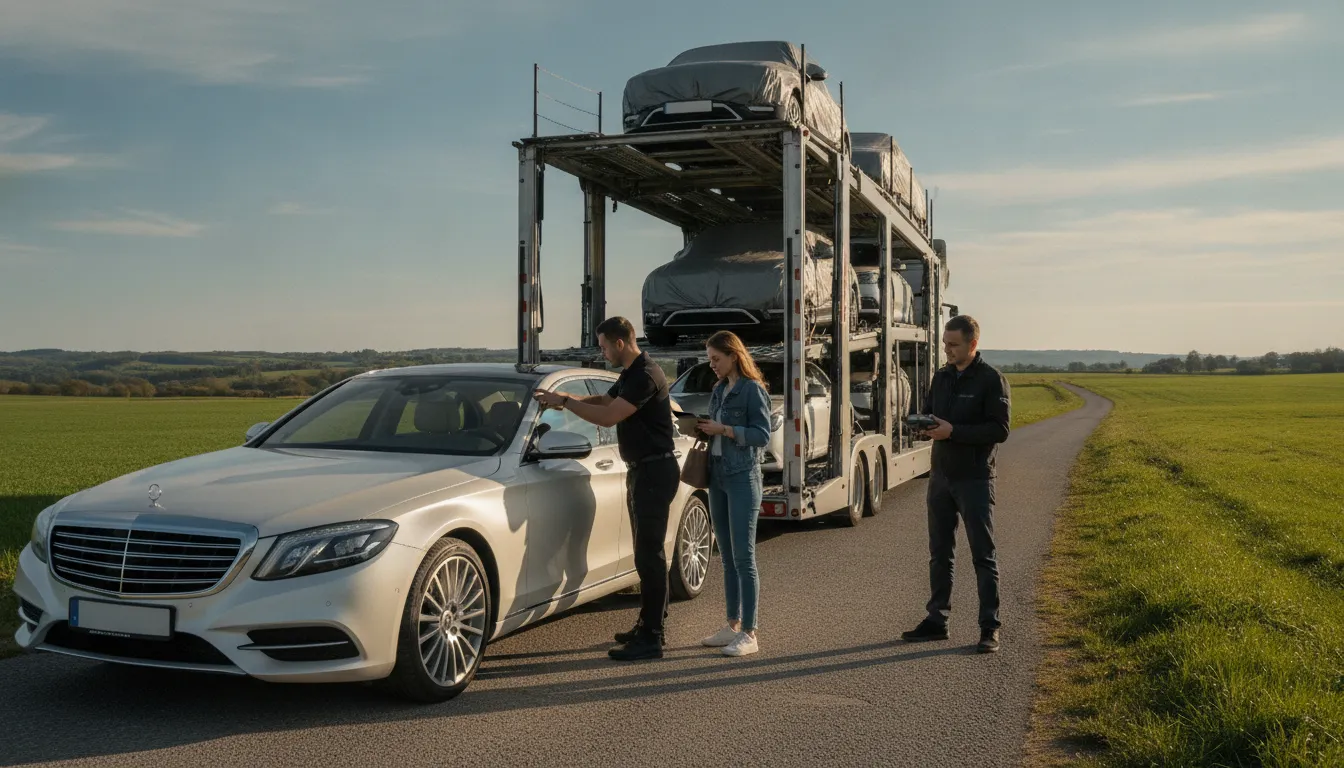
Delivery-day checklist
- Confirm arrival time: Stay in contact with the driver before the drop-off window.
- Prepare the approved funds: Bring the exact payment method the carrier requested.
- Inspect the vehicle: Compare the delivery condition with the pickup report.
- Sign the bill of lading: Note any issues before signing.
- Pay the carrier balance: Complete payment only with the approved method.
- Keep your receipt: Save the paperwork and proof of payment.
What happens if you cancel after a carrier is assigned?
Section summary: Cancellation rules depend on timing. A full refund may be available before carrier assignment, while a $200 administrative fee may apply after carrier assignment on the scheduled shipping day.
Plans change, and Road Runner’s cancellation guardrails are based on when the cancellation happens. Timing matters because assigning a carrier involves real work, route planning, and reserved truck space. The earlier you communicate a change, the easier it is to avoid unnecessary costs.
If you cancel before a carrier is assigned, Road Runner’s KB states that a full refund is available. Written cancellation by email or text is required. Verbal cancellation is not enough, so keep a written record of the request.
If you cancel after a carrier is assigned on the scheduled shipping day, a $200 administrative fee may apply. That fee reflects the work already performed to secure the carrier and reserve the shipment. The remaining broker fee may be refundable after the administrative fee, depending on the specific order terms.
Credit card processing fees are handled separately. The 3.95% processing fee is non-refundable even if another payment amount is returned. Customers who are unsure about their move date should ask about timing, cancellation rules, and payment method options before approving the shipment.
How to reduce cancellation risk
Confirm your pickup window, delivery location, vehicle condition, and contact details before booking. If your schedule is uncertain, tell Road Runner before a carrier is assigned. Clear timing is the best way to avoid last-minute changes and extra fees.
How to prepare for a smooth payment and delivery
Section summary: A smooth delivery starts before pickup. Confirm the quote, payment split, carrier method, delivery contact, and inspection process before the truck arrives.
Good payment preparation is mostly about communication. You should know the total quote, the broker service fee, the carrier balance, and the delivery payment method before the vehicle is on the truck. If any detail changes, ask for the update in writing.
Start by requesting a clear quote through Road Runner’s quote page. Make sure the quote reflects the correct vehicle, route, running condition, pickup access, and delivery access. If you need a different transport style, review options such as open car transport and enclosed car transport before finalizing the order.
Next, confirm the payment split. Ask what is due after carrier assignment and what remains due at delivery. Then ask what methods are accepted for each part. If a credit card is used for the broker payment, factor in the 3.95% processing fee. If certified funds are required at delivery, plan a bank visit before the driver arrives.
Finally, decide who will receive the vehicle. If you cannot be present, choose a trusted adult who can inspect the vehicle, sign the paperwork, and pay the carrier balance. Give that person the exact payment amount and the approved method. A prepared receiver can prevent delays even when delivery timing changes.
Have questions before you book? Call 888-430-5866 or request a quote online so Road Runner can explain your car shipping payment methods before pickup day.
Frequently Asked Questions
Do car shipping companies offer payment plans?
Most auto transport brokers do not offer monthly payment plans. Road Runner generally uses a two-part payment structure: the broker service fee after carrier assignment and the carrier balance at delivery. This keeps the main delivery payment tied to the vehicle handoff.
Can I pay the carrier balance with a personal check?
Most drivers do not accept personal checks at delivery because they need secure funds before releasing the vehicle. Cash, cashier’s check, and money order are more common. Always confirm the carrier’s accepted method before the delivery date.
Are credit card processing fees refundable if I cancel my order?
No. Road Runner’s KB notes that credit card payments include a 3.95% processing fee and that the processing fee is not refundable. It is separate from the broker fee or any cancellation refund calculation.
What is the safest way to pay for car shipping?
The safest approach is to confirm the payment split in writing, pay eligible broker charges through an approved Road Runner method, and keep the carrier balance ready in the driver-approved form for delivery. Inspect the vehicle before signing final paperwork and paying the balance.
Ready to request your car shipping quote?
Road Runner can help you compare routes, vehicle details, timing, and payment options before you book. Clear payment planning helps prevent delivery delays, card-fee surprises, and cancellation confusion.
Request your quote today: Start with the online quote form or call 888-430-5866 to speak with a shipping expert about your route and preferred payment method.