
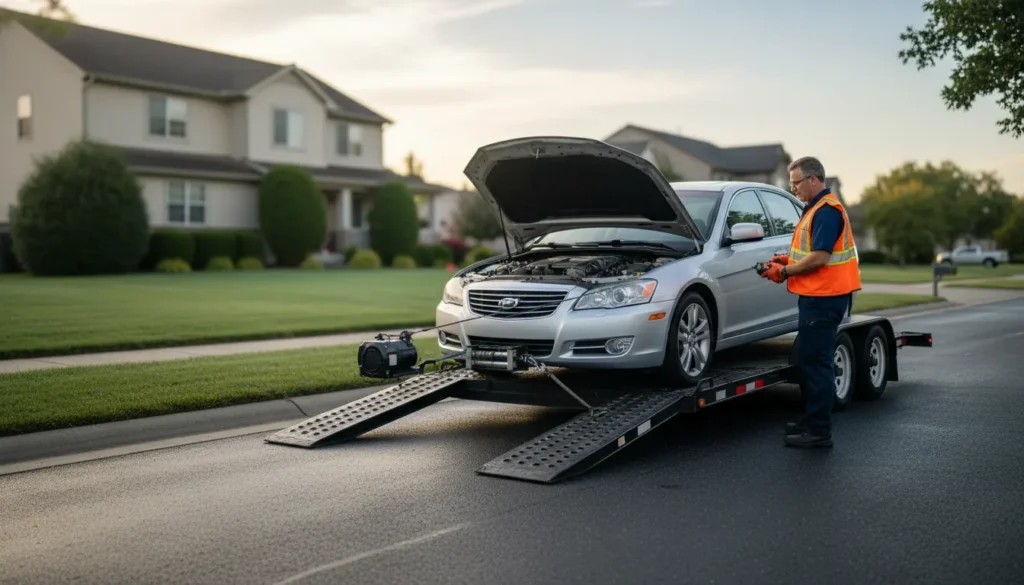
A car that will not start can still cross the country safely. The key is telling the carrier exactly how it rolls, steers, and brakes before a truck arrives.
Request an inoperable car transport quote with your vehicle condition and route details.
Inoperable car transport moves a vehicle that cannot drive onto a carrier using the equipment and planning its condition requires at pickup.
Before booking, state whether the car starts, rolls, steers, brakes, has inflated tires, and can be reached by the transport truck on pickup day.
A carrier may need a winch or other loading support. Non-running shipments can cost more when loading needs additional coordination or equipment.
To request transport, share the locations, vehicle details, condition, and access limits before booking so the quote reflects the actual move.
If you are arranging a move for a project car, breakdown, or auction purchase, the first question is what the vehicle’s condition changes. Start with What is inoperable car transport?, then use that definition to plan loading, compare cost factors, and request the right service: here’s how.
What is inoperable car transport?
A service for vehicles that cannot load normally
Inoperable car transport is shipment for a vehicle that cannot move onto a carrier by its own power. It may not start, or it may start but still be unsafe to drive. The key issue is loading: the driver needs an accurate condition report before pickup. Road Runner supports moves involving non-running vehicles through its vehicle transport services.
A running vehicle can usually be driven onto the trailer, positioned, and secured for the trip. An inoperable vehicle needs a loading plan based on what still works. That may include a winch or other loading aid, based on the condition information supplied before dispatch.
Non-running does not mean one condition
A vehicle does not have to be wrecked to fall into this category. A dead battery, failed starter, seized engine, missing keys, flat tires, flood damage, or collision damage can keep it from loading normally. A car that starts may also be inoperable for shipping if it cannot be moved safely.
The useful test is simple: can the vehicle roll, steer, and brake as needed during loading? Share those details when requesting inoperable car transport. A car with working steering and brakes presents a different loading task than one with locked wheels or damaged suspension.
Owners may also classify a car as inoperable when moving it could add damage. For example, collision damage can affect how a wheel tracks or how a loose panel sits. Do not assume that an engine start means a car is ready to drive onto a trailer.
Why accurate classification matters
A carrier deck is not a repair bay or a test drive. The transport team must know what the vehicle can do before the loading attempt begins. Photos of visible damage can support that description. Also note low clearance, loose parts, leaking fluids, or blocked access at the pickup site.
Once loaded, a vehicle must remain positioned for transport. For an owner, the essential job is to disclose condition and access details early. So the transport team can coordinate the move before pickup rather than discovering limitations at the curb.
For owners, the safest classification is the honest one. If you are unsure whether the car starts, stops, steers, or rolls, state what is known and what is not. The transport team can use those details to plan equipment and safe access before pickup.
What details should you provide for a non-running car quote?
A non-running car quote starts with a simple question: what can the vehicle still do without engine power? For inoperable car transport, state its condition as it sits today, not as you hope it will be by pickup. Clear details help the transport team choose a workable loading plan before a carrier arrives.
Movement and control details
First, say whether the car rolls, steers, and brakes. A vehicle may not start, yet still move freely and guide onto a trailer. Another may have locked wheels, seized brakes, or steering damage. Those are different loading jobs, so a useful quote must reflect the real condition.
Also confirm whether all four tires are mounted and hold air. Note missing wheels, flat tires, low clearance, or parts dragging below the car. Share whether you have keys and whether the transmission can shift into neutral. These details can change how the vehicle reaches the trailer safely.
Carriers need the roll, steer, and brake condition before pickup to plan safe loading. This helps avoid delays, as outlined in a non-running vehicle shipping guide. Do not label a car as simply “inoperable” when you already know more. A short, exact description is more useful than a broad label.
Pickup access and damage
Describe where the vehicle sits now and where it must be delivered. Is it on pavement, gravel, grass, a steep drive, inside a garage, or behind a gate? Tell the quote team if a large transport truck cannot enter the street or lot. Include any towing, storage yard, or auction release rules you know.
List visible collision, flood, fire, or mechanical damage before requesting the quote. Mention loose panels, broken glass, leaking fluids, deployed air bags, or a crushed wheel area. Photos can add context when damage affects movement or safe handling. Do not promise repairs before pickup unless they are complete.
Safe transport is not only about getting the car onto the trailer. Interstate motor carriers must use devices that prevent cargo from shifting or falling. The Federal Motor Carrier Safety Administration cargo securement rules explain this requirement. A clear damage report helps the carrier prepare for the vehicle that will actually be loaded.
Honest answers and the quote request
Accurate answers reduce last-minute surprises for both the shipper and driver. If a car was quoted as rolling, then arrives with locked wheels, the original loading plan may not fit. That can delay pickup or require a different carrier setup. Sharing the issue early gives dispatch a better starting point.
Before using the quote or contact option, gather a short condition summary. Include year, make, model, pickup and delivery locations, roll-steer-brake status, tire condition, keys, neutral access, known damage, and access limits. If one answer is unknown, say so plainly and provide photos when possible. That is enough detail to begin planning inoperable car transport.
How to prepare an inoperable vehicle for pickup
Details the carrier needs before pickup
Good preparation starts before the truck reaches your vehicle. For inoperable car transport, describe what the vehicle can and cannot do without guessing. This helps the driver arrive with a loading plan that fits the actual condition.
A disabled vehicle still must be loaded and secured with care. Clear information and a clear pickup area help the carrier plan that work. Review Road Runner’s transport process before you submit the condition details for your move.
A seven-step pickup checklist
Use this workflow before pickup, then check it again when the pickup window is confirmed. If a repair shop, storage yard, or auction site controls the vehicle, share the same list with that contact.
-
Confirm movement condition. Tell the transport contact whether the car starts, rolls, steers, and brakes. Also note flat tires, locked wheels, low clearance, or loose parts that may affect loading.
-
Remove personal items. Empty the cabin, trunk, cargo area, and door pockets. Take toll tags, removable electronics, garage openers, tools, papers, and any valuables with you.
-
Reduce avoidable problems. Secure loose trim or convertible covers if they are already detached. Do not attempt late repairs. Do not force a stuck part just to make the vehicle appear operable.
-
Make keys available. Provide keys or remotes for doors, trunk, steering lock, and ignition when available. Label each key, especially when a shop or yard will release the car for you.
-
Check carrier access. Confirm that a truck can reach the pickup point and exit safely. Note gates, steep driveways, narrow streets, parking limits, mud, low branches, or nearby parked cars.
-
Photograph current condition. Take clear images of all sides, the interior, wheels, glass, and any existing damage. Keep the photos with the pickup date and vehicle details for your records.
-
Coordinate the receiving party. Give the destination contact the vehicle condition, key details, and unloading access notes. Make sure that person can receive a non-running car in an open unloading area.
Pickup access and handoff notes
An inoperable vehicle may need room for loading equipment and a direct approach to the vehicle. Tell the transport contact early if the car sits in a garage, repair bay, impound lot, underground area, or crowded parking space.
Stand clear and let the driver control loading equipment during pickup. Keep children and pets away from the work area, and do not try to push, steer, or adjust the vehicle while loading is underway.
Finally, keep the pickup contact and destination contact reachable on transport day. A handoff note should list the vehicle and its location. It should also state its movement condition, available keys, access limits, and authorized contacts.
How are non-running vehicles loaded safely?
Condition details before pickup
Safe inoperable car transport starts with an accurate description of the vehicle before pickup. Tell the transport team whether it rolls freely, steers, brakes, and can be reached without obstacles. A car that does not start may still move onto a carrier in a controlled way. A car with locked wheels or heavy crash damage needs a different loading plan.
Share any detail that may affect movement or access. Examples include missing keys, a flat tire, low clearance, leaking fluid, or a narrow driveway. Photos can help show wheel position, damage, and the pickup setting. This advance check helps the carrier review the job and confirm that the planned load can be handled safely.
Rolling vehicles and restricted vehicles
Not every non-running car presents the same loading task. A vehicle that rolls and steers can often be guided in a straighter, more controlled path. Locked wheels, severe damage, or limited access can affect the approach, loading position, and equipment choice. The assigned carrier should confirm those details before arrival.
| Condition | Plan before pickup |
|---|---|
| Car rolls and steers | Share keys, brakes, and tire condition. |
| Locked or damaged | Share damage, leaks, clearance, and photos. |
The table is a planning guide, not a promise of a certain machine or method. The trailer type, site conditions, vehicle weight, and damage can all affect the carrier’s decision. Keep the area around the vehicle clear. Do not try to force stuck wheels to turn during pickup.
Secure loading and transport checks
After loading, the vehicle must stay stable while the carrier is on the road. Federal rules require motor carriers in interstate commerce to use securement devices that prevent cargo from shifting or falling. The FMCSA cargo securement rules explain this safety purpose for commercial vehicles.
Some loads may involve winch use or other controlled loading support, based on the vehicle and carrier setup. This is trained work, not a safe place for bystanders to assist. The CDC guidance on unguarded winches notes that entanglement can cause serious or fatal injuries. Stand clear, follow the driver’s directions, and keep children and pets away from the loading area.
A useful pickup plan is simple: report the true condition, provide safe access, and let the carrier choose its loading approach. With those details, the driver can prepare for the vehicle as it sits. This planning may help avoid a blocked or unsafe pickup.
Does inoperable car transport cost more?
Yes, an inoperable car transport quote may be higher than a quote for a car that runs. That is not a set fee or a fixed rule. The carrier must first learn what the vehicle can and cannot do, then plan pickup and loading around its condition.
What changes the loading plan?
A car that will not start can still roll, steer, and brake. Another may be stuck in gear, have locked wheels, or lack working brakes. Those details change the loading plan. Share them at the quote stage, since they help a carrier match the load with available equipment and access.
The main question is not simply whether the engine runs. A quote needs a usable picture of the move. A car that rolls freely may call for different loading coordination than one that cannot move on its own. Do not assume the carrier will discover this at pickup.
Loading also has a safety purpose. Federal cargo rules require motor carriers in interstate commerce to use suitable securement devices. They must prevent cargo from shifting or falling. The FMCSA cargo securement rules explain that duty.
Other quote factors
Vehicle condition is only one part of a quote. Pickup access matters when a non-running car must move from a driveway, lot, garage, auction yard, or roadside location. Tell the carrier about truck access, available keys, and who can meet the driver.
Route and vehicle size can also shape pricing. A heavier pickup, long van, low sports car, or modified vehicle may need a different plan than a standard sedan. Distance, origin, destination, and seasonal demand can affect carrier availability on that route. For that reason, one price cannot fit each inoperable move.
Details for an accurate quote
Choose the transport option that fits the vehicle and timing. Open transport and enclosed transport have different uses, while urgent pickup can limit carrier choices. If your schedule is flexible, share a pickup window instead of a single date. This gives the quote team clearer options to review.
Before requesting a quote, gather the vehicle year, make, model, pickup location, destination, and a clear condition report. State whether it starts, rolls, steers, brakes, and has accessible tires and keys. Add photos or access notes when the vehicle sits in a tight place.
Ready to price inoperable car transport? Request a quote and include the vehicle condition details from the start. Clear details help the carrier plan the right pickup approach and give you a quote built for the move.
Choosing open or enclosed transport for a non-running car
Protection needs and vehicle condition
Open and enclosed carriers can both move a non-running car when the load plan fits its condition. The main difference is exposure during transit. An open carrier leaves the car open to weather and road debris. An enclosed carrier adds cover around a vehicle that needs more protection. Compare these choices in Road Runner’s transport services.
Start with the car itself, not a blanket rule. An open carrier may fit a daily-use car with ordinary wear and no delicate exterior parts. Enclosed transport may make more sense for a restored car, rare vehicle, fresh paint job, or low-clearance project. Loose trim, soft tops, or exposed parts also deserve discussion before booking.
Loading access and equipment fit
For inoperable car transport, loading details can matter as much as carrier type. Tell the transport team whether the car rolls, steers, and brakes. Also note locked wheels, missing keys, low clearance, leaking fluids, or parts that may drag. These details help the carrier decide how to approach loading and secure the vehicle.
A non-running car may need winch loading or other planned handling. The trailer must also reach the pickup and delivery points without tight turns or blocked access. Enclosed trailers can require added clearance and room for loading. Open equipment may offer a different loading setup, but site access still needs review.
Secure loading is not only about avoiding visible damage. Share the car’s true condition so the carrier can coordinate an appropriate pickup and transport plan.
A practical choice before booking
Choose open transport when basic exposure is acceptable and the car can be loaded with the planned equipment. Choose enclosed when added protection matters because of value, finish, parts, or condition. Neither choice removes the need for clear condition notes, workable access, and direct carrier coordination.
Before requesting service, list the vehicle year, make, model, location, and destination. Add whether it starts, rolls, steers, brakes, and has unusual clearance or damage concerns. Ask which equipment is planned and what access the driver needs at each stop. This keeps the discussion focused on the real loading task.
Inspection continues after loading. That work belongs to the carrier, while your role is to report vehicle issues before transport and keep your pickup and delivery contacts reachable.
Also take clear photos before pickup and remove unsecured personal items or loose vehicle pieces. Confirm how keys will be provided and who can meet the driver. If the vehicle’s condition changes before pickup, report it promptly. A car that stops rolling or develops a leak may require a different loading plan.
What happens after you request transport?
From request to carrier plan
After you request inoperable car transport, Road Runner starts by confirming the move details. Be ready to share pickup and delivery locations, time needs, and the vehicle’s present condition. State whether it rolls, steers, and brakes. Note low clearance or loose parts.
This first step helps shape a loading plan that fits the car. It avoids treating an inoperable vehicle like a running one. If you are still gathering details, use the contact form to describe what is known and what needs review.
Road Runner’s eight-step journey covers request review, quote, booking, carrier setup, pickup check, transit updates, delivery check, and handoff. Your booking details should list agreed locations, contacts, vehicle status, and the timing window. Read them before confirming. Corrections are simpler before dispatch.
Pickup and loading checks
Before pickup, remove personal items and clear safe access to the vehicle. Keep keys ready when available, even when the engine will not run. Tell the driver about locked steering or flat tires. Also report missing parts or a parking spot that may limit loading.
At pickup, you and the driver review the vehicle’s visible condition. Note existing marks and confirm the record before loading starts. Take clear photos from several angles for your records. Keep the pickup inspection record until delivery.
Loading an inoperable car may call for added care and the right equipment. Securement matters once the car is on the carrier. Clear details at booking help the transport team coordinate these needs before arrival.
Updates, delivery, and handoff
During transit, use the contact details in your booking record for status questions or delivery plans. Keep your phone available as the delivery window approaches. If someone else will accept the car, share that person’s name and phone number before arrival.
At delivery, inspect the vehicle before closing the handoff. Compare its visible condition with the pickup record. Check the same panels, wheels, glass, and loose parts noted earlier. If you see a concern, record it on the delivery inspection. Take photos before signing.
The final step is a clear handoff: confirm receipt, keep inspection records, and save booking documents with your photos. This file set gives you a record of the full move. For questions about a non-running pickup, review the transport process before submitting your request.
Frequently Asked Questions
How do I ship a car that does not run?
To arrange inoperable car transport, describe the vehicle before booking and state whether it rolls, steers, and brakes. A non-running car may need a winch or other loading support instead of being driven onto the trailer. Share pickup and delivery access details, vehicle location, and any missing wheels or locked steering, so the assigned carrier can assess loading safely.
What does a non-running vehicle need to do for carrier pickup?
A non-running vehicle should be accessible on a firm, open surface where a carrier can position loading equipment. Tell the transporter whether it rolls freely, steers, and has working brakes before pickup. These details help the team coordinate an appropriate loading plan and reduce pickup-day surprises.
Does shipping an inoperable car cost more than standard auto transport?
It may. Inoperable car transport can require additional loading coordination because the vehicle cannot be driven onto a trailer. Distance, route, access, vehicle size, transport method, timing, and the vehicle’s condition can affect the quote. Request a quote with accurate condition details to discuss the move.
How do I request a quote for inoperable car transport?
Provide pickup and delivery locations, vehicle year, make, and model, preferred timing, and the car’s exact condition. State whether it starts, rolls, steers, brakes, has inflated tires, or needs help reaching the trailer. Include access constraints, such as a garage, narrow street, or storage lot. Accurate details allow a transporter to quote suitable loading arrangements instead of changing plans at pickup.
Ready to Request Your Vehicle Transport Quote?
Leaving a non-running vehicle unshipped can prolong storage, disrupt a planned move, and keep an unfinished sale or relocation waiting. Delaying the request can leave less time to confirm pickup access, loading needs, vehicle condition, and a workable delivery window on your calendar. Starting now gives you time to explain the transport requirements clearly, compare the next steps, and plan the handoff without last-minute pressure.
Ready to move forward with a clear plan for your vehicle transport request? Request your free vehicle transport quote today to discuss the non-running vehicle, its pickup location, required loading arrangements, destination, and timing. Use the form to request transport details while your preferred schedule is still ahead of you.