
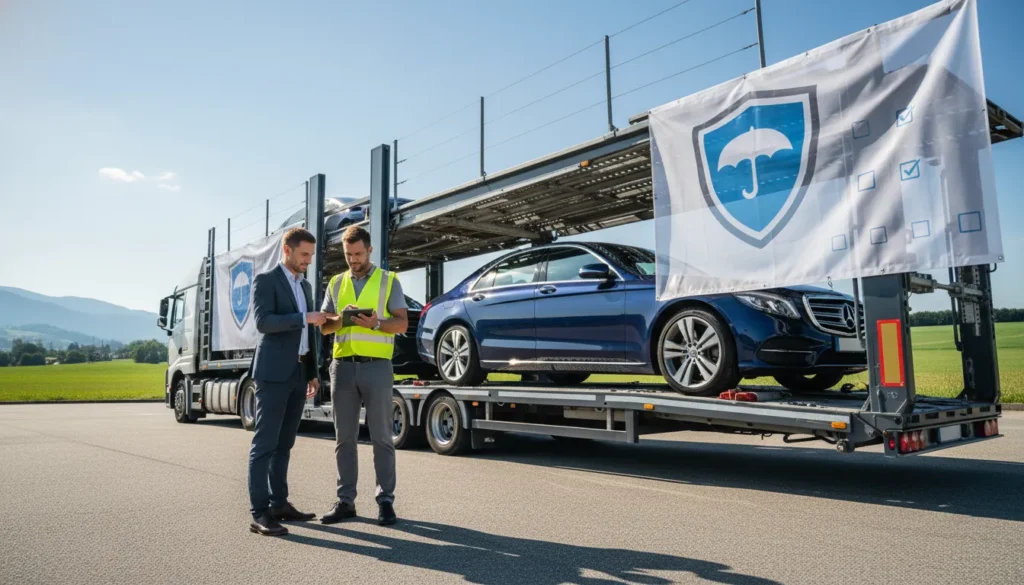
Car shipping insurance is one of the most important details to understand before a vehicle is loaded onto a transport truck. It generally refers to the assigned motor carrier’s cargo coverage for qualifying damage that happens while the vehicle is in the carrier’s care. The exact protection depends on that carrier’s active policy, including its limits, deductible, exclusions, and claims rules.
Request a custom vehicle shipping quote and ask about the assigned carrier’s coverage before pickup.
Road Runner Vehicle Transports is an auto transport broker. We help connect customers with carriers and coordinate shipments, while the assigned carrier’s policy governs the coverage available during transport. Before pickup, review the carrier’s insurance certificate and written terms rather than relying on a general promise that a shipment is insured. Learn more about Road Runner’s broker role and credentials.
This guide explains the roles involved, the questions to ask, how to create strong inspection records, and what to do if you notice new damage at delivery.
What does car shipping insurance cover?
In most domestic auto transport arrangements, the motor carrier is the party physically moving the vehicle. Its cargo policy may respond when a covered event causes direct physical damage to the vehicle during the covered transit period. However, a certificate of insurance is only a starting point. It proves that a policy was issued, but it does not explain every term that could affect a claim.
Cargo coverage versus liability coverage
Cargo coverage and general liability coverage serve different purposes. Cargo coverage is the policy most directly associated with damage to property being transported. General liability typically addresses certain third-party injury or property-damage risks related to business operations. Ask specifically about cargo coverage for your vehicle, not simply whether the company has insurance.
Coverage depends on the assigned carrier
Policies differ between carriers. Coverage can vary by the type of trailer, route, vehicle value, cause of damage, and policy language. Never assume a limit or deductible based on another shipment. Request current documents for the carrier assigned to your order and confirm that the carrier identity matches the company arriving at pickup.
When coverage usually begins and ends
The bill of lading and policy terms help define the shipment and inspection record. Coverage commonly relates to the time when the carrier takes custody through delivery, subject to the actual contract and policy. Ask when responsibility begins, when it ends, and whether storage, terminals, or other handoffs affect the terms.
Carrier coverage, broker support, and your auto policy
Several parties may be involved in a shipment, and each has a different role. Understanding those roles prevents confusion if you need documents or want to report a concern.
| Party | Primary role | What to verify |
|---|---|---|
| Motor carrier | Physically transports the vehicle and maintains the policy governing carrier cargo coverage | Carrier identity, active certificate, limits, deductible, exclusions, and claims contact |
| Auto transport broker | Connects the customer with a carrier and helps coordinate the shipment | Assigned carrier details, shipment communications, and where to direct coverage questions |
| Your auto insurer | Provides your personal vehicle policy | Whether your policy offers any protection during commercial transport and how a claim could affect you |
Road Runner’s role as a broker
Road Runner Vehicle Transports helps arrange transportation with a carrier. As a broker, Road Runner does not replace the carrier’s cargo policy or set that policy’s terms. We can help customers understand the shipping process and identify the assigned carrier, but the carrier’s written policy determines whether a particular loss is covered.
Your personal auto policy may be separate
Do not assume your personal auto policy automatically covers commercial transport, or that it never does. Contact your insurer before pickup and ask how your policy treats a vehicle in transit. Ask about deductibles, exclusions, notification requirements, and whether the insurer would coordinate with a carrier’s insurer after a covered loss.
How do you verify car shipping insurance before pickup?
Insurance verification should happen before the truck arrives. Give yourself enough time to read the information and ask questions without delaying pickup.
- Request the carrier’s current certificate. Check the named insured, insurer, policy dates, and cargo coverage information.
- Match the carrier’s identity. Confirm the legal carrier name on the certificate matches the assigned company and pickup paperwork.
- Ask for relevant policy terms. A certificate alone may not show exclusions, deductibles, valuation rules, or claim deadlines.
- Confirm the limit applies to your vehicle. Ask whether limits apply per vehicle, per load, or per event, and whether your vehicle’s stated value affects coverage.
- Review exclusions and special conditions. Discuss personal items, aftermarket parts, non-running vehicles, high-value cars, weather events, and any other concern specific to your shipment.
- Save the claims contact. Keep the carrier’s reporting instructions, insurer contact information, and your shipping documents together.
Questions worth asking in writing
- Coverage: What cargo coverage is active for this shipment?
- Deductible: Is there a deductible, and who is responsible for it?
- Exclusions: Are there exclusions that apply to this vehicle or route?
- Evidence: What documents are required to submit a claim?
- Deadline: How quickly must damage be reported?
- Repairs: Should repairs wait until an adjuster reviews the vehicle?
Written answers create a clearer record than a phone conversation alone. Save emails, texts, the quote, order confirmation, certificate, and bill of lading in one folder.
Get your vehicle shipping quote and start the carrier-verification conversation before transport day.
Common exclusions and coverage limits to review
Car shipping insurance is not the same as an unlimited guarantee against every loss. Exact exclusions vary, so read the assigned carrier’s terms and Road Runner’s terms and conditions. The following issues frequently deserve closer review.
Personal belongings inside the vehicle
A vehicle cargo policy may not protect household goods or personal property left in the car. Loose items can also move during transit and damage the interior. Remove personal belongings before pickup unless your written shipment instructions expressly allow specific items.
Pre-existing and mechanical damage
Existing scratches, dents, paint defects, fluid leaks, and mechanical problems generally are not new transit damage. A carrier may also distinguish between external impact damage and a mechanical failure that occurs without an insured event. Accurate pickup photos and a detailed bill of lading help separate old conditions from a new issue.
Weather, road debris, and force majeure language
Policies and contracts can treat hail, flooding, road debris, and events outside the carrier’s control differently. Ask how these risks are addressed, especially when shipping during severe weather seasons. If you are transporting a rare, restored, or high-value vehicle, discuss the available transport options when requesting a quote.
Aftermarket equipment and vehicle value
Modified suspensions, custom wheels, spoilers, roof racks, and other aftermarket parts can affect loading and risk. Disclose modifications before booking. Also ask how the policy values a vehicle after a covered loss and whether additional documentation is needed for a collector or unusually valuable car.
How should you document your vehicle?
Good documentation establishes the vehicle’s condition immediately before and after transportation. It cannot guarantee a claim outcome, but it can make the facts much easier to evaluate.
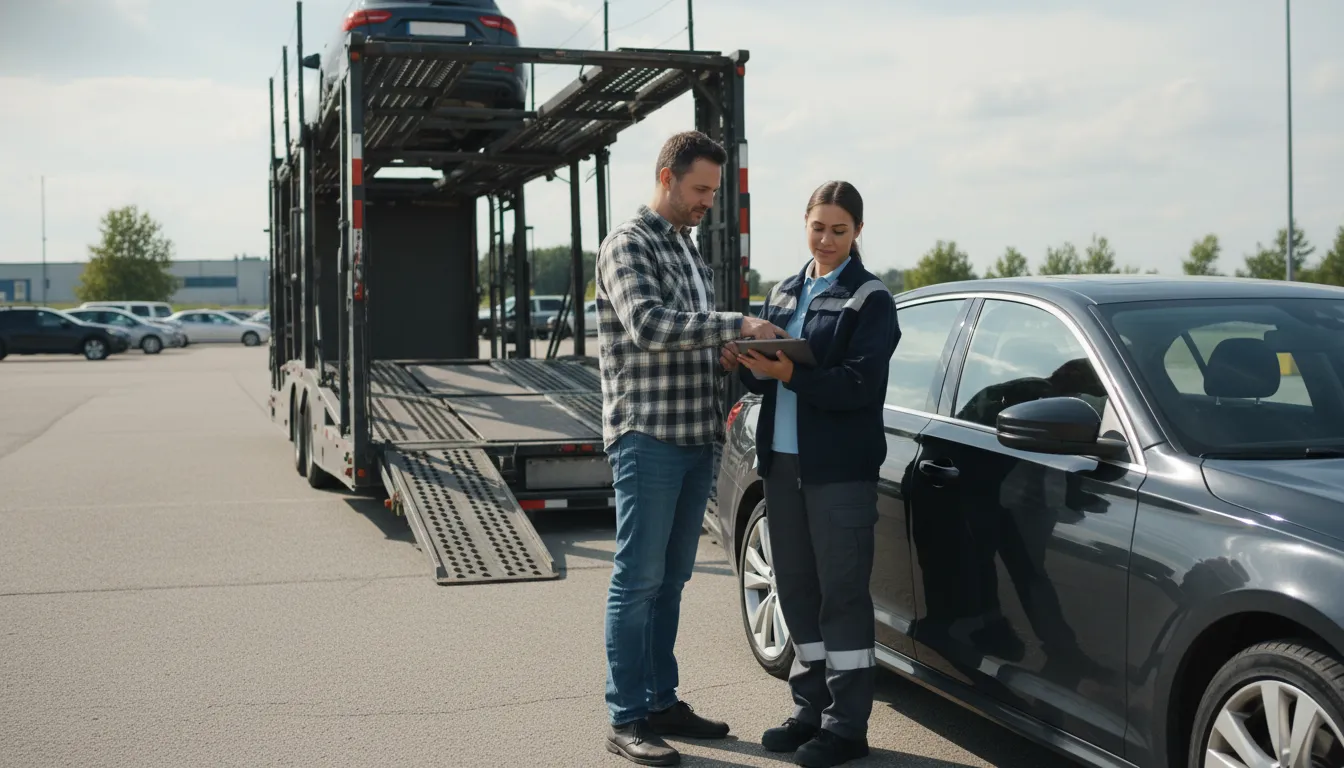
Prepare for a clear inspection
Wash the exterior so existing scratches, chips, and dents are visible. Remove personal belongings and secure or remove loose accessories. Note mechanical concerns, low ground clearance, alarms, modifications, and anything the driver needs to know for safe loading.
Take a complete set of pickup photos
Photograph every side of the vehicle in good light. Capture the front, rear, both sides, roof when practical, wheels, glass, and interior. Add closeups of existing damage and take a slow walkaround video. Include the odometer and fuel level. Keep the original files with their timestamps and avoid editing them.
Review the pickup bill of lading
The driver normally records existing condition at pickup. Walk around the vehicle with the driver and compare every notation with what you see. Add missing marks before signing. Save a readable copy of the completed pickup inspection and do not rely only on memory.
Inspect carefully at delivery
Whenever possible, arrange delivery during daylight or in a well-lit location. Compare the vehicle with your pickup photos and inspection report before signing the delivery paperwork. Look at body panels, bumpers, glass, wheels, roof, and underbody areas you can safely inspect. If you find a new issue, photograph it and note it clearly on the bill of lading before signing.
What should you do if your vehicle is damaged?
If you notice possible transit damage, stay calm and build a clear record. Prompt, organized reporting gives the carrier and insurer the information needed to evaluate the claim.
Document the issue before the carrier leaves
Take wide photos showing the vehicle and delivery setting, then closeups from several angles. Compare the area with your timestamped pickup images. Write specific damage on the delivery bill of lading. Do not sign a clean delivery receipt if you are reporting visible new damage.
Notify the proper parties promptly
Follow the reporting instructions in the carrier’s paperwork and policy. Notify the carrier and the appropriate claims contact as soon as practical. You can also inform Road Runner so the team knows there is a concern and can help clarify the relevant shipment contacts. The carrier’s policy and insurer govern the claim decision.
Submit a complete claim package
A claim package may include the order confirmation, pickup and delivery bills of lading, before-and-after photos, written description, repair estimates, and proof of vehicle value. Provide requested documents promptly and keep copies of everything submitted. Ask for a claim number and confirm the next step in writing.
Avoid premature repairs
Do not begin non-emergency repairs until you understand the inspection requirements. An insurer may need to inspect the damage or approve an estimate first. If immediate work is necessary to prevent additional damage or address safety, document the condition thoroughly, retain receipts, and communicate promptly.
Ways to reduce risk during vehicle transport
The best approach combines careful carrier verification with practical preparation. Start by providing accurate details about the vehicle, including operability, modifications, dimensions, and value concerns. Surprises at pickup can create avoidable delays or loading problems. Browse more car shipping guides and resources as you prepare.
Choose a transport method that fits the vehicle
Open car transport is a common option for everyday vehicles. Enclosed transport adds protection from direct exposure and may suit exotic, classic, restored, or high-value vehicles. The right choice depends on the vehicle and your preferences, not on a claim that one method eliminates every risk.
Keep communications and records together
Save your quote, carrier details, insurance documents, inspection photos, bills of lading, and delivery messages in one place. Make sure the person accepting delivery understands the inspection process and has access to the pickup record.
Do not skip the final inspection
Rushing at delivery is one of the easiest ways to lose useful evidence. Plan enough time to inspect the vehicle before the driver leaves. If weather or darkness makes inspection difficult, note that circumstance on the paperwork and take the best photos possible.
Frequently asked questions about car shipping insurance
Is insurance included when shipping a car?
The assigned motor carrier should maintain required coverage, but the exact cargo protection for your shipment depends on its active policy and contract. Ask for the current certificate and relevant written terms before pickup.
Does my personal auto insurance cover vehicle shipping?
It depends on your policy. Contact your auto insurer and ask specifically about commercial vehicle transport, deductibles, exclusions, and reporting procedures. Do not assume coverage without confirmation.
Who pays if a car is damaged during transport?
Responsibility depends on the facts, contract, and applicable policies. Document damage immediately and submit it through the carrier’s claims process. The insurer evaluates whether the event and damage are covered.
What is the bill of lading?
The bill of lading is a key shipping document that records shipment details and vehicle condition at pickup and delivery. Review it carefully, add accurate damage notes, and retain copies.
Should I leave belongings in my vehicle?
It is generally safest to remove personal belongings. Carrier policies may exclude them, and loose items can cause damage. Follow the written instructions for your shipment.
Request a custom vehicle shipping quote
Clear expectations begin before pickup. Road Runner Vehicle Transports can help coordinate your shipment and connect you with an assigned carrier, while you review the carrier-specific coverage details that apply. Request a custom vehicle shipping quote to start planning your transport.