
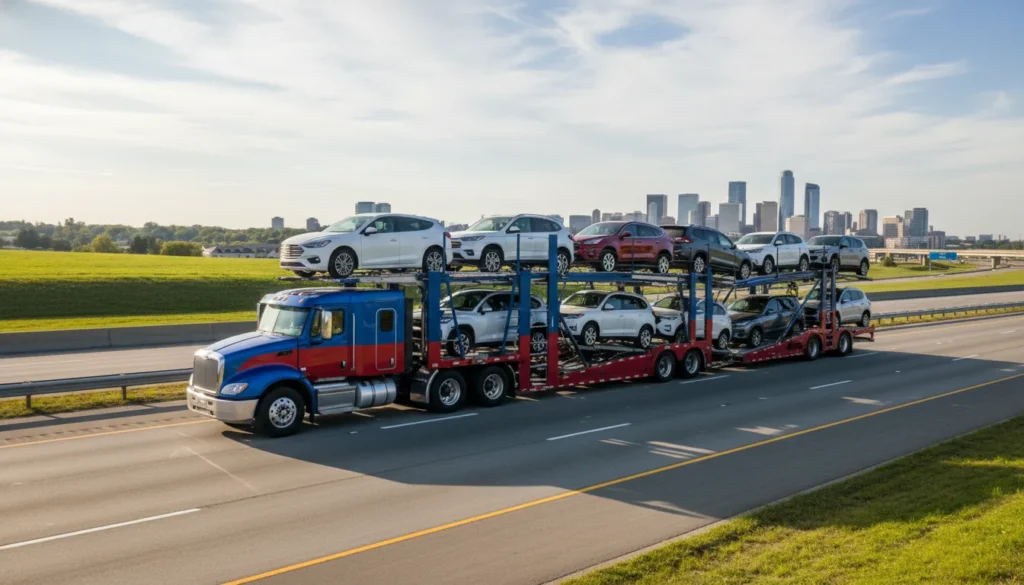
The company booking your shipment may never touch your vehicle, and that is often the point. Knowing who arranges the move and who drives the truck helps you judge price, protection, and communication before pickup.
Request your vehicle shipping quote from Road Runner.
An auto transport broker arranges vehicle shipping between a customer and motor carrier, but does not operate the truck or physically move the vehicle. The broker vets available carriers, coordinates dispatch, explains market-based pricing and payment, and manages communication when schedules or delivery plans change. The motor carrier supplies the driver and equipment, transports the vehicle, and maintains the cargo insurance that generally handles damage liability during transit. The FMCSA defines brokers as intermediaries that arrange transportation without operating vehicles or assuming responsibility for the cargo being transported. Because brokers and carriers hold separate operating authority, customers should independently verify both licensed parties with the FMCSA before booking a vehicle shipment.
Choosing between a broker and a carrier starts with knowing which party controls each part of your move and who answers when plans change. Next comes the key question, What does an auto transport broker do? Its answer shows who manages pricing, vetting, dispatch, and updates before a carrier loads your vehicle. Here’s how.
What does an auto transport broker do?
An auto transport broker arranges vehicle shipping between a customer and an independent motor carrier. The broker does not drive the truck or move the vehicle. Instead, the broker coordinates pricing, carrier vetting, dispatch, and communication so the shipment can move as planned.
The link between customer and carrier
The broker manages the details needed to connect each shipment with a suitable carrier.
This role is different from the carrier’s role. The Federal Motor Carrier Safety Administration defines a broker as the middle person who arranges transport without operating the vehicle. A motor carrier owns or operates the equipment used for the physical move.
Coordination from quote to delivery
A broker first gathers key facts about the shipment. These include the pickup and delivery locations, vehicle details, preferred dates, and service type. The broker then looks for an independent carrier that serves the route and can meet those needs.
Vetting is a key part of that search. The broker checks carrier authority, safety information, insurance compliance, and reliability before dispatch. Road Runner uses this process to match customers with vetted independent carriers. Its licensed auto transport broker page explains the company’s role.
- Review the shipment details and explain available transport options.
- Seek a qualified independent carrier for the requested route and timing.
- Confirm dispatch details and help keep communication clear during the move.
- Support the customer if questions arise before pickup or after delivery.
What the customer handles
The customer must provide correct contact, vehicle, pickup, and delivery information. They also need to share any changes that affect loading, such as an inoperable vehicle. Clear details help the broker find a carrier with the right equipment and plan.
Before pickup, the customer should remove personal items as directed. The vehicle also needs to be ready for inspection. An adult must be available for pickup and delivery unless another plan is confirmed.
The carrier handles the physical move, equipment, and cargo insurance, while the broker stays focused on coordination. The customer should review the quote, payment terms, and carrier details before dispatch. Asking questions early helps prevent confusion about timing or service.
Service choice is another customer decision. For example, choosing Enclosed Auto Transport changes the equipment needed. It should be discussed before a carrier is assigned.
What does a motor carrier do?
A motor carrier physically moves the vehicle. It operates the transport truck, provides the driver, manages loading and transit, documents vehicle condition, and carries the cargo insurance associated with the trip.
The carrier’s core role
The Federal Motor Carrier Safety Administration defines a motor carrier as a company that operates commercial motor vehicles to transport property or passengers.
In auto shipping, the carrier accepts a vehicle for a set route and takes custody during transit. Its hands-on work starts at pickup and ends when the vehicle is delivered. That direct role sets it apart from an auto transport broker. The broker arranges the move but does not drive the truck.
Pickup, inspection, and transport
At pickup, the driver checks whether the location has enough room for safe truck access. If a large transport truck cannot enter, the driver and customer may agree on a nearby meeting point. The driver then inspects the vehicle and records its visible condition before loading it.
The carrier supplies and operates the trailer, tie-downs, ramps, and other gear needed for the move. Its driver loads the vehicle, secures it, and transports it along the assigned route. The equipment depends on the service, such as Open Auto Transport or enclosed shipping.
During transit, the carrier manages the truck, route, and safe handling of the vehicle. It also holds the cargo insurance tied to the physical transport. The broker coordinates with the carrier and customer. Still, the carrier remains responsible for the truck and the vehicle in its care.
Delivery and final inspection
At delivery, the driver unloads the vehicle at the agreed location when access allows. The customer and driver inspect it again, using the pickup condition record as their point of reference. Both parties should note any new damage before signing the delivery paperwork.
The final inspection gives the customer and driver a shared record of the vehicle’s condition. Customers should take time to look over the exterior before accepting delivery. Clear notes at pickup and delivery make it easier to compare the vehicle’s condition.
This split in duties helps explain who handles each part of a shipment. The carrier performs pickup, transport, and delivery. A licensed auto transport broker handles carrier vetting, dispatch, scheduling, and communication rather than the physical move.
Auto transport broker vs carrier at a glance
An auto transport broker arranges the shipment, while a motor carrier moves the vehicle. The broker finds and vets a carrier for your route. The carrier supplies the truck, driver, and equipment used for pickup and delivery.
The core difference
The Federal Motor Carrier Safety Administration defines a broker as the middle person between a shipper and motor carrier. A broker does not operate the truck or transport the vehicle. A carrier operates commercial vehicles and performs the physical move.
Each business also holds authority tied to its role. A broker uses broker authority to arrange transport, then checks the selected carrier’s authority and insurance. Road Runner Vehicle Transports is a licensed auto transport broker, not the carrier that drives the truck.
Side-by-side comparison
The table shows who handles each part of a typical shipment. Knowing these lines helps you direct questions, review charges, and understand which company is responsible at each stage.
| Comparison point. | Auto transport broker. | Motor carrier. |
|---|---|---|
| Operating authority. | Uses broker authority to arrange transport. | Uses motor carrier authority to haul vehicles. |
| Vehicle and equipment ownership. | Does not supply the transport truck or driver. | Supplies the truck, trailer, driver, and loading gear. |
| Insurance and claims. | Checks the carrier’s insurance before dispatch. | Carries the cargo insurance tied to the physical move. |
| Pricing and payment. | Builds the quote, coordinates market pricing, and charges a service fee. | Accepts the dispatched transport rate, often paid at delivery. |
| Communication. | Coordinates booking, dispatch, carrier selection, and issue support. | Confirms pickup, delivery, access details, and driving updates. |
| Key agreements. | Provides the customer booking or broker service agreement. | Provides the bill of lading for condition checks and delivery. |
Pricing reflects the route, vehicle, timing, and available carrier capacity. The broker presents the quote and explains how payment is split. The carrier agrees to the dispatched transport rate before pickup. This setup lets the broker search beyond one fleet when route needs change.
Agreements and responsibility
The customer usually accepts the broker’s booking terms before dispatch. Those terms cover the arranged service, price structure, and payment duties. The broker and selected carrier then confirm the dispatch terms for the route.
At pickup, the carrier and customer review the vehicle and sign the bill of lading. They repeat that review at delivery and note any new damage before signing. The carrier’s cargo policy generally handles damage tied to the physical move. The broker helps coordinate the claim process.
Communication may also shift as the shipment moves forward. Before dispatch, the broker is the main contact for scheduling and carrier selection. After pickup, the carrier can give the most direct update on driving progress and delivery access.
How broker and carrier pricing works
An auto transport quote can include the carrier’s transport pay and the broker’s service fee. Carrier pay covers the truck, driver, equipment, fuel, and physical move. The broker fee covers coordination, carrier screening, dispatch, and communication throughout the shipment.
The two-part price
The payment schedule should clearly state what is due to the broker, what remains due to the carrier, and when each amount must be paid.
The FMCSA defines a broker as the middle person between a shipper and motor carrier, not the company operating the truck. That distinction explains why an auto transport broker prices coordination separately from the carrier’s work.
Ask for a clear payment breakdown before booking. It should show what goes to the broker and what remains due to the carrier. Carrier transport fees are often paid at delivery, while the broker service fee is paid separately.
Factors that shape carrier pay
There is no useful fixed rate for every vehicle and route. Carrier pay responds to the details of each shipment and current demand. A strong quote reflects the actual job rather than a low price meant only to gain attention.
- Route and distance: Popular lanes may have more available trucks, while remote pickup or delivery points can limit options.
- Timing: A flexible pickup window gives the broker more room to match the vehicle with a suitable carrier. Expedited moves narrow that window.
- Vehicle size: Larger or heavier vehicles use more trailer space and may need different equipment.
- Operability: A vehicle that cannot run, steer, brake, or roll may require added loading tools and planning.
- Transport type: Open transport and enclosed transport use different equipment and serve different protection needs.
These details help the broker find a carrier that can perform the move as described. They also help prevent a mismatch at pickup. Customers comparing brokers should look for clear assumptions behind each quote.
When a quote may change
A quote may change when the shipment details change or the carrier market shifts before dispatch. Common triggers include a new pickup date, a different address, or an inaccurate vehicle description. Switching from open to enclosed transport can also change the price.
Carrier availability matters because brokers arrange transport with independent motor carriers. If few suitable carriers serve a route during the requested window, the offered carrier pay may need adjustment. The broker should explain that change before the customer accepts it.
Transparency starts with accurate information. Share the vehicle’s year, make, model, condition, pickup location, delivery location, and timing needs. Then confirm which charges are included, when each payment is due, and whether the price is estimated or confirmed.
How to verify authority and insurance
Verifying a company before booking helps you understand who will arrange the shipment and who will move the vehicle. An auto transport broker coordinates the move, while an assigned motor carrier provides the truck, driver, and cargo coverage. These checks also help you spot unclear terms before handing over your keys.
A five-step verification check
Ask the broker for its legal company name, USDOT number, and MC number. Then use those details to complete this check before you sign or pay:
-
Search the company’s federal record and confirm that its broker authority is active. The legal name on the record should match your paperwork.
-
Confirm whether the company is acting as a broker or carrier. The FMCSA defines a broker as an intermediary that arranges transport rather than moving the property itself.
-
Ask for the assigned carrier’s legal name, USDOT number, MC number, and insurance certificate. Check that the policy is current for your pickup date.
-
Review the carrier certificate for cargo coverage, policy dates, limits, exclusions, and the insurer’s contact details. Ask how a damage claim would be filed.
-
Compare every company name and number across the quote, contract, dispatch notice, and insurance certificate. Pause if the records do not match.
Broker security versus carrier insurance
Broker financial security and carrier cargo insurance serve different roles. Federal rules require brokers to maintain financial security for unpaid freight charges, not to cover vehicle damage. The FMCSA states that brokers must maintain at least $75,000 in financial security.
The motor carrier physically transports the vehicle and provides the cargo policy tied to that move. A careful licensed auto transport broker checks carrier authority and insurance before dispatch. Still, customers should request the carrier’s certificate and read its terms for themselves. They should also confirm whether deductibles or exclusions could affect a claim.
Contracts and inspection reports
Read the broker agreement and carrier paperwork before pickup. Check the quoted price, payment timing, cancellation rules, claim steps, and each party’s stated duties. Ask for written answers when a term is unclear. A phone promise may not appear in the signed agreement.
At pickup, inspect the vehicle with the driver and make sure existing damage is recorded on the inspection report. Take clear, dated photos from several angles and keep copies of all signed records. At delivery, inspect again before signing, then note any new damage on the report.
Who communicates with you during shipment?
Communication changes as your vehicle moves from booking to delivery. Before a carrier is assigned, your auto transport broker is your main contact. The FMCSA defines a broker as the middle person who arranges transport between a shipper and a motor carrier.
Before carrier assignment
Contact the broker for quote details, route changes, vehicle updates, or questions about timing. The broker handles logistics, checks available carriers, and explains what must happen before dispatch. At this stage, there is no assigned driver to call.
Once the broker confirms a carrier, ask for the carrier’s company name and the driver’s contact details. You should also confirm the pickup window, delivery estimate, and payment terms. Clear written details help you understand this handoff.
Get a clear Road Runner quote for your route and vehicle.
Pickup and in-transit updates
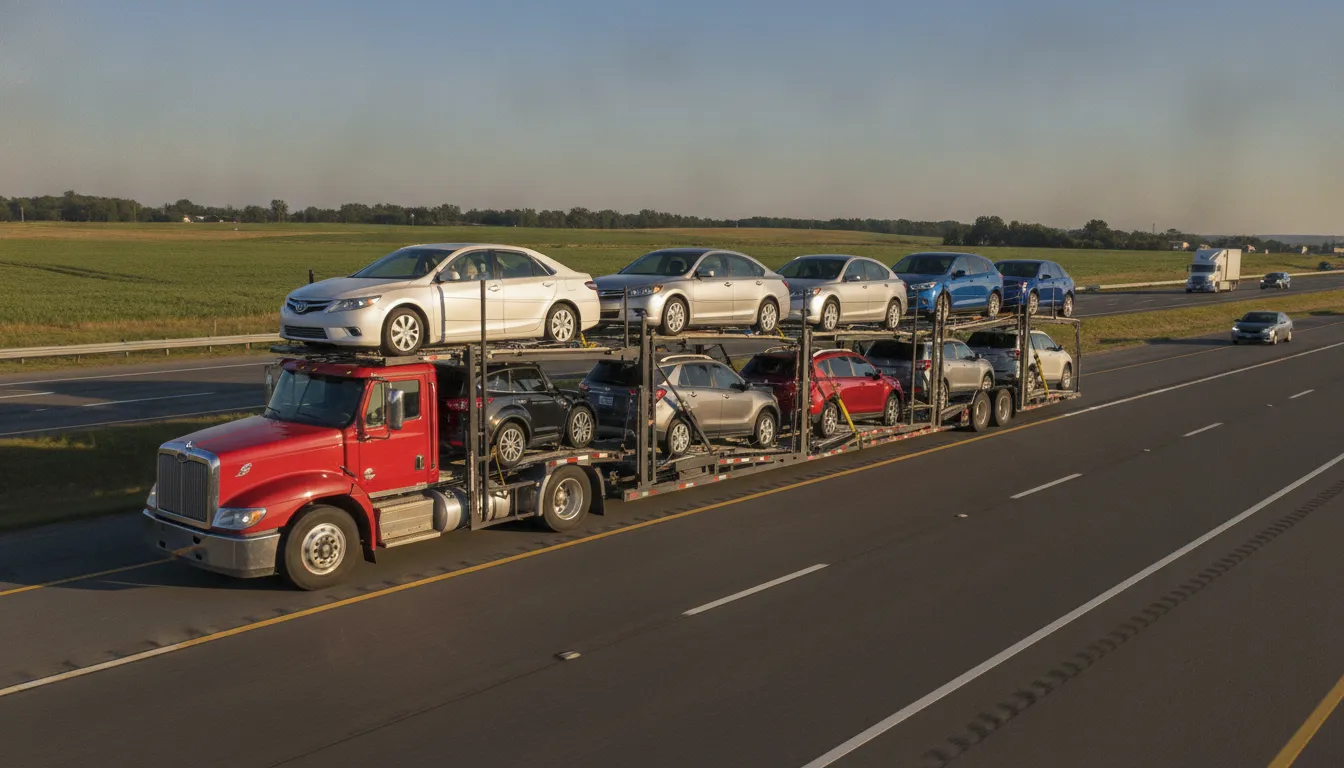
The assigned driver usually becomes the best contact for pickup coordination. Call the driver about safe meeting points, local access limits, or a short arrival delay. Contact the broker if the driver misses the pickup window or if shipment details do not match your order.
- Call the driver: For arrival timing, meeting location, road delays, and practical pickup or delivery questions.
- Call the broker: For order changes, carrier concerns, payment questions, or help when you cannot reach the driver.
During transit, drivers may not answer while driving. Leave a clear message and allow time for a safe reply. If the matter is urgent or contact stops, ask the broker to follow up with the carrier.
Delivery and issue reporting
Near delivery, the driver should coordinate the arrival time and location with you. Ask the driver about access for the transport truck and any final payment due. For door-to-door shipping, the meeting point may need to change if the street is unsafe or restricted.
At delivery, inspect the vehicle with the driver before signing the final paperwork. Note any new damage on the delivery record and keep photos. Raise the issue with the driver at once, then contact the broker for guidance on the carrier’s claim process.
Keep both contact numbers until the shipment is complete. The driver handles the truck and physical handoff, while the broker helps manage the overall order. When unsure whom to call, start with the broker, who can route the question to the right party.
How to choose a reliable auto transport broker
Choose a reliable auto transport broker by verifying active authority, asking how carriers are screened, reviewing the written quote and payment schedule, and confirming who communicates with you at each stage. Clear answers before booking reduce surprises after dispatch.
Verify the broker and carrier
Start by confirming whether the company is a broker, carrier, or both. The FMCSA defines a broker as the middle person who arranges transport but does not operate the truck. This distinction matters. The broker coordinates the move, while the assigned carrier physically hauls the vehicle.
Ask for the broker’s legal business name and active operating authority. Then request the assigned carrier’s name, authority details, and cargo insurance certificate before pickup. Check that the policy is current and that your vehicle type is covered. A careful broker should explain how it vets carriers and handles insurance checks.
Do not rely on a company name or website alone. Compare the details in your order with the details provided for the assigned carrier. Ask who will answer questions during transit and who will handle a damage claim. Clear answers show that the broker understands each party’s role.
Review the quote and written terms
A reliable auto transport broker explains what affects the quote and avoids promises that sound too good to be true. Ask whether the price includes the broker fee, carrier payment, fuel, tolls, and added charges. Road Runner is transparent about operating as a licensed auto transport broker that connects customers with independent carriers.
Read the order terms before paying or signing. They should state the pickup and delivery windows, cancellation rules, payment timing, and each party’s duties. Confirm which amount goes to the broker and which amount goes to the carrier. Get any price change in writing before accepting it.
- Request an itemized quote with clear payment terms.
- Ask whether pickup and delivery dates are estimates or guarantees.
- Confirm the carrier and insurance details before releasing the vehicle.
- Keep the signed agreement, inspection reports, and payment records.
Test communication before booking
Pay attention to how the broker answers basic questions. A dependable team gives direct replies, explains uncertainty, and shares a clear contact method for the move. It should also tell you when the carrier has been assigned and what to expect at pickup.
Ask one or two detailed questions before booking. For example, ask what happens if a carrier cancels or the pickup window changes. The response should explain the next steps without avoiding the issue. Realistic promises are more useful than a firm date that cannot be supported.
Red flags include pressure to pay at once, vague written terms, and refusal to share authority or insurance details. Be cautious with a quote far below other offers. It may not attract a carrier for your route. Choose clear terms, realistic timing, and steady communication instead of the lowest headline price.
Frequently Asked Questions
How do auto transport brokers determine pricing?
Auto transport brokers estimate pricing from the route, distance, vehicle size and condition, transport method, timing, and current carrier demand. A broker then seeks an available carrier willing to accept the shipment at that rate. The total may include a broker service fee and a separate carrier transport fee, so customers should ask when each amount is due.
Are auto transport brokers required to carry insurance?
Brokers and motor carriers have different financial responsibilities. A carrier’s cargo insurance generally covers the vehicle during transport, while a broker must maintain required financial security. Under the FMCSA financial responsibility rules, brokers must maintain at least $75,000 in available security. Customers should confirm the assigned carrier’s active cargo coverage before pickup.
What is the role of an auto transport broker in vehicle tracking?
An auto transport broker coordinates communication among the customer, dispatcher, and assigned motor carrier. The broker can request pickup, transit, and delivery updates, then relay them to the customer. The carrier or driver has the most direct knowledge of the vehicle’s location and road conditions. Tracking methods and update frequency can vary, so customers should confirm the communication plan before pickup.
Do auto transport brokers own their own fleet of trucks?
Auto transport brokers generally do not own the trucks or employ the drivers that move vehicles. They arrange shipments with independent motor carriers that operate the equipment. The FMCSA definitions distinguish brokers, which arrange transportation, from motor carriers, which operate commercial vehicles. Some companies may hold both authorities, so customers should verify the role listed in their agreement.
How do auto transport brokers differ from motor carriers?
An auto transport broker arranges the shipment, identifies and vets available carriers, coordinates dispatch, and manages customer communication. A motor carrier supplies the truck and driver, physically transports the vehicle, and carries cargo insurance for the trip. Because these roles involve different responsibilities, customers should know which company is the broker and which carrier will handle the vehicle.
Ready to Request Your Vehicle Shipping Quote?
Waiting to plan your shipment can leave less time to compare options, confirm responsibilities, and prepare your vehicle for pickup. Starting now gives you more time to share your route, schedule, vehicle details, and preferred transport method before pickup approaches. Clear information early helps your broker coordinate with a motor carrier and keeps expectations aligned before your vehicle begins its trip.
Take the next step while you still have time to review the shipping plan and ask questions about your move.
Request a vehicle shipping quote from Road Runner Vehicle Transports.
Share your preferred dates, pickup and delivery locations, and vehicle details so the team can review your request and explain what comes next.