The few minutes spent inspecting your car can decide whether a later damage claim succeeds. Your bill of lading turns that inspection into the written record both you and the carrier sign.
A car shipping bill of lading is the legal transport document, vehicle receipt, and condition report used from pickup through delivery. The U.S. government explains that a bill of lading serves as a document of title, contract of carriage, and receipt for goods. For vehicle shipping, it records shipment details and existing damage at pickup, then provides the baseline for checking the car again at delivery. Before signing either inspection, review every marked scratch or dent, add clear written notes, and take dated photos that show the vehicle from several angles. If you find new damage at delivery, write it on the bill before signing and keep your copy for a claim with the carrier’s insurance.
To use the form well, you first need a clear answer to “What is a car shipping bill of lading?” and why it matters. Then we can walk through pickup inspections, delivery checks, signatures, photos, written notes, and damage claims.
What is a car shipping bill of lading?
A car shipping bill of lading, often called a BOL, is the main transport record for a vehicle shipment. It serves as a receipt, records shipping terms, and captures the vehicle’s condition at pickup and delivery. A bill of lading also establishes transport terms between a shipper and a transportation company.
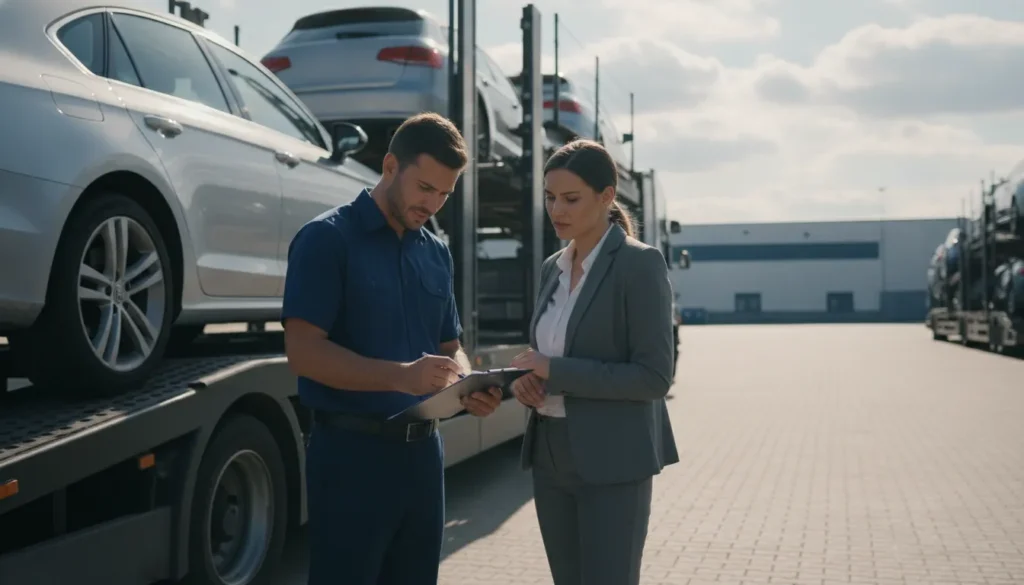
The driver and customer review the BOL during the pickup inspection. They use it again at delivery to compare the vehicle’s condition with the earlier record. The exact terms and duties depend on the shipment documents and the parties involved.
The shipment receipt
As a receipt, the BOL shows that the carrier took possession of the vehicle for transport. It commonly lists the pickup and delivery contacts, vehicle details, route information, and carrier information. This record helps everyone confirm which vehicle entered the carrier’s care.
The BOL may also note shipment instructions and payment details. Customers should review every field before signing and ask for corrections when something is wrong. Keeping a clear copy of the signed document makes later checks easier.
The condition report
The condition report creates a shared record of the vehicle before loading. During the inspection, the driver marks visible scratches, dents, chips, and other existing damage. Photos can support the written record, but they do not replace careful documenting of vehicle condition on the BOL.
At delivery, the customer should inspect the vehicle before accepting it. The pickup notes provide the baseline for spotting any change. Any new damage should be written on the delivery BOL before it is signed.
Carrier and broker roles
The carrier transports the vehicle, and its driver completes the inspection record with the customer. The carrier also controls the truck and handles the vehicle while it is in transit. If damage is found, the BOL helps show what changed between pickup and delivery.
A broker arranges transport between the customer and an independent carrier. The broker can help coordinate communication and guide the customer through the next steps. It does not own the carrier’s truck or replace the carrier’s insurance process.
The BOL is important evidence, but it does not promise a specific claim result or create a delivery guarantee. Customers should read the document, keep their copy, and take time when inspecting the car upon delivery. Clear notes give the carrier, broker, and customer a common record to review.
What information does the bill of lading record?
A car shipping bill of lading records who is involved, what vehicle is moving, and its condition during handoff. It also gives the carrier and customer one shared record to review. Each entry should be clear enough to compare at delivery.
Shipment and vehicle details
The shipment details usually name the customer, carrier, pickup contact, delivery contact, and both locations. The person named to receive the vehicle is the consignee under federal law. The document may also show an order number and the pickup date.
Vehicle details tie the record to the correct car. Common entries include the year, make, model, color, VIN, license plate, and odometer reading. Check these fields before the vehicle is loaded.
Condition reports at both ends
At pickup, the driver inspects the vehicle and marks existing damage on the bill of lading. Notes may cover scratches, dents, chips, or other visible flaws. Photos can support the written condition record.
| Record item | Pickup entry | Delivery entry | Customer action |
|---|---|---|---|
| Vehicle identity | VIN and vehicle details | Identity confirmed | Check for errors |
| Exterior condition | Existing flaws marked | Condition compared | Inspect all sides |
| Odometer | Pickup reading | Delivery reading | Review both readings |
| Exceptions | Pickup concerns noted | New concerns noted | Write details before signing |
| Acceptance | Pickup signature | Delivery signature | Keep a copy |
At delivery, compare the car with the pickup notes before signing. When inspecting your car upon delivery, look in good light and check each marked area. Record any new concern on the delivery bill of lading at once.
Signatures and exceptions
Pickup and delivery signatures confirm the condition written on the document at each handoff. Read every note first, since a blank exception area can suggest no new issue was reported. Ask for a clear copy after each signature.
An exception is a written note about damage, a missing item, or another concern found during inspection. Describe its location and type in plain terms, then add supporting photos. Careful documentation of vehicle condition creates a clearer record if questions arise later.
How to inspect your vehicle at pickup
A careful pickup inspection creates the condition record used when the vehicle reaches its destination. The car shipping bill of lading is more than a checklist. A federal export guide explains that a bill of lading can serve as a receipt, contract of carriage, and document of title.
Your goal is to make the pickup record clear enough for another person to understand later. Small flaws matter because a missed mark can create doubt at delivery. Slow down, inspect in a set order, and make sure the written record matches what you see.
Prepare for a clear inspection
Wash the exterior before pickup so dirt does not hide chips, dents, or scratches. Remove personal items, disable alarms, and park in a bright, open area. If pickup happens after dark, use a strong flashlight and check each surface from more than one angle.
Keep your phone charged and leave enough time to work without rushing. Ask the driver to join you during the walkaround. Both parties should see the same condition and agree on each written note.
Pickup inspection checklist
Use the same route around the vehicle each time. This simple habit helps you inspect every area and match your photos to the written report. Open doors only when it is safe and check edges that are easy to miss. Use close photos to show detail and wide photos to show location.
- Begin at the front bumper and walk around the vehicle in one direction. View each side from a standing position and from a lower angle.
- Inspect the windshield, windows, mirrors, headlights, and taillights. Look for cracks, chips, scratches, moisture, or broken parts.
- Examine each body panel, including the roof, hood, trunk, doors, and bumpers. Note every dent, chip, scrape, stain, and patch of rust.
- Check all four wheels, tires, rims, and wheel covers. Look closely for curb rash, cuts, missing pieces, and damage already present.
- Record the odometer mileage and photograph the dashboard while the vehicle is running, when possible. Note warning lights, fuel level, and any issue already present.
- Take wide photos of every side, then capture close views of existing damage. Include clear shots of the roof, glass, wheels, and lower panels.
- Match every written mark on the condition diagram to the correct spot. Use clear terms and add notes when a mark alone could cause doubt.
Review the record before signing
Compare your photos with the driver’s written entries before the vehicle is loaded. This review is a key part of documenting vehicle condition for any type of move. Ask the driver to correct missing, vague, or misplaced entries.
Check that each note names the flaw and its location, such as a scratch on the left rear door. Make sure the condition diagram uses marks you can understand. If an entry is unclear, ask for plain wording before you sign.
Do not sign until the mileage, diagram, notes, and visible condition are accurate. Keep a readable copy of the signed pickup record and save the original photos. At delivery, use both records to check whether the vehicle’s condition changed during transit.
How to inspect your vehicle at delivery
Start with the pickup record
At delivery, inspect the vehicle with the pickup car shipping bill of lading in hand. The pickup inspection set the starting record. Your delivery check should compare the vehicle’s current condition against every mark and note on that record.
Do not treat delivery as a quick repeat of pickup. At pickup, you and the driver record damage that already exists. At delivery, you look for changes that may have happened during transit. This comparison also matters when inspecting your car upon delivery.
A careful walk-around
Inspect the vehicle before signing the delivery section. Ask the driver to park in a safe place with good light. If delivery happens after dark, use a bright flashlight and take extra time. Dirt, rain, and shadows can hide small dents or scratches.
Walk around the vehicle in one direction, then check the roof and lower panels. View each panel from more than one angle. Compare the paint, glass, wheels, mirrors, trim, and bumpers with the pickup notes and photos.
- Check all sides for new dents, chips, cracks, or scratches.
- Look at the windshield, windows, lights, mirrors, and wheels.
- Check loose parts, missing trim, and signs of fluid leaks.
- Start the vehicle when possible and note any clear operating issue.
- Photograph the full vehicle and any area that may show new damage.
Keep the inspection focused on visible changes since pickup. Normal road dust is not damage, but it should not stop a close check. If a panel is too dirty to inspect, note that issue before you sign.
Notes, signatures, and copies
If you find possible new damage, point it out to the driver right away. Write a clear note on the delivery bill of lading before either party signs. Mark the exact location and describe what you see. Take close photos and wider photos that show where the damage sits.
Do not rely only on a verbal promise or a separate text message. The signed delivery record is the key document that connects your observation to the handoff. Ask the driver to acknowledge the note, then keep a clear copy with your pickup record and photos.
Review every page before accepting your copy. Make sure the notes are readable, the date is correct, and both signatures appear where needed. Federal record rules also list bills of lading among transport records that carriers retain, which shows why these documents matter. You can review that requirement in the electronic Code of Federal Regulations.
If no new damage appears, sign only after the full check is complete. Save your copy after delivery rather than leaving it in the vehicle. A complete file gives you a clear record if a question comes up later.
How photos and written notes support a damage claim
A car shipping bill of lading records the vehicle’s condition at pickup and delivery. Clear photos and precise notes add useful detail to that shared record. They show what each area looked like at a specific point in the shipment.
A clear photo record
Take photos before the vehicle is loaded and again before accepting it at delivery. Capture every side, plus the roof, bumpers, wheels, glass, and other visible details. Wide photos show location, while close views show the size and shape of a mark.
Use good light and keep the vehicle clean enough to see its finish. Save the original files because they may include useful date and time data. Road Runner’s shipping paperwork guide explains more about setting clear expectations before transport.
Precise written notes
Photos work best when the bill of lading describes the same condition. Note the exact panel, side, and type of damage instead of writing a broad phrase. For example, write “three-inch scratch on left rear door” rather than “new damage.”
Compare the pickup record with the vehicle before signing at delivery. If you see a new issue, add it to the delivery inspection and ask the driver to acknowledge it. Keep your copy of the signed car shipping bill of lading with all related photos and messages.
- Photograph the full vehicle from several angles.
- Take close photos of existing marks and possible new damage.
- Write where each mark appears and what it looks like.
- Keep the pickup and delivery records together.
What happens after damage is noted
A written claim should identify the shipment, state that the carrier may be liable, and request a specific or determinable amount. Those elements appear in the federal minimum filing requirements for claims. Photos, notes, estimates, and the signed bill of lading can help support that filing.
Claims go directly to the carrier’s insurance provider, not Road Runner’s insurance. As the broker, Road Runner coordinates the shipment and can assist with the claims process. Clear records do not promise approval, but they give the carrier and insurer useful facts for their review.
What should you check before signing?
A car shipping bill of lading records the vehicle’s condition and key shipment details at pickup and delivery. Read the full document before signing, even when the driver is waiting. Your signature confirms what the document says, so accuracy matters at both handoffs.
Shipment details and empty fields
Start with the basic details. Check your name, contact information, pickup and delivery locations, vehicle year, make, model, color, and VIN. Also compare the listed carrier, driver, dates, and agreed services with your booking records.
Do not sign a form that contains blank fields that could be filled in later. Ask the driver to complete each needed field or mark unused spaces as not applicable. If a detail is wrong, request a clear correction before you sign.
A bill of lading may be provided on paper or in an electronic format. Federal recordkeeping rules also require authorized carriers to keep bills of lading for one year. You can review the relevant bill of lading recordkeeping rule for more context.
Condition notes and exceptions
At pickup, walk around the vehicle with the driver in good light. Compare every marked scratch, dent, chip, and other condition note with the vehicle itself. Take clear photos from each side and capture close views of any existing damage.
At delivery, inspect the vehicle before signing the final condition report. Compare it with the pickup report and your photos. If you see a new issue or missing item, describe it in the exceptions area before signing.
- Use specific notes, such as “fresh dent on left rear door,” instead of vague terms.
- Make sure each note points to the correct area on the condition diagram.
- Check that any added note remains visible in the final saved copy.
- Do not let a rushed handoff replace a careful inspection.
Your copy and unanswered questions
Ask for a complete copy after each signature. Check that your copy includes all pages, condition diagrams, exceptions, signatures, and dates. For a digital document, open the file or email before the driver leaves.
Ask questions about any term, charge, code, or note you do not understand. Request plain wording and a correction when the document does not match what happened. Signing without an exception may limit the written record available later, but it does not guarantee any claim result.
Keep the signed copies, inspection photos, booking confirmation, payment records, and messages together. These records help show the shipment timeline and what both parties recorded at each handoff.
Frequently Asked Questions
Can I file a car shipping damage claim after signing the bill of lading?
You can still contact the carrier after signing, but a claim may be harder to support if the delivery record lists no damage. Report the issue promptly and preserve all evidence. Send the carrier your signed bill of lading, pickup and delivery photos, written notes, repair estimates, and shipment details. Claim approval depends on the evidence, policy terms, and carrier review.
What documents do I need for a car shipping damage claim?
Keep the signed pickup and delivery bills of lading, original photos, booking confirmation, payment records, messages, and repair estimates. Your written claim should identify the shipment, state that the carrier may be liable, and request a specific or determinable amount. These elements follow the federal minimum filing requirements for claims.
Is an electronic car shipping bill of lading valid?
An electronic bill of lading can serve as the shipment record when the carrier uses a digital form. Review every field and condition mark before signing on the device. After signing, open or download your complete copy before the driver leaves. Confirm that the saved file includes both signatures, dates, inspection diagrams, and every written exception.
How long should I keep a car shipping bill of lading?
Keep your bill of lading and supporting shipment records until any questions or claims are fully resolved. Saving them longer can help if a later issue arises. Federal rules require authorized motor carriers to retain bills of lading for one year, as explained in the bill of lading recordkeeping rule. That carrier requirement does not prevent customers from keeping copies longer.
Ready to ship your vehicle with a clear plan?
A careful car shipping bill of lading review helps create a clear record at pickup and delivery. Road Runner Vehicle Transports can coordinate your shipment with an independent carrier and help you understand what to expect at each handoff.
Call +1 (305) 900-7142 to request a vehicle shipping quote and discuss your transport needs.