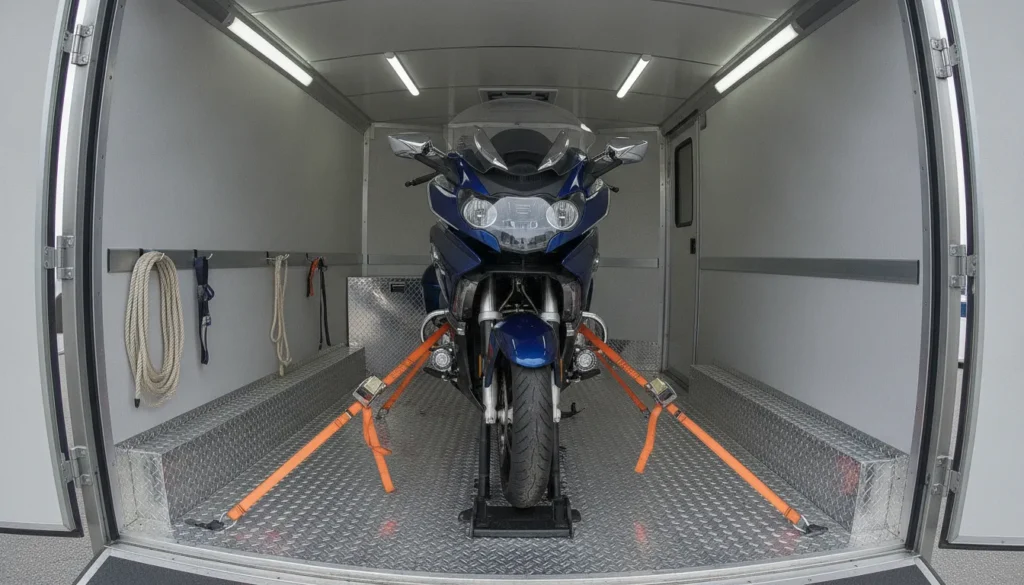
Enclosed motorcycle shipping gives owners of custom, classic, luxury, and show-condition bikes a more protective way to move their motorcycles. Instead of riding exposed on an open trailer, the bike travels inside a hard-sided trailer that reduces exposure to weather, road debris, and public view.
Need enclosed motorcycle shipping for a custom, classic, or high-value bike? Request a motorcycle transport quote or call 888-430-5866.
Enclosed motorcycle shipping is a premium transport option that places your bike inside a hard-sided trailer to reduce exposure to weather, road debris, and unnecessary handling. It is often the better fit for high-value bikes because long routes, seasonal weather, and highway debris can create avoidable risk. Road Runner Vehicle Transports works as a licensed transportation logistics broker, which means the company coordinates the move with independent licensed and insured motor carriers rather than owning the trucks. The team checks carrier authority and active cargo insurance before dispatch so customers can book with more confidence.
For riders comparing open transport and enclosed service, the right choice usually comes down to the bike’s value, condition, route, and tolerance for exposure. Here is what enclosed transport means, when it makes sense, and what to ask before you request a motorcycle transport quote.
What enclosed motorcycle shipping means for high-value bikes
Enclosed motorcycle shipping places the bike inside a covered trailer instead of exposing it to open-road conditions. For high-value motorcycles, the main benefit is reduced exposure to weather, road debris, public view, and unnecessary handling during long-distance transport.
Fuller protection during the trip
Enclosed motorcycle shipping means the motorcycle is loaded into a covered trailer instead of traveling in the open air. Road Runner’s enclosed carrier shipping guide explains the same protective logic for covered vehicle transport. The enclosed trailer helps shield the bike from rain, snow, road salt, loose gravel, insects, and wind-blown debris. That matters most when the motorcycle has custom paint, polished chrome, rare trim, aftermarket accessories, or a collector-grade finish that would be costly to repair.
Open transport can be a practical option for many standard moves, but it exposes the motorcycle to the same highway conditions a vehicle faces on a long drive. Enclosed service reduces that exposure. Riders often choose it for high-value bikes, classic motorcycles, custom cruisers, sportbikes, touring motorcycles, and bikes being moved to shows, auctions, second homes, or buyers in another state.
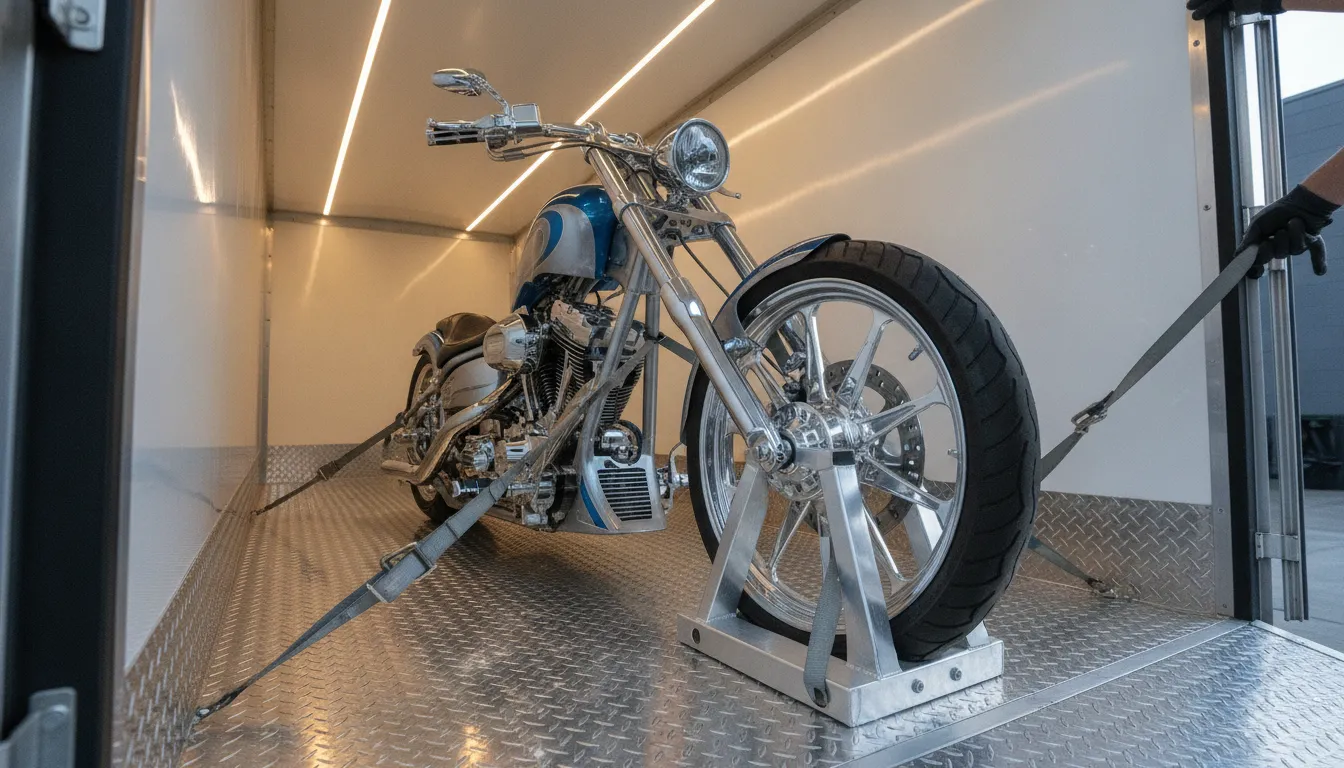
Motorcycle-specific loading and securement
Enclosed carriers that handle motorcycles commonly use equipment designed to keep a bike upright and stable. Depending on the carrier and trailer, that may include wheel chocks, soft straps, ramps, lift gates, or other securement tools. These details matter because motorcycles do not sit on four wheels like cars. They need careful loading, balanced securement, and a driver who understands how to prevent tipping or unwanted movement.
Road Runner’s role is to match the shipment with a carrier that fits the route and the motorcycle’s needs, a model explained in its broker vs carrier guide. The company verifies MC or DOT authority and active cargo insurance before dispatch. That broker role is important. Road Runner does not present itself as the truck owner. It coordinates the shipment through a carrier network and helps customers understand the process from quote through delivery.
A better fit for valuable finishes and rare parts
For a standard commuter motorcycle, the lowest-cost option may be enough. For a bike with custom paint, limited-production parts, low mileage, or sentimental value, the calculation changes. A small chip, scratch, or bent accessory can be more than a cosmetic issue. It can affect resale value, show condition, and the owner’s trust in the transport process.
That is why enclosed service is often discussed alongside other high-protection vehicle moves. Road Runner already explains the value of enclosed transport for high-value vehicles, and the same core idea applies to motorcycles. For motorcycles, that protection needs to account for bike-specific risks such as balance, tie-down points, accessory clearance, and careful inspection.
When should you choose enclosed motorcycle transport?
Choose enclosed motorcycle transport when the bike is custom, classic, rare, show-condition, newly purchased, or difficult to repair. It is also a strong fit for long-distance routes, winter roads, coastal humidity, or shipments where privacy and cleaner arrival condition matter.
Enclosed transport is not automatically required for every motorcycle shipment. It is the right choice when the cost of extra protection is justified by the value, condition, or route of the bike. If you are moving a bike that would be difficult or expensive to restore, enclosed service deserves serious consideration.
Choose enclosed for custom, classic, and show-condition bikes
Custom cruisers, restored vintage bikes, rare sportbikes, luxury touring models, and show bikes benefit from enclosed transport because their value often lives in the details. Paintwork, chrome, fairings, saddlebags, trim pieces, and custom accessories are all vulnerable to road exposure. Even if the motorcycle arrives mechanically sound, visible damage can create frustration and added repair costs.
Enclosed service also makes sense when the bike has low ground clearance, unique dimensions, wide handlebars, expensive bags, or fragile aftermarket parts. Those details should be disclosed before booking. A better quote starts with accurate information, and the carrier needs to know if standard loading equipment will not be enough.
Choose enclosed for long-distance or weather-sensitive routes
The longer the route, the more exposure an open trailer creates. Road Runner’s cross-country vehicle transport guide explains why long routes add planning concerns. A short regional move in mild weather is different from a cross-country shipment through rain, snow, heat, road salt, or dusty construction corridors. Enclosed transport reduces the chance that the motorcycle arrives covered in grime or exposed to changing weather for several days.
Seasonal timing also matters. Winter routes can bring salt and ice. Summer routes can bring intense heat, storms, and heavy traffic. Coastal routes can involve humid or salty air. A closed trailer does not remove every transport risk, but it gives the bike a more controlled environment than open shipping.
Choose enclosed when privacy and security matter
High-value motorcycles can draw attention on the road. Enclosed trailers keep the bike out of public view during most of the trip. That added privacy can be important for collectible motorcycles, expensive custom builds, auction purchases, or bikes being delivered to a new owner.
Security should still be discussed directly. Ask what type of trailer will be used, how the bike will be secured, whether the carrier has cargo insurance, and how pickup and delivery will be coordinated. A serious transport quote should answer those questions clearly instead of relying on vague promises.
How pickup and inspection work before shipping
Pickup begins with preparation, photos, and a Bill of Lading inspection. A clean motorcycle, accurate condition notes, and careful delivery inspection help protect the owner if damage questions arise after transport.
A successful motorcycle shipment starts before the carrier arrives. The pickup inspection creates the record that protects the customer, the carrier, and the broker. It also gives everyone a shared understanding of the motorcycle’s condition before it is loaded.
Prepare the motorcycle for a clear inspection
Wash the motorcycle before pickup so scratches, dents, paint chips, and other marks are easy to see. Dirt and road grime can hide existing damage. A clean bike makes the inspection more accurate and reduces disagreement later. Take your own photos from multiple angles, including close-ups of custom parts, fairings, chrome, wheels, mirrors, bags, and any existing blemishes.
Remove loose personal items and unsecured accessories. Helmets, jackets, tools, GPS units, loose bags, and other personal belongings should not be left on the bike unless the carrier specifically approves them in writing. Cargo insurance is meant for the transported vehicle, not loose personal property.
Use the Bill of Lading carefully
The Bill of Lading, often called the BOL, is the key transport document. At pickup, the driver and customer inspect the motorcycle together and note pre-existing damage on the BOL. At delivery, the motorcycle should be inspected again before the delivery paperwork is signed.
Do not rush this step. If a scratch, dent, cracked part, or missing accessory is not noted at pickup, it can be harder to prove what happened later. If new damage appears at delivery, it should be written on the delivery paperwork before signing. Clear documentation is one of the best ways to protect a high-value bike during transport.
- Clean the motorcycle. Make sure paint, chrome, fairings, and accessories are visible for inspection.
- Take photos. Capture the motorcycle from all sides before pickup and again at delivery.
- Remove loose items. Take off personal gear and unsecured accessories unless the carrier approves them.
- Disclose special needs. Tell Road Runner if the bike is inoperable, low-clearance, oversized, leaking, or modified.
- Review the BOL. Confirm that existing damage is listed before the bike is loaded.
Pickup and delivery windows are estimates. Road Runner’s guide on how long vehicle shipping takes explains why route conditions and carrier schedules affect timing. Weather, traffic, carrier routing, and access issues can affect timing. Road Runner can help coordinate communication, but customers should avoid planning around an exact guaranteed minute unless a specific service agreement supports it.
How much does enclosed motorcycle shipping cost?
Enclosed motorcycle shipping cost depends on route, distance, trailer availability, motorcycle size, operability, timing, and access at pickup or delivery. Enclosed service usually costs more than open transport because it offers added protection and carries fewer vehicles per trailer.
The cost of enclosed motorcycle shipping is dynamic. It depends on the route, timing, carrier availability, motorcycle size, operability, access at pickup and delivery, and the level of protection required. Because enclosed trailers carry fewer vehicles and use more specialized equipment, they usually cost more than open transport. For broader pricing context, see Road Runner’s guide to online vehicle shipping costs.
Distance and route shape the quote
Distance is a major pricing factor, but the route itself matters too. Shipping between major metro areas can be easier to price because more carriers travel those lanes. Rural pickup or delivery points may require extra time, extra miles, or a meeting location that can safely fit the truck.
Timing also affects the quote. Last-minute requests may be more expensive because fewer enclosed carriers have available space, which is why Road Runner also explains when expedited shipping can affect timing and availability. Flexible pickup windows can help a broker match your bike with a better carrier option. If the motorcycle is being moved for a sale, auction, event, relocation, or seasonal stay, start the quote process early.
Bike size, condition, and handling needs matter
A lightweight sportbike, a large touring motorcycle, and a custom cruiser do not take up the same space. Wide handlebars, saddlebags, tall windscreens, low clearance, extended frames, and delicate accessories can all affect carrier selection. An inoperable motorcycle may require extra equipment or labor because it cannot roll, steer, or brake normally, much like the special handling covered in Road Runner’s inoperable vehicle transport guide.
Accurate details lead to a better motorcycle transport quote, and Road Runner’s vehicle shipping calculator guide explains why route and vehicle details shape estimates. Tell Road Runner the year, make, model, pickup ZIP code, delivery ZIP code, operability status, special modifications, and preferred timing. If the bike has unusual dimensions or a very high declared value, mention that before dispatch.
| Factor | Why it matters | What to share |
|---|---|---|
| Distance and route | Longer or less common routes can change carrier availability. | Pickup and delivery ZIP codes, plus flexibility. |
| Motorcycle size | Large bikes use more trailer space and may need different securement. | Year, make, model, bags, fairings, and modifications. |
| Operability | Non-running bikes may need a winch or extra loading help. | Whether the bike rolls, steers, and brakes. |
| Trailer type | Enclosed trailers provide more protection but often cost more. | Open vs enclosed preference and value concerns. |
| Access | Large transport trucks may not fit on tight streets. | Gate codes, street limits, low trees, or meet-up locations. |
Comparing protection levels? Get a quote with your bike details, route, and enclosed transport preference so Road Runner can match the shipment with the right carrier option.
Understand the payment structure
Road Runner’s KB describes a two-part payment structure. The broker fee is paid to Road Runner when the carrier is assigned. The remaining transport balance is paid directly to the carrier at delivery. Customers should confirm the exact payment method and timing before booking so there are no surprises at drop-off.
Pricing should not be reduced to a single generic number because the right rate depends on the live transport market. A quote for a high-value custom bike in an enclosed trailer should reflect the route, equipment, timing, and carrier fit.
How Road Runner matches your bike with a carrier
Road Runner Vehicle Transports coordinates shipments as a transportation logistics broker. The team matches the motorcycle with an independent licensed and insured carrier based on route. Timing, trailer type, and handling needs, then helps organize pickup, dispatch, and delivery communication.
Road Runner Vehicle Transports is a transportation logistics broker. That means the company coordinates vehicle moves through independent motor carriers rather than presenting itself as the owner of the transport trucks. For customers, this broker model can be helpful because it gives access to a broader carrier network and route options.
Carrier vetting comes before dispatch
Road Runner verifies carrier authority and active cargo insurance before assigning a vehicle. That matters for motorcycle owners because the carrier is the company physically moving the bike. Customers should know who is transporting the motorcycle, how the bike will be secured, what insurance applies, and how communication will work during the trip.
The broker’s job is to match the shipment with a carrier that fits the motorcycle, route, timing, and service level. For enclosed motorcycle shipping, that means looking for a carrier with the right trailer type and securement process. For a high-value bike, it also means discussing any special handling needs before the truck arrives.
Road Runner keeps the process organized
Motorcycle shipping has several moving parts: quote details, carrier assignment, pickup timing, inspection, payment, transit updates, delivery inspection, and paperwork. Road Runner gives customers a central point of contact to help coordinate those steps.
This does not mean exact pickup or delivery dates can be guaranteed in every case. Carrier schedules can shift because of weather, traffic, route changes, and prior deliveries. A reliable broker should explain the estimated window, keep communication clear, and help customers prepare for pickup and delivery.
What should you ask before requesting a motorcycle transport quote?
Before requesting a motorcycle transport quote, ask about trailer type, securement, cargo insurance, payment terms, pickup access, and delivery inspection. The best quote should explain how the bike will be loaded, protected, documented, and delivered, not just show the lowest price.
The best motorcycle transport quote is not just the lowest number. It is the quote that matches the bike with the right service level, trailer type, carrier, insurance, and timing. Before you book, ask questions that reveal how the shipment will actually work.
Ask about trailer type and securement
Start by confirming whether the quote is for open or enclosed transport. If you are moving a custom, classic, or high-value motorcycle, ask what enclosed equipment is available. Ask whether the carrier uses soft straps, wheel chocks, lift gates, ramps, or other motorcycle-specific securement methods.
Also ask how low-clearance bikes, wide bars, saddlebags, and custom accessories are handled. The answer should be specific enough to show that the carrier understands motorcycles, not just cars.
Ask about insurance and paperwork
Ask whether the carrier has active cargo insurance and what documentation you can review. Confirm how the Bill of Lading is handled at pickup and delivery. Ask what steps to take if you notice damage at delivery, and make sure you understand when to sign the paperwork.
You should also ask about payment terms. With Road Runner’s two-part system, the broker fee is paid when the carrier is assigned and the carrier balance is paid at delivery. Confirm accepted payment methods before the motorcycle is picked up.
Ask what information improves quote accuracy
Give the broker the details needed to quote the move correctly. Include the motorcycle’s year, make, model, running condition, modifications, pickup location, delivery location, timing, and enclosed transport preference. Share access issues such as gated communities, narrow streets, steep driveways, low branches, or limited space for large trucks.
If you are not sure whether the truck can reach the door, ask about a nearby meeting point. A safe, open location can make loading and delivery easier while still keeping the process convenient.
Frequently Asked Questions
What is enclosed motorcycle shipping?
Enclosed motorcycle shipping is a transport service that moves a motorcycle inside a covered trailer. The enclosed trailer helps protect the bike from rain, road debris, dust, and public exposure during transit. It is commonly chosen for high-value, custom, classic, or show-condition motorcycles.
How much does enclosed motorcycle shipping cost?
The cost depends on distance, route, timing, carrier availability, motorcycle size, operability, trailer type, and pickup or delivery access. Enclosed transport usually costs more than open transport because it provides added protection and uses more specialized equipment. The best way to price your move is to request a motorcycle transport quote with accurate bike and route details.
Is enclosed transport better than open trailer shipping?
Enclosed transport is better when protection is the priority. Open shipping may be more budget-friendly for standard moves, but it exposes the motorcycle to weather and road debris. Enclosed shipping is usually the better choice for high-value bikes, custom paint, rare parts, long-distance moves, or weather-sensitive routes.
Are motorcycles insured during enclosed shipping?
Road Runner checks that carriers have active cargo insurance before dispatch. Customers should still ask what coverage applies, whether deductibles exist, and whether the coverage fits the motorcycle’s value. Your own motorcycle insurance provider may also be able to explain how your policy treats transport-related situations.
What is involved in motorcycle pickup and inspection?
At pickup, the customer and driver inspect the motorcycle and record its condition on the Bill of Lading. The bike should be clean so existing scratches, chips, dents, and accessories are easy to document. At delivery, inspect the motorcycle again before signing the final paperwork.
Ready to protect your bike with enclosed shipping?
A high-value motorcycle deserves a transport plan that matches its condition, route, and risk level. Road Runner Vehicle Transports can help you compare enclosed options, understand the inspection process, and get matched with a licensed and insured carrier for your route.
Ready to book? Call 888-430-5866 or visit the Road Runner quote page to request a motorcycle transport quote.