Shipping a car that does not start is possible but needs the right tools and planning. You must know what equipment a carrier needs before the truck arrives at your door. Taking these steps helps you avoid hidden fees and help your car get home safely.
Call 888-430-5866 or request a non-running car shipping quote before pickup so the carrier brings the right loading equipment.
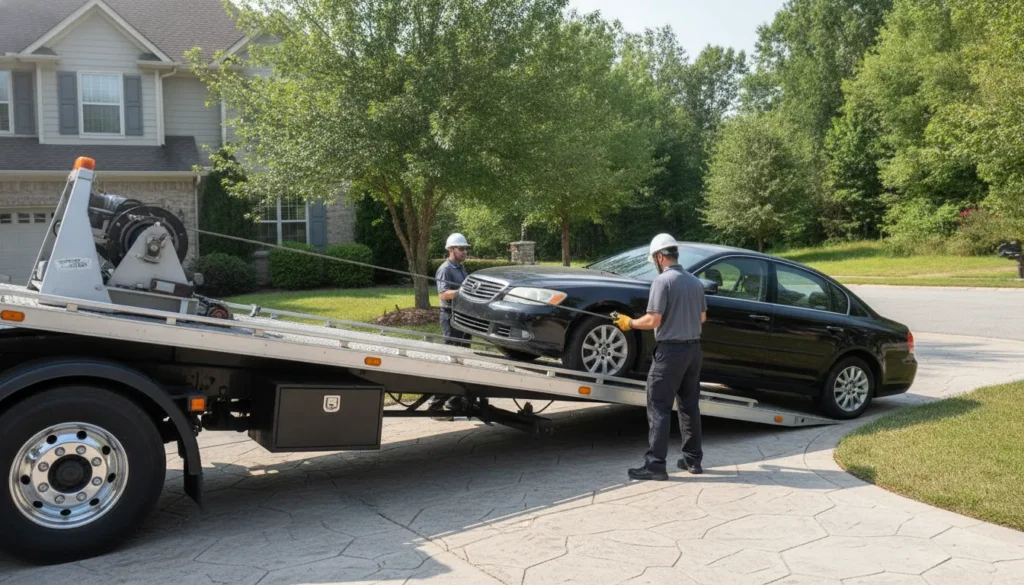
To ship a non running car requires a truck that has a winch to pull the unit onto the trailer. Most haulers use three tests to check if a car can be loaded: if it can roll, brake, and steer. As noted by industry experts, a car is non-running if it cannot start or move on its own. Tell the hauler about wheel or brake problems early to avoid extra fees or a lost pickup. Getting the car ready can keep your quote more accurate. Make sure the tires have air and the car is easy to reach so the driver can load it safely.
Shipping a dead car is simple once you know the rules for the road. You can save money and time by knowing what counts as a non-running car for shipping. You also need to know which tools the shipping truck will need.
What counts as a non-running car for shipping?
Short answer: A non-running car is any vehicle that cannot safely drive onto a carrier under its own power. It may still roll, brake, and steer, or it may need extra loading equipment. The more accurately you describe the condition, the easier it is to quote the shipment.
When you need to ship a non running car, you must first know how brokers and carriers define “non-running.” In the car shipping world. A car is non-running if it cannot move on its own. This includes cars that do not start, as well as cars that are not safe to drive onto a trailer. Even if a car starts but has no brakes or cannot steer, it counts as a non-runner.
Road Runner is a logistics broker that helps you find a vetted driver for your car. We do not own the trucks, but we work with a large network of carriers. These drivers need to know the state of your car before they arrive. This helps them bring the right gear to load and unload your car safely.
The roll, brake, and steer rule
Most carriers use three main tests to check if a car is easy to move. They look at whether the vehicle can do these three things:
- Roll: The wheels turn freely without being locked.
- Brake: The car can stop when needed during loading.
- Steer: The driver can guide the car up the ramps.
If a car can do all three, it is often much easier to load. A driver can use a winch to pull the car onto the trailer. A winch is a strong cable that pulls the car up the ramps while the driver steers it into place.
If your car has locked wheels or cannot steer, it needs even more help. A carrier might need a forklift or a flatbed to move it. This type of move takes more time and costs more money. You should check how to estimate shipping costs for inoperable vehicles to plan your budget. Always tell your broker if the car has flat tires or a locked wheel.
Common non-running car issues
A car might be non-running for many small reasons. A dead battery is a common issue. If the battery is dead, the car cannot start and the steering might lock. If you can jump-start the car and drive it safely, it may count as running. But if it must be pulled by a winch, it is non-running. You should also check for fluid leaks, as some carriers will not take cars that leak oil or fuel.
Other issues include missing keys or damage from a crash. If you do not have keys, the driver cannot unlock the steering or shift the car into neutral. This makes it hard to roll the car onto the ramps. The Federal Motor Carrier Safety Administration (FMCSA) has rules for securement that drivers must follow. They need to tie down the car at both the front and rear to keep it safe during the trip.
Why being honest saves you money
It is key to be honest about the state of your car. If a driver arrives and finds a car that does not roll, they may not be able to load it. This can lead to a “dry run” fee. This is a charge you pay when the driver shows up but cannot pick up the car. It wastes time for the driver and slows down your shipment.
Clear details help your broker find the best carrier for your needs. Mention any big issues like a bad engine or broken axles right away. When you are getting a quote for non-running vehicles, give as much info as you can. This ensures the driver brings the right tools, like a winch or a forklift, to handle your car with care.
How carriers load inoperable vehicles
Short answer: Most inoperable vehicles are loaded with a winch when they can still roll and steer. Cars with locked wheels, missing wheels, or severe collision damage may need dollies, skates, a forklift, or a different pickup location with proper equipment.
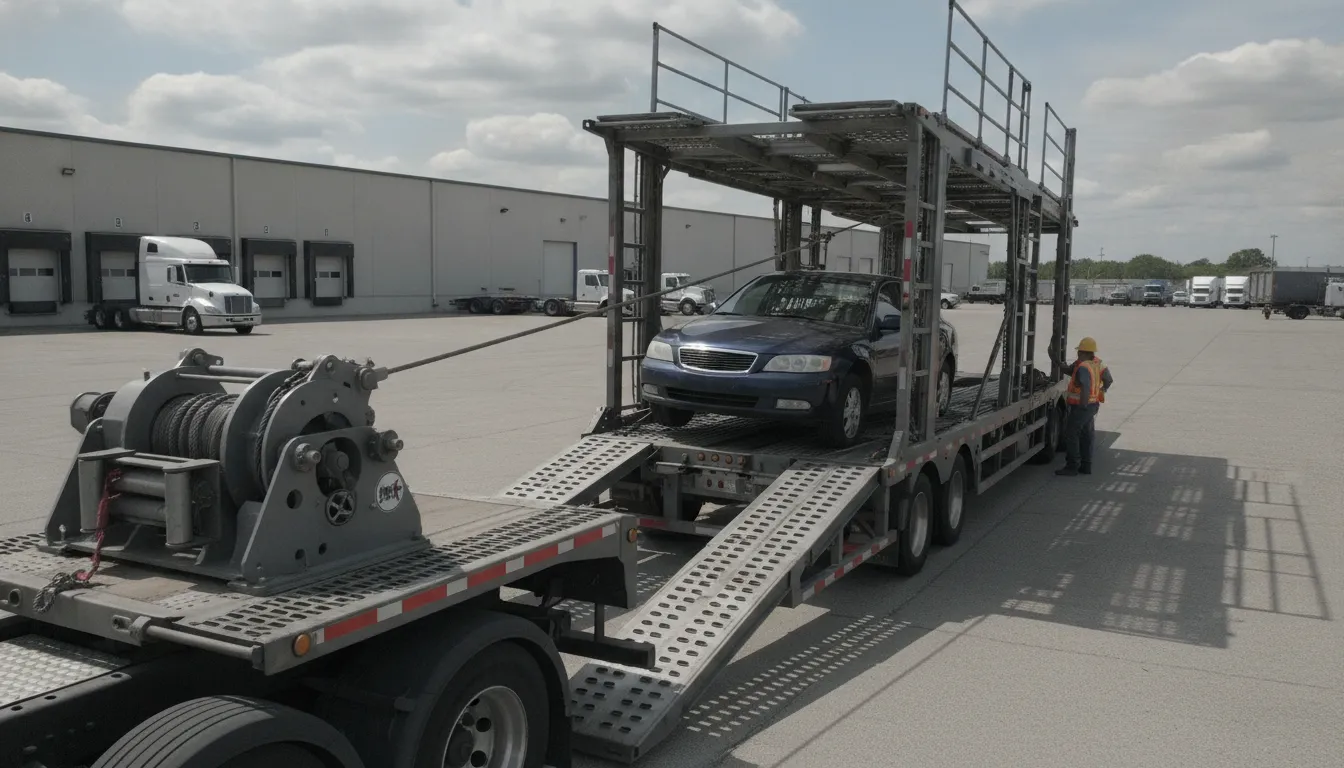
Loading a car that does not start takes more work and tools than a running one. To ship a non running car, carriers must use specialized gear to move the vehicle onto the trailer. Most drivers check if the unit can roll, brake, and steer before they start. If the car has these three functions, the loading process is much faster and costs less for the owner.
The role of the winch
A winch is the most common tool for loading non-running cars. It is a motorized spool with a heavy cable that pulls the car up the trailer ramps. The driver hooks the cable to a solid point on the car frame. As the winch pulls, the driver must sit in the car to steer it onto the deck. This method works well on open trailers where there is space to work. It ensures the car stays in a straight line as it moves up.
Equipment for stuck vehicles
Some cars cannot roll because of flat tires or locked brakes. In these cases, a standard winch may not be enough. Drivers might use tire skates or dollies to help the wheels slide over the metal ramps. If the car is missing wheels or has a broken axle, it might need a forklift to lift it from the side. You should always tell your broker the exact state of the car. If a driver comes with the wrong gear, they may charge a fee and cancel the pickup.
Safety and securement
Once the car is on the trailer, the driver must lock it in place. The Federal Motor Carrier Safety Administration requires at least two tiedowns for most light cars. These straps go on the front and rear of the car to stop it from shifting left, right, or back. Proper tiedowns keep the car safe during turns and sudden stops on the road. The driver will also do a full check to note any old dents or scratches on the bill of lading before they pull away.
Inoperable car shipping cost factors to expect
Short answer: Inoperable car shipping cost depends on the vehicle condition, loading equipment, route, timing, size, and carrier availability. Road Runner uses quote-based pricing because a non-running car that rolls freely costs less to handle than one that needs a forklift or special access.
When you need to ship a non running car, the price is not fixed. Costs change based on how much work the carrier must do. A non-running car often needs more time and tools to load safely. You should know these key factors so you can plan for the final quote. The inoperable car shipping cost reflects the extra care needed for a car that cannot move on its own power.
Extra tools and carrier work
The biggest cost factor is the gear needed to move the car. Most carriers use a winch to pull a car onto the trailer. As noted by industry experts, carriers check if the car can roll, brake, and steer before they start. If a car lacks wheels or has locked brakes, the carrier may need a forklift. These tools add to the fee because not every truck has them. You pay for the driver’s time and the use of this special gear.
Vehicle size and weight limits
Big and heavy cars cost more to move. Weight is a major factor in fuel use and safety. The FMCSA has strict rules on how to secure cars to prevent any movement. Cars over 10,000 pounds have even tougher rules that carriers must follow. If your non-running car is a large SUV or truck, it takes up more space on the trailer. This reduces the number of other cars the carrier can take, which raises your price.
Market trends and fees
Prices move up and down with the market. Fuel costs and how many drivers are nearby will change your quote. Also, you need to factor in the 3.95% credit card fee for the broker service. Using a guide to estimate shipping costs for inoperable vehicles helps you see these parts of the total. If you are in a remote area, the driver may have to go far out of their way, which adds to the cost.
| Cost Factor. | How it impacts price. | How to reduce cost. |
|---|---|---|
| Winch loading. | Adds a fee for gear use. | Ensure the car can roll and steer. |
| Vehicle size. | Heavier cars use more fuel. | Remove all personal items from the car. |
| Pickup spot. | Remote spots cost more for fuel. | Meet the driver near a main road. |
| Timing. | Fast pickup can raise the quote. | Be flexible with your dates. |
| Processing fee. | 3.95% fee on card payments. | Budget for this fee in your total. |
Ready to price the job accurately? Request a quote with the car condition, pickup access, and loading needs before the carrier is assigned.
How to avoid overpaying when you ship a non running car
Short answer: The best way to avoid overpaying is to disclose the vehicle condition before dispatch. Confirm whether it rolls, brakes, steers, has keys, has inflated tires, and can be reached by a large carrier. Accurate details reduce failed pickups and surprise equipment fees.
You can keep costs low when you ship a non running car without overpaying by being clear about its state. A carrier needs to know if the car can roll, brake, and steer. If you do not share this, the driver may show up with the wrong tools. This often leads to a dry run fee from the carrier and a late pickup. Being exact from the start helps you avoid these extra costs.
Choose the right transport type
Open transport is usually the cheapest way to move a car. Most non-running cars can go on an open trailer if they still roll and steer. The driver will use a winch to pull the car up. If your car is very heavy, it may need more care. The FMCSA sets rules for how to tie down cars to keep them safe. Pick open transport to save money unless your car is a rare classic.
Meet in an easy spot
Big trucks have a hard time on narrow streets or under low trees. You can save time and money by meeting the driver in a large, open lot. This makes loading much faster for the driver. It also keeps your car safe from low branches or tight turns. If you can move the car to a better spot, it can help lower the price of your quote.
Check all quote details
When you get a price, look at what it covers. Some quotes might not show the fee for a winch or special gear. It is best to compare quotes to see the full cost. At Road Runner Vehicle Transports, we help you find the best fit for your needs. You can call us at 888-430-5866 to talk about your car. We offer vehicle transport services that are fair and clear.
Steps to prepare a non-running vehicle for pickup
Short answer: Prepare the vehicle by clearing personal items, checking tire inflation, gathering keys, photographing the condition, disabling alarms, and confirming truck access. These simple steps help the driver load faster and document the vehicle before it leaves.
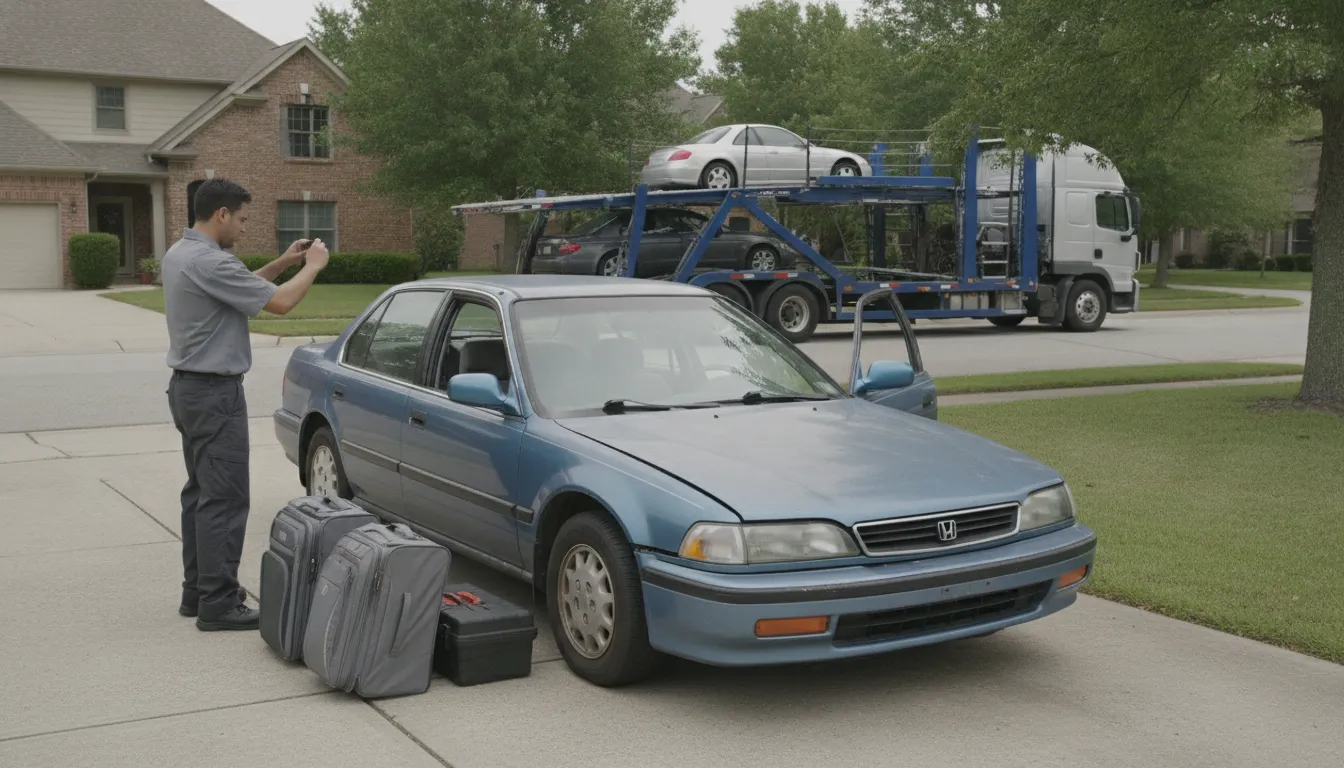
When you need to ship a non running car to another state, you must take a few extra steps. Proper prep helps the driver load your car without any harm and avoid extra costs. If the car has sat for a long time, check the air in the tires first. A car that rolls is much easier to move than one with flat tires or stuck brakes. Small tasks like this help make the process go much faster for everyone.
Be clear about the car’s state
You must tell your broker if the car can roll, brake, and steer. Carriers need to know these facts to bring the right gear for the job. Most non-running cars use a winch to get onto the trailer. A winch is a tool with a strong cable that pulls the car up a ramp. If the car is stuck, the driver may need a forklift or a special truck to lift it into place.
Giving us clear facts helps you get the best price when getting a quote for non-running vehicles online. If the driver finds the car is in a worse state than you said, they might not be able to load it. This could lead to a dry run fee, which is a cost for a failed pickup. Keep in mind that dates for pickup and drop-off are only rough dates and not a firm promise.
- Tell us the exact state of the car. Make sure the carrier knows if the car rolls or steers. If the car cannot move, they need to bring a winch or a forklift to the site.
- Wash the car and take out your things. A clean car makes it easy for the driver to see any old dents or marks. You must also remove all personal items from the car to keep them from being lost.
- Check fuel levels and car alarms. Keep the gas tank at a quarter full or less to keep the weight low. You should also turn off any alarms so they do not drain the battery during the trip.
- Get the keys and papers ready. Have the car keys in your hand when the driver gets there. Even if the car does not start, the driver needs the keys to steer the car onto the truck.
- Take photos of the car’s state. Use your phone to take clear pictures of the car from every angle. These photos are your proof of how the car looked before it was put on the trailer.
- Make sure the truck can reach the car. Big transport trucks need a lot of room to turn and park. If your street is too small, you may need to meet the driver at a nearby lot.
Focus on safety and access
Safety is the most vital part of moving any vehicle. Federal rules say that cars must be tied down at the front and back of the trailer. Drivers use at least two tiedowns to stop the car from moving during the trip. This keeps your car safe and protects other drivers on the road from a loose load.
When the driver gets to your home, you will both look over the car and sign a Bill of Lading. This paper shows any marks or flaws found during the first check. Be sure to read this form well before you sign it. If the car is hard to move, you might need a friend or some extra gear to help the driver with the loading process.
What if the car cannot roll, brake, or steer?
Short answer: A vehicle that cannot roll, brake, or steer needs special handling and may not fit a standard open-carrier pickup. Tell Road Runner before booking so we can search for a carrier with the right equipment or plan pickup from a facility that can load the car.
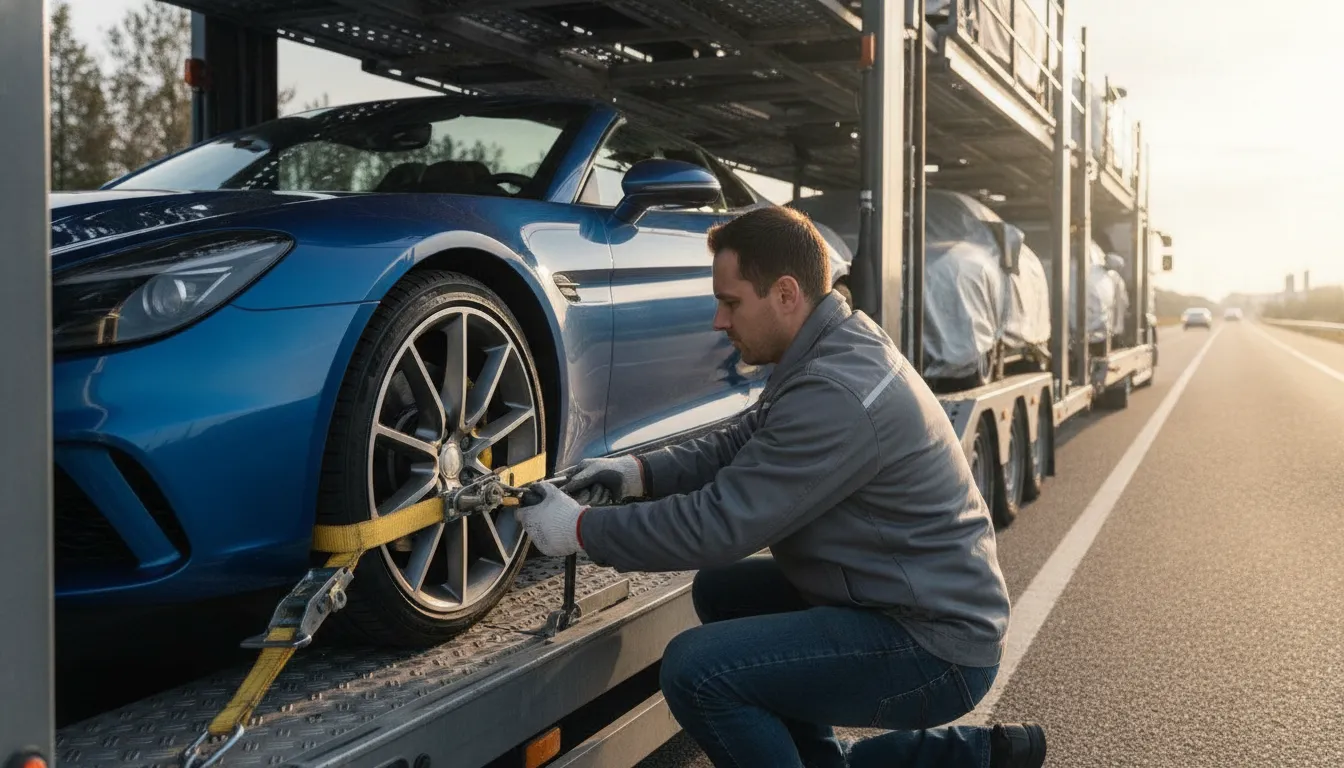
Shipping a car that does not run is one thing. Shipping a car that cannot roll, brake, or steer is much harder. Carriers use these three tests to decide if they can take your vehicle. When a car fails these tests, it needs more than just a winch to load. You must tell your broker about these issues to get a quote for non-running vehicles that is right.
The three critical functions
Carriers look at three main tasks: roll, brake, and steer. A car must roll so it can move up a ramp. It needs to brake so the driver can stop it once it is on the trailer. It must steer so the driver can guide it into a tight spot. If your car has locked wheels or a seized steering rack, it cannot do these things. In these cases, a standard winch is not enough to ship a non running car safely.
Failure to share these details can lead to big problems. If a driver shows up and finds a car that will not move, they may charge a fee. This is often called a dry run fee. The industry defines these fees as a way to cover the driver’s lost time and fuel. Always be honest about the state of your car to avoid these extra costs.
Special tools for hard moves
When a car is missing wheels or has a locked engine, the carrier may need a forklift. A large industrial forklift can pick up the car from the side to place it on the trailer. This tool is common at junk yards or auction sites. But not every truck driver has access to one. Using a forklift or a liftgate may raise your price. It also makes it harder to find a carrier who has the right gear for the job.
Safety and laws
Safety is the top goal when moving a damaged car. The Federal Motor Carrier Safety Administration (FMCSA) sets strict rules for this. For example, all cars must have tiedowns at the front and the back. These straps keep the car from moving in any direction while the truck is on the road. You can read more about these rules for vehicle securement on the Cornell Law site. Following these laws helps keep your car and other drivers safe.
If your car is at a tow yard, you will need to coordinate with them. Make sure they have the tools to help the driver load the car. Some yards charge a gate fee or a storage fee. You should pay these before the driver arrives. This helps the move go fast and keeps your shipping cost estimates for inoperable vehicles accurate.
Questions to answer before requesting a quote
Short answer: Before requesting a quote, know the pickup and delivery ZIP codes, vehicle year, make, model. Condition, access limits, keys, tire condition, and whether the vehicle can roll, brake, and steer. These facts help match the job with a carrier that can actually load it.
To ship a non running car, you must give the broker specific facts about its state. This helps the broker find the right carrier and tools for the job. Giving clear details also helps you avoid extra fees or delays during pickup.
Can the car roll, brake, and steer?
The most important check for any non-running vehicle is whether it can roll, brake, and steer. According to industry standards, carriers use these three tests to decide how to load your car. If the car has tires that hold air and a working steering rack, a driver can often use a winch to pull it onto a trailer. This is usually the best way to keep costs low.
If the car cannot roll or steer, the carrier may need an industrial forklift to lift it from the side. You should also check the tire condition and see if the keys are present. Without keys, the driver might not be able to unlock the steering or shift the car into neutral. This can make the loading process much harder and more expensive.
What are the dimensions and location?
You need to know the exact size of your vehicle, especially if you have added parts like a lift kit or a roof rack. Large cars that weigh over 10,000 lbs must follow strict FMCSA rules for safe securement on the road. Knowing the height and width of your car helps the broker ensure the trailer has enough space to carry it safely.
The pickup spot also matters for a smooth transport. Tell your broker if the car is at a home, an auction site, or a tow yard. Some spots have tight turns that a large truck cannot make. You can learn how to estimate shipping costs for inoperable vehicles by looking at these distance and access factors. This will help you plan your budget for the move.
Do you want open or enclosed transport?
You should decide if you want to use an open or enclosed trailer for your move. Open trailers are common and cost less, but your car is open to the weather and road debris. Enclosed trailers offer more safety and shield the car from the elements. This is a top choice for rare or classic cars that do not run but need extra care.
When getting a quote for non-running vehicles, make sure to mention your timing. Brokers need to know your desired timeframe to match you with a driver. Some carriers have more experience with non-running cars and carry the winch gear needed for a safe load. Sharing these details early leads to a better price and a faster pickup.
Frequently asked questions about non-running car shipping
Can I ship a non-running car?
Yes, you can ship a non-running car, but the carrier must know the exact condition before pickup. A car that rolls, brakes, and steers can often be moved with a winch-equipped trailer. A car with locked wheels, missing wheels, no brakes, or seized steering may need a flatbed. Forklift, or liftgate, which can change the quote and reduce available carrier options.
What is the cheapest way to ship a non-running car?
The cheapest option is usually open transport with a carrier that has the right winch, if the vehicle can roll, brake, and steer. You can also help control cost by being flexible on pickup dates, choosing an easy loading location, removing extra weight, and giving clear condition details up front. The safest quote is based on real vehicle facts, not a fixed rate guess.
Does my car need to roll and steer to be shipped?
It does not always need to roll and steer, but those functions make the job easier and may lower the cost. If the car cannot roll, brake, or steer, tell your broker before the quote is built. The shipment may require special loading gear, extra labor, or a different carrier type.
Why does inoperable car shipping cost more?
Inoperable car shipping cost can be higher because loading takes more time and may need special tools. The carrier may need a winch, flatbed, liftgate, or forklift support. Cost can also rise when pickup access is tight, the vehicle is heavy, the route is remote, or only a few carriers can handle the condition.
Ready to request a quote for non-running vehicle transport?
Letting a car that does not run sit in your driveway can lead to high fees and extra stress that builds up over time. You can avoid these costs and clear your mind by starting the shipping process right now to get your vehicle moved to its next home. Our network of carriers uses special tools to move cars that cannot roll, brake, or steer so you can rest easy knowing the job is safe. You can also learn how to estimate shipping costs for inoperable vehicles to help you keep your budget in check while you plan your move. Shipping your vehicle today ensures it gets where it needs to go faster and helps you focus on other tasks while we handle the work.
Ready to request a quote for non-running vehicle transport? Call 888-430-5866 to request your free quote today.