
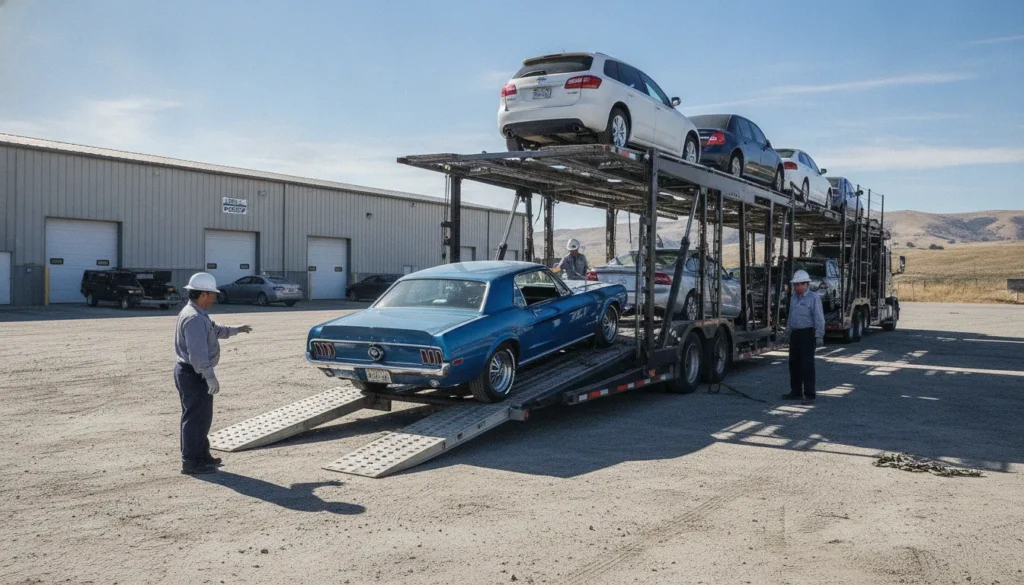
Winning an auction bid only solves half the puzzle of getting a new car to your door. You often have just four days to clear a vehicle from the lot before heavy storage fees start to pile up. A clear plan ensures your auction find does not become a financial burden.
Ready to ship a car from auction? Contact Road Runner Vehicle Transports to coordinate pickup details and carrier matching before storage fees begin.
Auction car shipping is a clear process that needs careful work between the buyer, the auction site, and the carrier. To ensure a smooth pickup, you must give the carrier a valid gate pass, as auction cars often need specific coordination for keys and title paperwork. You also must state the exact condition of the car since non-running vehicles need winches and special gear that adds to your final bill. Most transport costs depend on car size and distance, but being clear helps you avoid extra fees or long delays. Since carriers work on fluid schedules, you should book early to avoid storage costs while your broker finds a vetted carrier.
Navigating the rules of a busy auction yard is simpler when you know what to prepare. You can save money by organizing your paperwork before you hire a broker. Next, we will cover why auction car shipping starts before the carrier arrives.
Auction car shipping starts before the carrier arrives
Auction car shipping works best when release forms, buyer numbers, lot numbers, keys, and vehicle condition details are ready before dispatch. Those details help a broker match the shipment with a carrier who can enter the auction yard, load the vehicle properly, and keep pickup inside the storage-fee window.
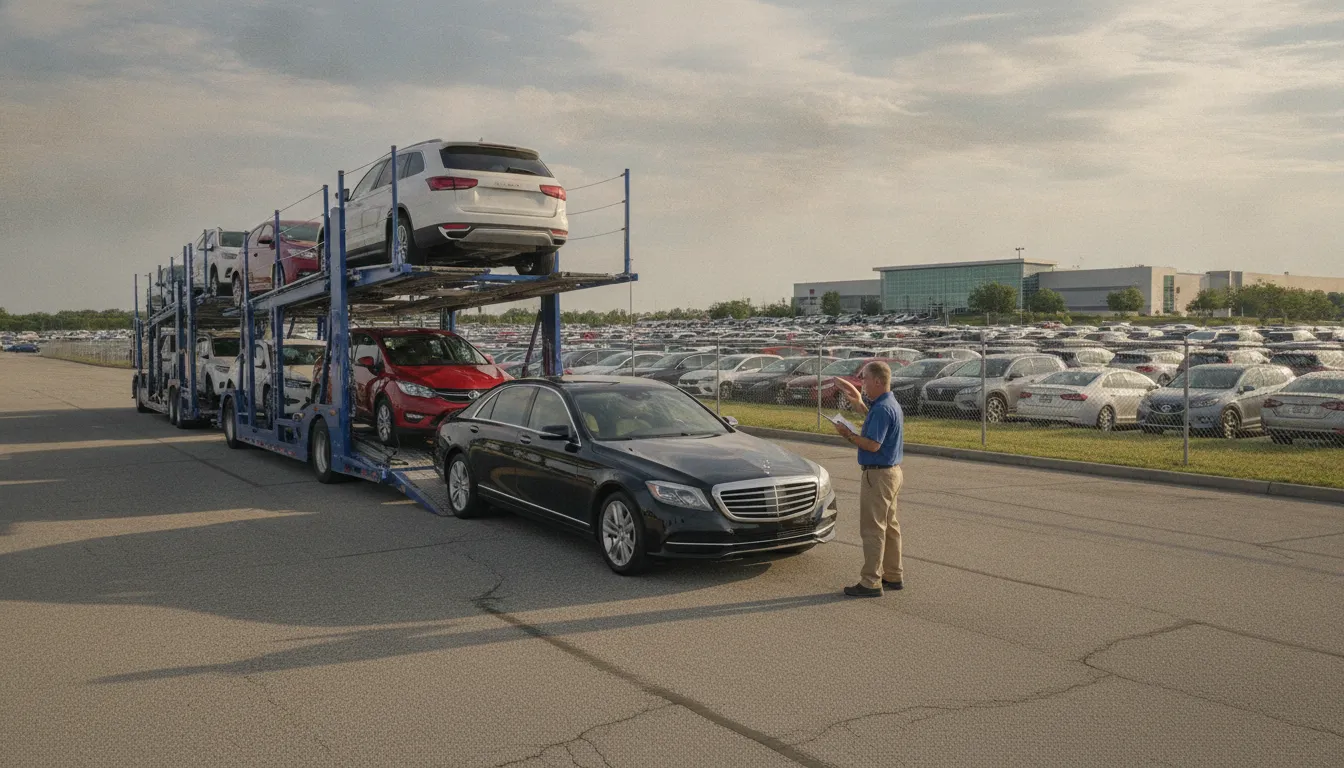
Buying a car from an online auction is a fun way to find a deal, but the pickup process is unique. Unlike a standard home move, auction car shipping requires you to do a lot of work before a truck ever arrives at the lot. You must manage gate passes, buyer numbers, and strict timelines to ensure your vehicle leaves the site on time.
Managing your vehicle release
Auction sites like Copart or IAA have very strict rules for removing cars from their lot. You cannot simply send a driver to pick up your car without the right forms in place. Most lots require a pre-arranged release form to let a driver onto the lot. This process usually involves giving the auction your buyer number and a specific stock or lot number for the car.
You also need to make sure the lot has the title and keys ready for the driver. If the car does not run, you must tell your broker right away. Non-running cars need specific tools like winches to get them onto the trailer. Giving the right info about the car’s state helps you avoid transport cost factors that might surprise you at the last minute. Being clear about these details ensures the driver comes prepared with the right gear.
Meeting auction storage deadlines
Timing is a huge factor when you buy a car through an auction. Most auction sites only give you a few days of free storage after the sale ends. Once that time is up, the lot will charge you a daily fee. These costs can add up fast and eat into the savings you got from the auction. It is vital to start moving a newly purchased car as soon as you win the bid.
Drivers often have full schedules, and shipping depends on when a driver is ready rather than a fixed time. To avoid fees, you should have your payment and title work done as fast as you can. Many things like the distance traveled and the size of the car will affect how long it takes to find a driver. Planning ahead helps you stay within the free storage window.
The role of a shipping broker
Road Runner works as a broker to link you with a network of skilled drivers. We do not own the trucks ourselves, but we handle the hard work of finding a driver who can meet your needs. This service is key for auctions because we manage the talk between you, the auction lot, and the driver. We make sure the driver knows the lot rules and has the right tools for a safe pickup.
A broker also helps you find the most open carrier option if you need to move more than one car. We check that every driver in our network is skilled and reliable. By matching you with the right driver, we help you hit your deadlines and get your car home. Using long-distance auction transport through a broker gives you peace of mind that your new car is in good hands.
What information do you need to ship a car from auction?
To ship a car from auction, pay for the vehicle, authorize release, verify condition, share pickup instructions, book transport, stay reachable during loading, and inspect the vehicle at delivery before signing the bill of lading.
Buying a car at an auction is not like a normal sale. You must give your broker clear info to get a smooth pickup. Giving the right data early helps you avoid delays and extra fees. If you plan for transporting auction purchases, you must have all your files in order before the driver gets there.
Auction details and release forms
The most vital bits of info are your buyer and lot numbers. These act as your ID at the auction yard. Without them, the lot will not give the car to the driver. You also need to show that the car has been paid for in full. Most sites have set rules for when a car can leave. For example, sites like IAA have clear paths for how they handle transport pickups. Knowing these rules saves time for everyone involved.
You may also need to set up a release form. This is a paper that tells the yard it is okay to give the car to the carrier. Make sure the yard knows who is coming to get the car. If the carrier shows up and the car is not ready, you might have to pay for the driver’s lost time. Always check the yard’s clear rules for release before you book your move. A small mistake in the paperwork can stall the whole trip for days.
Car state and specs
You must tell your broker if the car runs and drives. If the car does not move on its own, the driver needs special tools. Shipping non-running cars often needs a winch to pull the car onto the trailer. This help comes with extra costs. Being honest about the car’s state helps you get a fair price. Giving correct facts helps you avoid shocks when the bill arrives. This is a key part of the car shipping process.
You also need the VIN and the basic make and model of the car. If the car is very big or has been changed, tell your broker. Large trucks or vans take up more space on a trailer. This can change the price of your transport cost factors. Knowing the exact size helps the carrier plan their load and keep your car safe on the trip. Carriers want to know if there are extra parts inside the car too.
Planning and timing needs
Carriers need to know if the pickup and drop-off spots are easy to reach. Some auction yards are very busy and have set hours. You should share the name and phone number of a person to call at both ends. If the driver gets lost or has a question, they need to know who to call. Clear paths can save hours of time and help the driver stay on track with their route. This makes the job go much faster.
Finally, be aware that timing is not always set. Trucking is a complex business that depends on road states and carrier space. Most brokers cannot promise a pickup at a set hour. It is best to give a range of dates when you are ready for the car to move. This open plan makes it easier to find a vetted carrier who can do the job for a good price. Being flexible helps you avoid the stress of tight deadlines.
- Buyer number and lot number.
- Car VIN, make, and model.
- Running state, including whether it starts and moves.
- Payment and release status.
- Pickup and drop-off spots.
- Contact names and phone numbers.
Pickup authorization and paperwork can make or break the move
Pickup authorization tells the auction lot who may remove the vehicle and what paperwork the driver must show. Buyers should confirm the release, title status, gate pass, buyer number, lot number, and contact details before the carrier arrives.
When you buy a car through an online auction, the real car is only half of the deal. The paperwork you handle before the truck arrives is just as vital. Proper auction car shipping starts with clear proof of sale and pickup rights. If the carrier lacks the right forms at the gate, they will be turned away. This can lead to dry-run fees and delays that push you past your free storage window.
Get your release forms and gate passes ready
Most auction sites use a strict gate pass system. You must give the auction house the name of the shipping company before they let a truck on the lot. Once you pay for your car, the auction will issue a buyer claim or release form. You must send these files to your broker or carrier at once. This helps the driver get the exact details needed to enter the yard. Without these papers, the auction yard will not release the car.
You should also check the gate pass for an expiration date. Some sites only allow pickup during short windows. If you miss that window, you may have to pay for a new pass or update your files. Make sure your carrier knows the exact lot location and the car’s stock number. Small errors in the VIN or stock ID can stop a pickup in its tracks. Clear talk with the auction staff keeps the move on track and helps meet your goal for great service.
Track title documents and the bill of lading
Title papers often move apart from the car itself. In many cases, the auction will mail the title to you after the sale is final. You do not usually need the real title for the pickup, but you do need proof that the car is yours. The driver will create a Bill of Lading (BOL) when they get to the vehicle. This form acts as a receipt and a report on the car’s state. It tracks every scratch or dent before the car leaves the lot.
The BOL is a key part of your door-to-door transport contract. When the car reaches your home, you will sign this form again to confirm its arrival state. Digital photos are also a great tool here. Most carriers take pictures at pickup to back up what they write on the BOL. These records protect you and the driver if any issues come up during the trip across state lines.
Meet auction deadlines to skip extra fees
Time is your biggest enemy when shipping auction vehicles home. Major auction yards like Copart or IAAI give you a few days of free storage. After that, they charge high daily fees that can quickly eat into your savings. You must resolve all payments and paperwork before the broker sends a carrier. A driver cannot wait at a gate while you try to fax a missing form.
Transport costs can change when the carrier is stuck at an auction lot or the vehicle details do not match the dispatch notes. Distance, vehicle size, pickup access, vehicle condition, and carrier availability all affect the final quote. Having your gate pass and release forms ready helps the driver move faster, which reduces the risk of delays and extra costs.
Running, inoperable, and surprise condition issues
Condition surprises change the shipping plan because non-running, oversized, locked, or damaged vehicles may need a winch, forklift support, or a different trailer. Accurate condition notes reduce delays and help prevent last-minute carrier fee changes.
Buying a car from an auction often brings up questions about its state. You must know if the car runs, steers, and rolls before you book a driver. This data changes how a driver loads the car and what truck they use. Open carrier transport is a common choice for these moves. But if the car has issues, the driver needs extra tools to get it on the trailer.
Working with non-running cars
A car that does not start or move on its own is called a non-running car. To pick up these cars, a truck needs a winch. A winch is a motor and cable used to pull the car up a ramp. Most trucks on the road do not have this gear. If you do not say the car is non-running, the driver might show up with no way to load it. This can lead to a canceled pickup and extra fees.
Carriers charge more for non-runners because they take more time to load. They also have to carry heavy gear that uses up space and weight. It is vital to tell your broker the exact state of the car from the start. This helps them find a carrier with the right tools for your move.
Surprise issues at the auction lot
Auction cars often sit in a yard for a long time before they sell. During this time, small issues can turn into big problems for a driver. Batteries often die in the heat or cold. Tires can lose air and go flat. In some cases, keys might even go missing between the sale and the pickup. These shocks can stop a pickup in its tracks. Most car shipping costs depend on the car state and size. If the car is not as described, the carrier may need to change the price.
Some large auction yards use forklifts to move cars that do not run. While this is fast, it can cause damage to the frame or bottom of the car. It is safer to use a carrier with a winch. You should also check if the auction needs a gate pass or a code for the driver. Shipping auction cars takes more work than a standard move. Keeping in touch with your broker helps the driver get the right tools.
How car state affects your price
The price you pay to ship a car is not just about miles. It also covers the time and gear needed to load it. A non-running car usually adds a set fee to the total bill. This fee pays for the winch and the extra effort. If you are not sure about the car state, it is best to plan for it to be non-running. This prevents a shock when the bill arrives or the driver asks for more money. Clear facts help you get the best vehicle shipping price factors without last-minute hikes.
Need help coordinating an auction pickup window? Reach out to Road Runner Vehicle Transports with the lot number, vehicle condition, and release details so the team can help match the shipment with the right carrier.
Auction car shipping cost factors to compare
Auction car shipping costs are shaped by distance, route demand, vehicle size, running condition, transport type, pickup deadlines, and auction-yard rules. Buyers should expect a broker fee and a carrier balance rather than one single fleet invoice.
Buying a car at an auction is often a smart way to save money. But the price you pay for the car is just one part of the total bill. You also need to think about the cost of auction car shipping to get the car to your home or shop. These costs can change based on many things like where the car is and what shape it is in. Knowing these things helps you plan your budget and avoid surprise fees later on.
Distance and location effects
The number of miles the truck must travel is a main part of the price. Longer trips often cost more because of fuel and time. If the auction is in a spot that is far away, it might cost more to get a driver to go there. Most people look for long-distance auction transport when buying from out-of-state sites. Shipping costs for vehicles also depend on how close the auction site is to major roads. Sites near big cities often have more trucks nearby. This can sometimes help keep the price lower.
The drop-off spot also matters for the total rate. If you live in a rural spot, the truck may have to go far out of its way to reach you. This adds to the work for the driver and can raise your rate. Always give the full address when you ask for a quote so the price is right from the start. This prevents the driver from asking for more money later because the route was harder than they thought. Drivers like easy routes that save time and fuel.
Vehicle size and running condition
The size and weight of your car will change the shipping rate. Small cars take up less room on the truck and weigh less. Large trucks and SUVs use more space and add weight. This adds to the price. This is a key part of vehicle shipping price factors that buyers should check before they bid. Heavy vehicles also make the transport truck use more fuel during the trip. This cost is passed on to the buyer in the final quote.
The state of the car is another big factor. Many auction cars do not run. These vehicles are called non-runners. Moving non-runners takes extra work and tools like winches to pull the car onto the truck. Because of this, inoperable vehicles cost more than cars that drive on and off the trailer. You must tell the shipping firm if the car does not run. This helps them send the right tools for the job. Correct info prevents delays when the truck arrives at the auction site.
Carrier types and payment models
You can choose between two main types of trucks. Open carriers are the most common choice and the lowest cost way to ship vehicles. These trucks carry many cars at once, which helps keep the price down. If you bought a very rare or costly car, you might want enclosed shipping. This costs about 30% to 40% more but keeps the car safe from road dirt and rain during the trip. This helps your car stay clean and safe.
It is also vital to know how you pay for the service. At Road Runner, we use a two-part payment model. First, you pay a fee to us for finding a vetted carrier and setting up the trip. Then, you pay the rest of the bill to the driver when they drop off the car. This model is clear and makes sure the driver gets paid. Knowing this helps you manage your cash while waiting for your vehicle to arrive. It also builds trust between you and the driver.
| Cost Factor | Impact on Price | Key Consideration |
|---|---|---|
| Travel distance | High | Long trips cost more in fuel and time. |
| Vehicle size | Medium | Heavy or large cars use more space. |
| Running state | Variable | Non-runners need winches and cost extra. |
| Carrier type | High | Enclosed trucks cost 30% to 40% more. |
| Pickup window | Medium | Fast pickups can cost more than flexible dates. |
| Auction storage | Time-based | Daily fees start if the car stays too long. |
Auction sites often have strict rules about how long a car can stay after a sale. If the driver does not pick up the car fast enough, the auction site may charge storage fees. These fees can add up fast and make the deal less sweet. It is best to plan your auction car shipping as soon as you win the bid. This gives the broker enough time to find a carrier that can reach the site before the storage fees start. Most sites only give you a few free days.
Lastly, check the access at your drop-off spot. Narrow streets or low trees can make it hard for a big truck to reach your door. If the truck cannot get close, you might have to meet the driver in a large parking lot nearby. This helps keep the drop-off safe for your car and the truck. Being open about the meeting spot can sometimes make the work go faster for all. This makes the drop-off go smoothly and helps you get your car sooner.
How long does it take to ship a car from auction?
To ship a car from auction, pay for the vehicle, authorize release, verify condition, share pickup instructions, book transport, stay reachable during loading, and inspect the vehicle at delivery before signing the bill of lading.
When you buy a car at an auction, you want it fast. But timing for auction car shipping costs and drop-off depends on a few steps. Most cars reach their new home in one to two weeks. Some moves go fast if the path is busy. Others take longer if the car is in a far spot.
What changes the pickup date
The pickup part often takes the most time. It often lasts two to five days after the car is ready. A broker must find a vetted driver near the car lot. This depends on how many trucks are in that area. Road Runner is a broker that connects you with vetted motor carriers to help the move go well.
The auction lot must also let the car go. You must pay for the car in full first. Then, you need a release form. Drivers cannot pick up the car without this paper. If the car does not run, the driver needs a winch. Finding a truck with a winch can add a day or two to the wait.
Drive times for your car
Once the car is on the truck, the trip is easy. Drivers often cover about 400 to 500 miles per day. A short trip of 500 miles might take just one or two days. A long trip across the country can take seven to ten days. Weather and road work can slow things down at times.
Also, the distance traveled and the drop-off window affect the speed. Most firms offer door-to-door transport to make it easy for you. This means the driver gets as close to your home as the truck can go. It saves you a trip to a lot or port.
The auction shipping process
- Pay the auction in full and get your buyer ID. You must have a clear release form before a driver arrives at the lot.
- Book your move and share the car facts. Tell the broker if the car has keys and if it rolls or steers well.
- Wait for the broker to find a vetted driver. This part takes a few days based on current truck paths and open spots.
- The driver picks up the car from the lot. They will check the car for marks and sign the bill of lading paper.
- Track the truck as it moves to your home. The driver will call you to set a time to meet for the drop off.
- Get your car and pay the last fee. Check the car for any new marks before you sign the final form.
Frequently Asked Questions
Can you ship cars you get from the auction?
Yes, you can ship cars bought from online or dealer sites. Companies like Road Runner find drivers who pick up cars right from the auction lot. According to Road Runner, these moves need clear plans. This includes checking if the car runs and making sure the site has your release forms. Using a broker helps you find a driver who knows the rules for large auction sites and can handle the final steps for you.
How much does it cost to ship a car from an auction?
The price to ship an auction car changes based on the trip length, the car size, the pickup location, and the truck type. Road Runner uses shipment details and current carrier availability to help match auction buyers with a practical transport option. Open trucks are often the most common choice, while enclosed transport usually costs more because it offers added protection.
What happens if my auction car does not run?
You can still ship a car that does not run, but you must say so when you get your price. According to Road Runner, non-running cars need extra tools like winches to pull them onto the truck. Because of this extra gear and work, shipping these cars often costs more. Giving the right info about the car’s state helps you avoid price hikes or wait times on the day the driver arrives.
How long does it take to ship a car after an auction?
Most auction cars get picked up a few days after the site lets the car go. However, according to Road Runner, times are based on when drivers are free and are not set for an exact hour. Things like bad weather, road work, and the trip length also change how long it takes to reach you. It is best to book your move as soon as you win the car. This helps make sure a driver is ready when the lot is open.
Ready to request an auction car shipping quote for your car?
If you wait too long to pick up your car, the auction house will charge you high daily fees that eat into your gains. You can also check auction car shipping costs to see how much you will save by booking your move with our team right now. Starting the process today helps you avoid these extra bills and ensures that your new car gets to your home as fast as you can. Waiting just leads to more stress and higher costs that you do not need when you want to enjoy your new car.
Ready to request an auction car shipping quote? Call 888-430-5866 to talk to a shipping expert and set up your car delivery today.