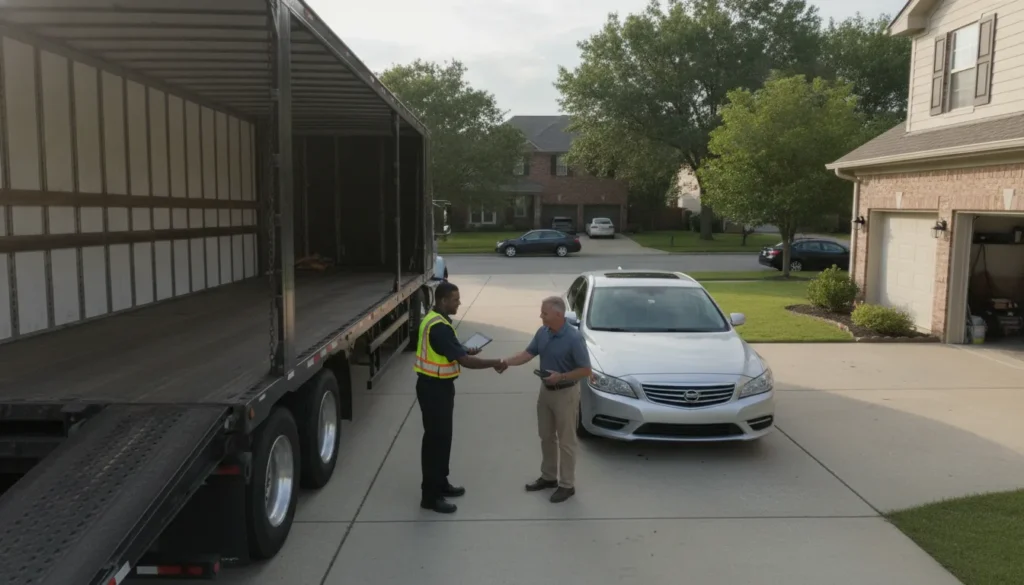
Sending a transport truck to a private home for a car pickup requires careful timing. You must balance the seller’s schedule with the carrier’s route. Clear steps keep the process simple.
Need to ship a private-sale vehicle? Get a custom quote from Road Runner Vehicle Transports or call 888-430-5866 before you coordinate pickup with the seller.
The process to ship a car bought from a private seller needs close timing between the owner and the carrier to ensure a smooth pickup. The work starts by checking the car title and finishing the payment before the transport truck arrives at the seller’s house or driveway. You should hire a trusted broker to find a vetted carrier registered with the Federal Motor Carrier Safety Administration for your long distance move. The seller must provide space for a large trailer and sign the Bill of Lading at pickup as a legal record of car condition. Sharing the seller’s info and car status helps ensure a smooth move while good planning stops delays and keeps your new car safe.
Moving a vehicle from a private driveway to your home has several critical steps to keep the car safe. Learning how to ship a car bought from a private seller starts with knowing the logistics of private deals.
How to ship a car bought from a private seller
When you buy a car from a person instead of a dealer, you handle the move yourself. This task starts with a clear plan and the right help. Road Runner acts as a logistics intermediary to help you shipping your car interstate by linking you with a network of vetted, independent motor carriers. By following a set path, you can ensure your new ride gets home safely without extra stress.
Agree on terms and get a quote
Before you book, you and the seller must agree on when the car is ready. You also need to know if the car runs. This fact is key because non-running cars need special tools for loading. Once you have these facts, you can get a price for your move. You can call 888-430-5866 for official help with your quote and booking. A good broker will give you a clear price with no hidden fees based on current market rates.
The shipping steps for private buys
Moving a car from a private home to your door follows a simple path. It begins with your order and ends with a safe delivery. Here is how you can ship a car bought from a private seller using a professional service:
- Get your quote and place an order. Share the vehicle type, locations, and if it runs. You will pay a broker fee to the company upfront to start the search for a driver.
- Wait for a driver. A broker finds a vetted driver who has the right tools and path to pick up your car. Check that the driver has the proper insurance coverage before they take the keys.
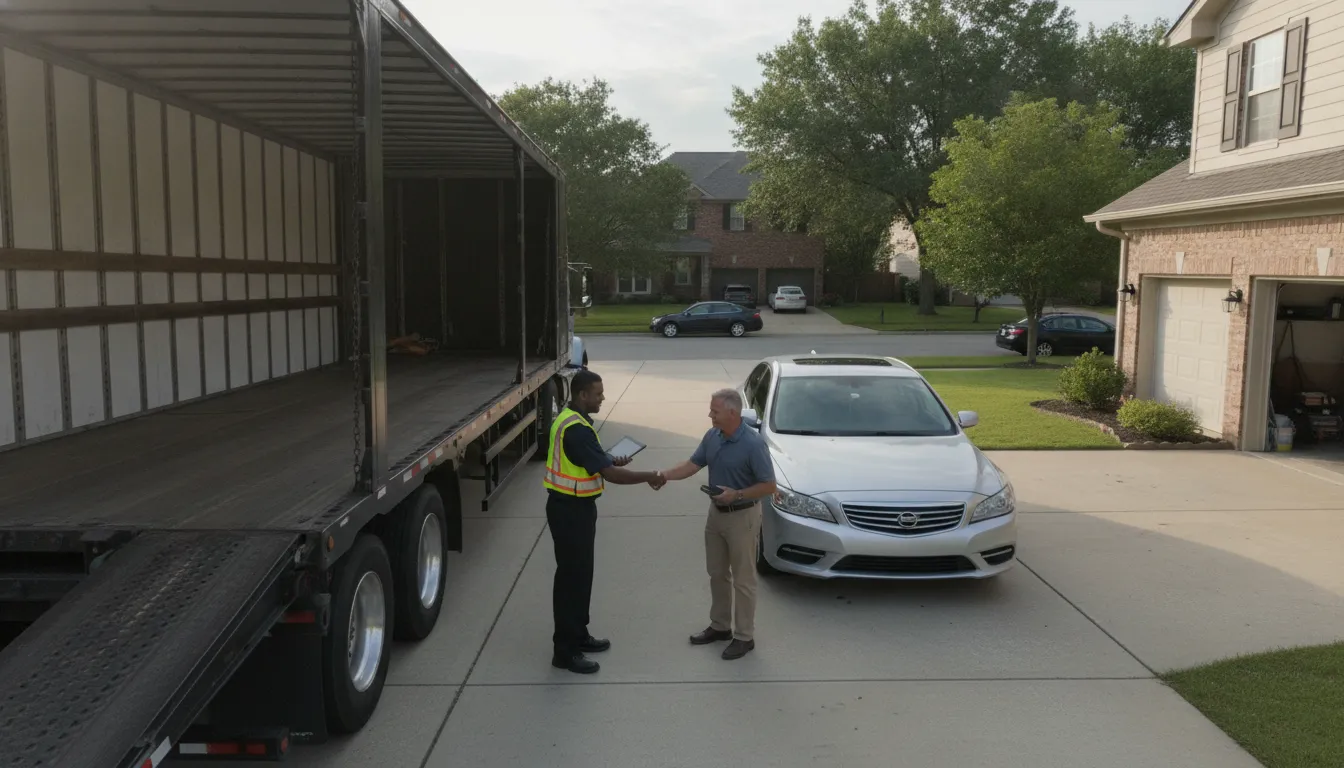
- Set up the pickup. The driver will call the seller to plan a time. Make sure the spot is easy for a large truck to reach, as door-to-door service depends on space for the truck to move and park.
- Complete the inspection. The driver and seller check the car and note any marks. This info goes on the Bill of Lading (BOL), which is a key legal paper you must review to confirm the car’s state at pickup.
- Track the move. The car moves toward you on the truck. Keep in mind that shipping windows are just estimates based on the driver’s path and plan.
- Accept delivery and pay the balance. When the car arrives, do a final check against the BOL. You will pay the transport balance directly to the driver once you see that your new car is home.
Check the papers and title
The deal is not done until the papers are right. When you buy from a private person, they must sign the title over to you. They also need to write the price and miles on it. If the seller does not have a title in their name, do not give them any money. Once you have the signed title, you take it to the DMV to get a new one in your name and pay any state sales tax.
Set title and payment timing before pickup day
Quick answer: Private-sale transport works best when the paperwork is settled before the carrier arrives. Confirm when the title will transfer, how final payment will be completed, who can release the keys, and whether the seller is still responsible for the vehicle until pickup documentation is signed.
Before you plan for shipping your car interstate, you must deal with the legal forms. Buying a car from a person is not the same as buying from a store. There are certain steps you must take to make sure you truly own the car. If you do not handle the title right, you could face delays or even lose your money. It is best to finish these tasks before you call a transport firm.
Verify the vehicle title and VIN
When you prepare to ship a car bought from a private seller, the title is your most vital tool. You must ask the seller to show you the paper title before you pay. Look at the name on the form to make sure it matches the person selling the car. If the title is not in their name, do not give them any money. This simple check helps you avoid scams and keeps your buy safe.
You must also check the car’s VIN. Walk around the car and find the VIN plate. It is often on the dash or inside the door. It is key to verify the VIN on the title is the same as the one on the car. If the numbers do not match, the car may have a bad past. You should never buy a car that has title flaws or a bad VIN.
Handle electronic titles and DMV rules
In some states, car titles are now kept in an online system. This means the seller might not have a real piece of paper to give you right away. If the seller tells you the title is online, you and the seller may need to visit the DMV to finish the deal. This step makes the swap real in the eyes of the state. It is a good way to ensure there are no debts on the car.
Every state has its own set of rules for car sales. You should look up the DMV site for both your state and the seller’s state. You will likely need to pay sales tax when you go to register the car in your home town. Knowing the tax costs and the needed forms will save you time and stress. Always follow the local rules to make sure the sale is legal and complete.
Coordinate payment and title handover
You and the seller must decide on a clear plan for payment and the title swap. To coordinate pickup after purchase, you must have the title in hand or a firm plan to get it. The seller must sign the back of the title. They must also write the sale price and odometer reading on the title for you. This data is needed for your new tags.
Do not let the transport driver pick up the car until you and the seller are both happy. The seller will want to be sure their payment has cleared. At the same time, you must be sure you have the rights to the car. Once the payment is done and the title is signed, the car is ready to ship. Taking these steps early ensures that your new car arrives at your door without any legal shocks.
Coordinate pickup access with the private seller
Quick answer: A private driveway is not always accessible for a multi-car carrier. Before dispatch, confirm the seller can meet the driver, clear space around the vehicle, answer the pickup call, and choose a safe nearby meeting point if the truck cannot reach the exact address.
When you ship a car bought from a private seller, clear plans are a must. You need to connect the truck driver with the person who has the car. This stage starts the real move. Good prep helps you avoid slow-downs or more fees. You will work with the seller, the broker, and the driver to get the job done right. Each person plays a key part in a smooth pickup.
Check the site for truck access
Most car haulers are very large. They need lots of room to turn and park safely. If the seller lives on a narrow street, the truck may not fit. Talk to the seller about the roads in their spot. If the street is too small, you will need to find a new place to meet. Low trees or low wires can also block big trucks. Gated spots can also be hard for a long trailer to enter.
A common fix is to meet at a nearby parking lot. Large lots for malls or food stores work well for this. This choice makes it safe for the driver and the car. It also keeps the whole move on track. You can read more about how to coordinate pickup after purchase to keep things simple. Pick a well-lit place if the pickup takes place late at night. Make sure the lot has plenty of space for a big rig to turn around.
Share contact and key details
The driver must be able to reach the seller. Give the carrier the seller’s full name and phone number. Make sure the seller knows to pick up the phone. The driver will call to set a firm time for the meet. You also need to check that the car keys are ready to go. The seller should be there to sign the Bill of Lading. This form is the main record of the car’s state at the start.
The seller must give the keys to the driver at the start. These keys let the driver move the car onto the trailer. If the car does not run, tell your broker right away. You need special tools for cars that do not move on their own. The Federal Motor Carrier Safety Administration says you should check if your broker is on file. This step helps you work with a safe and legal group. It also gives you peace of mind during the move.
Set a real pickup window
Dates for car moves are usually just guesses. Traffic and bad weather can change the plan fast. A pickup window often covers a few days. You and the seller should both try to be free during this time. This helps the driver manage their long trip. Most drivers call a few hours before they get to the curb. This call gives the seller time to get the car ready and meet the truck.
Stay in touch with your broker as the date gets close. They can give you fresh news on where the truck is. If the seller has a tight plan, tell the broker as soon as you can. This helps the carrier find the best time to stop by. Most car moves follow a set path from the first price to the final drop. Keeping everyone in the loop is the best way to get your car home fast. A good plan keeps the stress low for everyone.
What should be documented on the Bill of Lading?
The Bill of Lading (BOL) is the most vital paper when you ship a car bought from a private seller. This legal form serves as a receipt and a record of the car’s state. Both auto brokers and carriers that work across state lines must register with the Federal Motor Carrier Safety Administration. The BOL proves the carrier took the car and lists any issues it had before the trip.
Record the vehicle condition at pickup
When the driver arrives at the seller’s home, they will do a walk-around check. You or the seller should be there to watch this process. The driver will note every dent, scratch, or chip on the BOL. It is a good idea to take clear photos of the car from all angles in bright light.
These photos act as extra proof if you need to file a claim later. Make sure the driver records every mark, no matter how small it seems. A rushed check is a common cause of trouble. If the seller feels rushed, they might miss a small crack or a paint scrape.
If these marks are not on the BOL at the start, you cannot prove the driver caused them. This is why you should ask the seller to take their time. They should check the roof, the bumpers, and the lower panels. Clear notes on the BOL protect your money and your new car.
Record mileage and sign the form
The BOL must also show the current mileage of the car. The driver should look at the odometer and write the exact number on the paper. This ensures the car was not used for private trips while on the road. Once the check is done, the seller and the driver must both sign the form.
The seller should get a copy of the signed BOL before the truck leaves. This copy is your proof of how the car looked when it was picked up. If you are not there in person, you can have a friend or family member act as your agent. They will need to coordinate pickup after purchase with the driver.
This person must be able to spot damage and stand their ground if the driver misses something. Their signature on the BOL is just as binding as yours. Make sure they know the need for a full check before they sign anything.
Compare condition during delivery
When the car reaches your home, you must do another check. You will use the first BOL to compare the car’s state. Look for any new marks that were not listed at the start. If you find new damage, you must write it on the BOL before you sign it.
Do not let the driver rush you during this final step. A hurried delivery check often leads to disputes that are hard to win. Check the car for any new leaks or engine issues that were not there before. If the car was dirty at pickup, it might be hard to see small dents.
You may want to wash the car before the final sign-off if the driver allows it. Once you sign the BOL at delivery, you are saying the car arrived in good shape. Taking a few extra minutes to look over the vehicle can save you a lot of stress. It is the best way to make sure you have a smooth shipping your car interstate move.
Broker coordination versus hiring a carrier directly
Quick answer: A broker coordinates timing, carrier matching, and communication between you, the seller, and the assigned motor carrier. That support matters when the vehicle is out of state, the seller has limited availability, or the pickup window needs careful handling.
When you need to ship a car bought from a private seller, you have two main choices. You can work with a broker or hire a carrier directly. The Federal Motor Carrier Safety Administration (FMCSA) defines these roles in different ways. A broker only arranges the transport for your car. They do not own the trucks. A carrier is the firm that actually picks up and moves your vehicle. Both must register with the FMCSA to work across state lines.
The role of a transport broker
A broker like Road Runner Vehicle Transports acts as a bridge. We find the right truck for your move. Most car carriers are small teams. Many only have one or two trucks. These drivers spend most of their time on the road. They often do not have staff to answer phones or handle files. A broker takes on these tasks for you. We check that the carrier has the right insurance and a good safety record. This is a big help when you coordinate pickup after purchase from a seller you do not know.
Brokers also help with the flow of facts. We make sure the buyer, the seller, and the driver are all on the same page. This is vital for private sales. You may need to align pickup times with the seller’s plan. A broker manages these details so you do not have to. We also give you a clear price for the move. You usually pay a small fee to the broker first. Then you pay the rest of the bill to the driver when the car arrives. This split payment keeps the process fair for everyone.
Challenges of hiring a carrier directly
Hiring a carrier directly might seem like a way to save cash. But it often brings more stress. It can be hard to find a carrier that is heading exactly where you need to go. You would need to call many firms to check their routes. Also, many carriers only work with brokers. They do not take orders from one person at a time. They prefer to let a broker handle the billing and help desk. This lets them focus on driving safely. If you try to go direct, you might spend days on the phone without finding a truck.
When shipping your car interstate, safety is the top goal. A broker has tools to track carrier ratings and insurance. If a direct carrier has an issue, you might not find out until it is too late. Brokers also have a large network. If one truck breaks down, a broker can often find a new one fast. A direct carrier cannot offer that same backup plan. For most people, the peace of mind a broker gives is worth the cost.
Comparing your transport options
Choosing between a broker and a carrier depends on your needs. For a private sale, the planning is often the hardest part. A broker takes that weight off your back. They handle the search, the checks, and the timing. A carrier focuses on the move itself. Here is a look at how they differ.
| Choice | Best use |
|---|---|
| Broker | Arranges the move and checks carriers. |
| Carrier | Moves the car on its truck. |
Most buyers find that a broker is the best fit for private sales. The extra level of help prevents common slips. You get a partner who knows the trade. This makes the whole move smoother and safer for your new car.
Is it safe to ship a car bought from a private seller?
Quick answer: Shipping a private-sale car is safe when the buyer verifies ownership documents, shares accurate vehicle condition, uses a broker connected to vetted carriers, and makes sure the seller signs a clean Bill of Lading at pickup.
Buying a car from a person you do not know can feel risky. You might worry about the car’s state or the safety of your money. But you can ship a car bought from a private seller safely if you follow a few clear steps. Trust starts with proof of the sale and clear talk. If you check the car and the move company, you can make the move go well. It is wise to check the costs of shipping before you commit to the deal.
Verify the title and VIN
Before you send any money, you must check the forms. The seller must sign the title over to you. They also need to write down the sale price and the miles on the dash. It is vital to match the VIN on the title to the number on the car itself. If the seller does not have the title in their own name, do not buy the car. This step keeps you safe from buying a stolen car or one with a bank loan. It also ensures you can get a new title at your local DMV.
You should also ask for a past report. This report shows if the car was in a big crash or had flood damage. Seeing the car in person is best. If you cannot be there, hire a local mechanic to check the car for you. They can look for leaks, rust, or engine problems. Knowing the car is in good shape before it goes on a truck is vital. Never buy a car sight unseen if you can help it.
Check for broker and carrier registration
Safety also means picking the right help. When you hire a company to move your car, check their legal status. Interstate brokers and carriers must register with the Federal Motor Carrier Safety Administration (FMCSA). You should look for their six-digit MC Docket number on their site. If a company does not show this number, you should be wary. A registered broker acts as a guide to find a vetted driver for your move.
Avoid sites that do not clearly say if they are a broker or a carrier. Honest firms are open about their role in the job. When you use a broker, you often pay a fee to set up the move and more to the driver. Always check your bank or card use after you make a payment. Check that the sum taken matches what you agreed to pay. This helps keep your money safe while you make plans.
Plan the pickup safely
Once you buy the car, you must coordinate pickup after purchase with the seller and the driver. The driver will check the car before they load it onto the truck. They will create a Bill of Lading (BOL). This is a legal form that lists the state of the car at the start of the trip. You or the seller must sign this form. It is your proof if you need to file a claim later. Always keep a copy for your records.
Before the car leaves, check the carrier’s insurance. The driver should have insurance to cover the value of your car. If the seller meets the driver, ask them to take photos of the car from all sides. This gives you proof of the car’s state right before it was moved. Keep all talk in writing to avoid mistakes. Do not let the seller hand over the car until you both agree on the plan. This keep things clear and safe for all.
Frequently Asked Questions
How do you plan pickup with a private seller?
You must share the carrier info with the seller once a broker sets up a truck. Confirm the seller will be there for the check and to sign the Bill of Lading. According to Road Runner Vehicle Transports, this form is the main legal record of the car’s state at pickup. Make sure the spot is easy to reach for a large truck so the driver can find the home.
How do you handle the title when shipping a car?
The seller must sign the title over to you and write the sale price and miles on it. As the University of Central Florida says, you will need this signed paper at the DMV. You usually pay the broker fee first and the rest to the carrier at delivery. Keep the title with you and do not leave it in the car during the move.
Is it safe to ship a car bought from a private seller?
Yes, shipping is a safe choice if you use a licensed broker to find a good carrier. The FMCSA says all interstate carriers and brokers must register and have a set number. A good broker will check the carrier’s insurance and safety record before they pick up your car. This adds a layer of trust for your big buy from a person you do not know.
Can I drive a car home after buying it from a private seller?
You can drive it home, but you must have a valid plate, tag, and insurance first. Long trips in an old or unknown car can lead to break downs on the road. Many buyers choose to ship because it saves time and keeps the car in good shape. If you do drive, check the oil and tires well. Most people find that hiring a pro is much easier and less risky for a long trip.
Ready to ship your car from a private seller?
Leaving your new car in a private seller’s driveway for too long can lead to high storage fees and risks to its safety from the weather. Waiting to book your ship date means you might miss the best carrier routes and face much longer wait times to get your car home. By taking action today, you get your car on the road faster so you can start driving it as soon as you can without delays. You can also learn more about shipping costs for online purchases on our blog to help you plan your budget for this move.
Ready to get moving? Call 888-430-5866 to request a custom quote from our car shipping team today.