
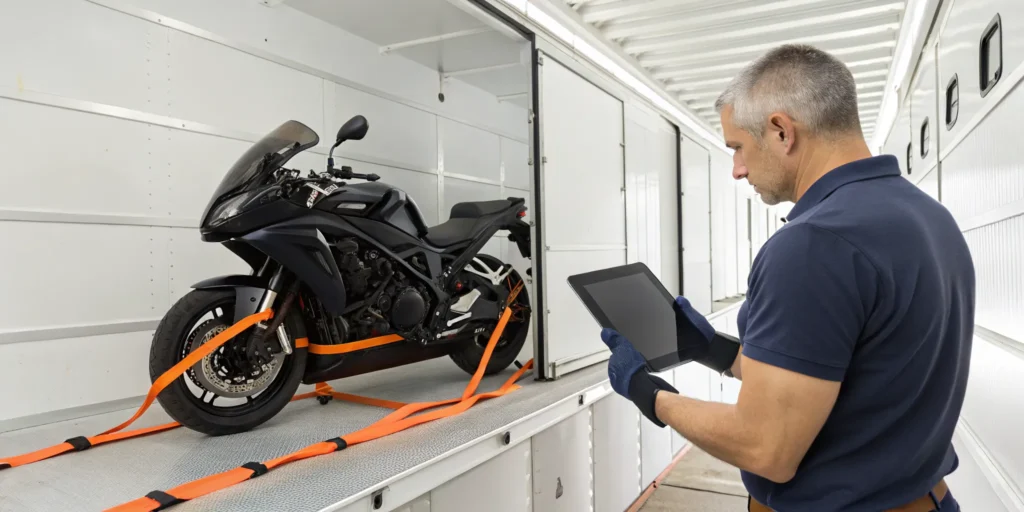
Your motorcycle is more than just a vehicle; it’s a prized possession. Entrusting it to a transport company requires confidence and peace of mind. That process begins the moment you request your first motorcycle transport quote. This isn’t just about finding a price; it’s about finding a professional partner you can rely on. To do that, you need to know what questions to ask, what red flags to look for, and how to spot a quality service. This guide is designed to put you in control, equipping you with the knowledge to vet transporters, understand insurance policies, and prepare your bike for a safe journey.
Key Takeaways
- Understand what shapes your quote: Your shipping cost is mainly determined by four factors: travel distance, your choice of open or enclosed transport, your motorcycle’s size, and the time of year. Having these details ready helps you get a fast and accurate price from any company.
- Look beyond the lowest price: The best value comes from a trustworthy company, not just the cheapest one. Protect your bike by verifying a transporter’s insurance coverage and licensing, reading recent customer reviews, and asking about their specific experience with motorcycles.
- Plan ahead for a smoother shipment: A little flexibility and preparation can save you money and prevent headaches. Try to book during the off-season or provide a wider delivery window for better rates, and always take photos of your bike’s condition before it’s loaded onto the truck.
What Affects Your Motorcycle Shipping Quote?
When you get a quote to ship your motorcycle, the final number is a careful calculation based on a few key details. Understanding these factors helps you see exactly what you’re paying for and how to find the best service for your budget. From the journey itself to the type of bike you have, the main components that influence your shipping cost are the route, transport type, your bike’s specifications, and the time of year.
Distance and Route
Unsurprisingly, the farther your motorcycle travels, the more it will cost. A cross-country trip from California to New York will have a higher price tag than a shorter, regional move from one state over. The specific route also matters. Shipping between major cities is typically more affordable because carriers run these popular routes frequently, making it easier to fill a truck. If your pickup or delivery location is in a remote or rural area, it may cost a bit more for the driver to go off the main highway to reach you. This extra mileage and time are factored into your quote.
Open vs. Enclosed Transport
You can choose between open and enclosed transport, and your decision directly impacts your quote. Open transport is the more budget-friendly option, where your bike is secured on an open-air trailer alongside other vehicles. For more protection, enclosed transport shields your bike inside a covered trailer, protecting it from weather and road debris. This premium service is a great choice for high-value, custom, or classic bikes and typically costs about 30-35% more than the open alternative. It’s a trade-off between cost and maximum protection during transit.
Your Motorcycle’s Size and Type
The size and weight of your motorcycle play a significant role in the cost. A large touring bike or a custom chopper takes up more space and weight on a carrier than a small scooter or a standard sport bike, so it costs more to ship. It’s also important to mention if your bike is in running condition. A non-running motorcycle requires special equipment, like a winch, for loading and unloading. This extra labor often adds a small fee to the final price, so be sure to provide accurate details when requesting your quote.
Time of Year
The calendar can affect your shipping quote. The vehicle transport industry has peak seasons, mainly in the spring and summer, when high demand can lead to higher prices. In contrast, shipping during the off-season in the fall and winter often comes with lower rates. If your timeline is flexible, booking your transport during these slower months is a great way to save. If you must ship during a busy period, try to book your service in advance to secure a better rate and ensure a spot on the carrier.
What’s the Average Cost to Ship a Motorcycle?
Let’s talk numbers. While every motorcycle shipment is unique, understanding the average costs can give you a solid baseline for your budget. The final price on your quote will depend on several factors, like the distance of the trip and the type of transport you choose. But to give you a clearer picture, we can break down the typical costs based on how far your bike needs to travel. Knowing these ranges helps you spot a fair deal and plan your expenses without any last-minute surprises.
Local and Short-Distance Rates
If you’re moving your motorcycle to a nearby city or just a few states over, the cost is quite manageable. For trips under 500 miles, you can generally expect to pay between $300 and $500. This price range makes short-distance shipping a great solution whether you’re buying a bike from a private seller in a neighboring town, heading to a regional rally, or moving to a new home within the same part of the country. The straightforward shipping process for these shorter trips helps keep the costs down.
Cross-Country Shipping Costs
For those bigger moves across the country, the price tag naturally goes up to account for the distance, fuel, and logistics. On average, shipping a motorcycle from one coast to another costs around $850. For any trip that exceeds 1,500 miles, you should budget somewhere between $700 and $1,000, though it can sometimes be more depending on the specific route. This investment ensures your bike is handled by professionals over a long haul, giving you peace of mind as it makes its way to its new home.
Common Additional Fees
The base quote is your starting point, but it’s smart to ask about other charges that could be added to your final bill. Transparency is key, so a good transport company will be upfront about these. Some common extra fees include residential pickup and delivery, which can add $50 to $150. If your bike needs to be stored at a terminal, that might cost $25 to $75 per day. A liftgate service for bikes that can’t be easily rolled onto the truck can also add $50 to $100. You can often find answers to these questions on a company’s FAQ page.
How to Get an Accurate Shipping Quote
Getting a clear and reliable quote is the first step toward a stress-free shipping experience. While it might seem like the goal is to find the lowest price, what you really want is an accurate price from a trustworthy company. A quote that seems too good to be true often is, and it could hide extra fees or reflect subpar service. To get a quote you can count on, you’ll need to do a little research and have your details ready. Let’s walk through the best ways to gather pricing information so you can make a confident decision.
Using Online Quote Tools
Online comparison tools can be a helpful starting point for getting a general sense of the market rate. Websites like uShip allow you to enter your shipping details once and receive bids from multiple carriers. This can give you a quick overview of what different companies are charging for your route. However, it’s important to remember that these platforms are marketplaces, and the quality of the carriers can vary significantly. Use these tools for initial research, but always take the extra step to investigate the individual companies behind the quotes. Look into their reviews, authority, and insurance coverage before committing.
Contacting Companies Directly
For the most accurate and transparent pricing, I always recommend contacting transport companies directly. When you request a quote from a provider like Roadrunner, you get to speak with a specialist who can answer your specific questions. This is your chance to ask about their insurance policy, the type of trailer they use for motorcycles, and their typical delivery timelines. Direct communication helps you gauge their professionalism and customer service. It also ensures the quote is tailored to your exact needs, with no surprises down the road. This approach gives you a much clearer picture of the company you’ll be trusting with your bike.
What Information to Have Ready
To get a fast and accurate quote, it helps to have all your information organized before you start making calls or filling out forms. The more details you can provide, the more precise your estimate will be. Be prepared to share the exact pickup and delivery locations, including zip codes. You’ll also need your motorcycle’s year, make, and model, along with any modifications that might affect its size or weight. Finally, have your ideal shipping dates in mind, and decide whether you prefer open or enclosed transport. Having these details ready will streamline the process and help your transport provider give you a quote you can rely on.
How to Compare Transport Companies
Once you have a few quotes in hand, it’s time to look beyond the price tag. The best transport company for you will offer a combination of fair pricing, reliable service, and peace of mind. It’s about finding a partner you can trust with your bike. To make a smart decision, you need to compare the details of what each company offers, from their insurance policies to their customer reviews. This helps you see the full picture and choose a service that truly fits your needs.
Insurance Coverage and Protection
Your motorcycle is a prized possession, so its safety during transit is a top priority. Don’t just assume your bike is covered; ask for the specifics. A reputable company will provide a standard insurance policy with every shipment. For example, some shippers include a set amount of coverage, like $7,000, with the option to purchase more if your bike’s value is higher. Before you commit, get a copy of their insurance certificate and understand what’s covered, what the deductible is, and how to file a claim if needed. This is one area where you definitely don’t want any surprises.
Reputation and Licensing
A company’s reputation can tell you a lot about the experience you can expect. Spend some time reading customer reviews on independent sites to get an unbiased view of their service. Look for companies with a long history of positive feedback and high ratings. Beyond reviews, verify that the company is properly licensed and bonded. A legitimate transporter will be registered with the Department of Transportation and have a motor carrier (MC) number. Choosing a well-regarded company with the right credentials is your best bet for a smooth, hassle-free shipment.
Delivery Windows and Flexibility
Understanding a company’s scheduling process is key to avoiding frustration. Ask about their estimated delivery windows and whether they offer a guaranteed pickup or delivery date. Many companies provide tracking services, allowing you to follow your motorcycle’s journey and stay updated on its progress. If your schedule is flexible, you might be able to save some money. Companies often have more pricing options if you aren’t locked into specific dates. Clear communication about timing and tracking is a hallmark of a professional shipping process, so make sure you’re comfortable with their system.
Service Options and Price Transparency
When you compare quotes, make sure you’re comparing apples to apples. A low price might not include the same level of service as a higher one. Check if the quote is for open or enclosed transport and whether it includes door-to-door or terminal-to-terminal service. A trustworthy company will provide a detailed quote with no hidden fees. If a price seems too good to be true, ask what’s included. Getting clarity on all the available services ensures you’re choosing the right option for your bike and your budget, without any unexpected costs later on.
Key Questions to Ask Your Transporter
A quote is more than just a price; it’s the start of a conversation. Asking the right questions helps you vet a company and ensures there are no surprises. A trustworthy transporter will welcome your questions and provide clear answers. Before you commit, make sure you get the details on these key topics.
“What does your insurance cover?”
Before handing over your keys, you need to confirm your bike is protected. Ask potential transporters, “Is your company bonded and insured?” Then, dig a little deeper. What is the insurance limit, and does it cover your motorcycle’s full value? Does the policy protect against damage during loading, transit, and unloading? It’s also smart to ask if there’s a deductible you’d be responsible for in case of a claim. Reputable transporters should readily provide a certificate of insurance, giving you the confidence and peace of mind that your bike is in safe hands.
“How much experience do you have with motorcycles?”
Shipping a motorcycle isn’t like shipping a car. Your bike has unique needs and requires special handling to arrive safely. That’s why you should ask, “How much experience do you have shipping motorcycles?” An experienced company uses the right equipment, like soft tie-downs and secure wheel chocks, to prevent damage. Ask about their process and the tools they use. Choosing a company that offers specialized motorcycle transport means they know exactly how to care for your bike from start to finish.
“How does pickup and delivery work?”
Understanding logistics is key to a stress-free experience, so ask, “How does pickup and delivery work?” Clarify if they offer door-to-door service or if you’ll need to meet at an accessible location. This is important if you live on a narrow street where a large truck can’t fit. You should also ask how they’ll keep you updated throughout the shipping process. Knowing who to contact and how you’ll receive tracking information makes the wait much easier.
“What are your payment and cancellation policies?”
To avoid financial surprises, get clarity on all costs upfront. A great question is, “Does your quote include everything?” This prompts the company to disclose any potential additional fees, like fuel surcharges. Also, confirm their payment schedule and what methods they accept. Finally, life happens, so it’s smart to understand their cancellation policy. Knowing the procedure and any fees if your plans change helps you make a confident decision. You can often find answers to these common questions on a company’s website.
Get Your Motorcycle Ready for Shipping
Once you’ve chosen a transporter and booked your shipment, a little prep work will ensure everything goes off without a hitch. Taking a few simple steps before the driver arrives protects your bike and makes the handoff process smooth and professional. Think of it as getting your motorcycle ready for its own mini-vacation. Properly preparing your bike is a crucial part of the shipping process that gives you peace of mind.
This checklist covers the essential tasks to complete before your motorcycle is loaded onto the truck. From documenting its condition to performing a quick mechanical check, these actions help guarantee a damage-free delivery and a stress-free experience from start to finish.
Document Its Condition
Before your bike goes anywhere, grab your phone and play photographer. Take clear, well-lit photos and videos of your motorcycle from every angle. Be sure to capture close-ups of any existing scratches, dings, or custom parts. This creates a detailed visual record of your bike’s condition right before it’s handed over to the carrier. This documentation is your best friend if you need to make an insurance claim later. It provides a clear “before” picture that protects both you and the transport company, ensuring everyone is on the same page.
Complete a Mechanical Check
Give your motorcycle a quick once-over to make sure it’s in good working order. Check the tire pressure and top off any essential fluids. Your bike should be able to roll and steer easily for loading and unloading. It’s also a good idea to charge the battery. If your motorcycle has a steering lock, ask your transport company if it should be left locked or unlocked during transit. A quick mechanical inspection helps prevent any surprises and ensures your bike is ready for a safe journey. For more specific questions, you can always check our company’s FAQ page.
Follow Fuel and Personal Item Rules
You don’t need a full tank of gas for shipping. In fact, it’s safer to have less. Aim for about a quarter tank of fuel, which is plenty for the carrier to move the bike without adding unnecessary weight or fire risk. Next, remove all personal items. This includes your GPS unit, toll transponders, loose items in saddlebags, and any custom accessories that aren’t permanently attached. Transport companies are not licensed to carry personal goods, and their insurance won’t cover them. Keeping your bike clear of extras simplifies the process and keeps your belongings safe.
Common Mistakes When Requesting Quotes
Getting a shipping quote is the first real step toward getting your motorcycle on the road to its new home. But it’s easy to make a few missteps that can lead to headaches later. To make sure you get a quote you can rely on, let’s walk through some of the most common mistakes and how you can sidestep them for a smooth, surprise-free experience.
Focusing Only on the Lowest Price
It’s tempting to jump on the lowest price you see, but this can be a classic case of “you get what you pay for.” A rock-bottom quote might come from a company that cuts corners on service, equipment, or insurance, putting your bike at risk. Some unusually low prices are just bait, with extra fees tacked on later. Instead of hunting for the cheapest option, look for the best value. A reputable company like Roadrunner Vehicle Transports provides a fair price that reflects high-quality service, reliable timelines, and the peace of mind that your motorcycle is in good hands.
Not Verifying Insurance Details
Never assume a transport company has adequate insurance. Your motorcycle is a valuable asset, and you need to know it’s protected. Before you commit, ask for proof that the company is fully bonded and insured. This is a crucial step that protects your bike against damage or loss during transit. A trustworthy transporter will be transparent about their insurance coverage and happy to provide documentation. If a company is hesitant to share these details, consider it a major red flag and move on. Your peace of mind is worth the extra question.
Overlooking Hidden Fees
The initial quote you receive should be clear and comprehensive, but sometimes it doesn’t tell the whole story. Some companies attract customers with a low base rate, only to add on extra charges later. These can include fuel surcharges, residential delivery fees, or extra costs for an inoperable motorcycle. To avoid any surprises, ask for a complete, itemized breakdown of all potential costs before you book. A transparent shipping process means you’ll know exactly what you’re paying for upfront, with no hidden fees waiting for you at the finish line.
Providing Incomplete Information
The accuracy of your quote depends directly on the accuracy of the information you provide. To get the best possible price estimate, you need to give the shipping company all the necessary details. This includes the exact pickup and delivery locations (city and zip code), the year, make, and model of your motorcycle, and whether it’s running or not. Being vague about your timeline or location can lead to an inaccurate quote that will likely change later. Having your information ready helps the transport company plan the route and give you a price you can count on.
Smart Ways to Save on Motorcycle Transport
Getting a great deal on motorcycle shipping doesn’t mean you have to settle for a sketchy service. While you should be wary of quotes that are drastically lower than the competition, there are several legitimate ways to reduce your costs. A little planning and flexibility can go a long way toward keeping more money in your pocket without sacrificing peace of mind. It’s all about understanding what drives the cost and using that knowledge to your advantage.
Be Flexible with Your Dates
If you can be flexible with your pickup and delivery dates, you can often find a better price. When you provide a wider window, it allows transport companies to plan the most efficient routes, grouping your motorcycle with other vehicles heading in the same direction. This logistical efficiency translates into savings for them, and they pass some of that on to you. Booking your shipment well in advance is the best way to give yourself this wiggle room. Instead of needing a specific day for pickup, see if you can provide a three-to-five-day window. You can learn more about how this fits into the shipping process and plan accordingly.
Consider Terminal-to-Terminal Service
While door-to-door shipping is incredibly convenient, it’s also the most expensive option because it requires a truck to travel into residential neighborhoods. If you live near a major city, you might be able to save by choosing terminal-to-terminal service. With this option, you drop your motorcycle off at a secure company hub and pick it up from another terminal near your destination. Not only can this lower your quote, but it can sometimes speed up the delivery time since the main transport truck doesn’t have to make as many individual stops. Check with your transport provider to see if they have terminals conveniently located for you and if this service option is a good fit.
Book During the Off-Season
Just like with travel, the vehicle transport industry has peak and off-peak seasons. The busiest times are typically during the summer months and around major holidays when more people are moving or traveling. During these periods, demand is high, and so are the prices. If your move isn’t time-sensitive, try to schedule your motorcycle shipment during the off-season, like the fall or winter. Shipping outside of these busy times can often lower your costs significantly. By avoiding the rush, you can take advantage of more competitive rates and greater carrier availability. Planning ahead and booking during a slower period is one of the easiest ways to get a more favorable quote.
Red Flags to Watch For in a Quote
Getting a quote should feel straightforward and transparent. If something feels off, it probably is. Trusting your gut is important, but knowing the specific warning signs can save you from a major headache. When you’re comparing quotes, keep an eye out for these red flags that signal a company might not be the reliable partner you’re looking for. A trustworthy company will provide clear, upfront information and professional service from the very first interaction.
Prices That Seem Too Good to Be True
We all love a good deal, but an unusually low shipping quote should make you pause. Some companies lure customers in with a rock-bottom price, only to inflate it with hidden fees once your motorcycle is in their possession. This “bait-and-switch” is a common scam where “a customer is originally quoted one price — usually a very low one — and once the bike is in transit, the price increases significantly.” A reputable transporter will give you a realistic quote that reflects the quality of their service. If a price seems drastically lower than all the others, ask detailed questions about what’s included and what might cost extra. A transparent shipping process should have no surprises.
Large Upfront Deposit Requirements
A small deposit to secure your booking is standard practice in the industry. However, be wary of any company that demands a large, non-refundable deposit before confirming your shipment. As one industry expert warns, choosing a company with the cheapest price can lead to issues, “especially if they require a large upfront deposit that may not be refundable.” This tactic can lock you into a contract with a subpar company, leaving you with little recourse if things go wrong. Before paying anything, make sure you fully understand the company’s payment and cancellation policies. A reliable partner will have fair and clear terms.
No Proof of Licensing or Insurance
This is a non-negotiable. Any legitimate auto transport company must be licensed, bonded, and insured. If a company is hesitant or unable to provide you with proof of their credentials, walk away immediately. You should always ask if the company is bonded and insured. Their inability to provide documentation is a significant red flag. You can independently verify a carrier’s operating authority and insurance status through the Federal Motor Carrier Safety Administration (FMCSA) database. Entrusting your motorcycle to an unlicensed or uninsured carrier puts you at risk of financial loss if something happens during transit.
Poor or Unprofessional Communication
The way a company communicates during the quoting process is a strong indicator of the customer service you’ll receive later. Vague answers, unanswered calls, or pushy sales tactics are all warning signs. As riders in online forums often caution, “poor communication or unprofessional behavior from brokers can indicate potential issues with the service.” You want a partner who is responsive, clear, and happy to answer all your questions. If you feel rushed or dismissed, it’s best to find another company. Excellent customer care should start from the moment you first reach out.
Related Articles
- How Much Does It Cost to Ship a Car? (Price Guide)
- How to Ship a Car: Complete Guide to Auto Transport | Road Runner Vehicle Transports
- The Cheapest Way to Ship a Car: A Complete Guide
- How to Ship a Car to Another State: A Complete Guide
- 5 Best Auto Shipping Companies in Texas (Reviewed)
Frequently Asked Questions
Is open transport really safe enough for my motorcycle? This is a very common question, and for most standard bikes, the answer is yes. Open transport is the industry standard, and carriers use specialized equipment like soft tie-downs and wheel chocks to secure your motorcycle properly. While it is exposed to the elements, it’s a reliable and cost-effective method used for millions of vehicles every year. If you have a classic, custom, or high-value bike, or just want maximum peace of mind, enclosed transport is a fantastic option for that extra layer of protection.
How long will it actually take for my motorcycle to arrive? The transit time depends almost entirely on the distance. A short, regional trip might only take a few days, while a cross-country shipment can take one to two weeks. Your transport company will give you an estimated delivery window, not a specific date. This window accounts for factors like weather, traffic, and the driver’s schedule for other pickups and drop-offs along the route. Good companies offer tracking so you can follow your bike’s progress.
Do I have to be there for the pickup and delivery? Someone needs to be present at both ends of the journey, but it doesn’t have to be you. You can designate a trusted friend, family member, or colleague to act as your representative. This person will need to sign the Bill of Lading (a crucial inspection report) after reviewing the bike’s condition with the driver. Just make sure they understand the process and have your contact information in case they need to reach you.
What happens if my bike gets damaged during shipping? In the rare event that damage occurs, the first step is to note it on the Bill of Lading before you sign anything at delivery. This is why taking detailed photos of your bike beforehand is so important. You would then contact the transport company immediately to start the claims process. A reputable company will have clear insurance policies and will guide you through the necessary steps to get everything resolved.
Why is my quote higher than the average prices you mentioned? The averages are a great starting point, but your specific quote is tailored to your shipment. If your quote is higher, it could be due to a few things. You might be shipping to or from a rural area that requires extra mileage for the driver. Or, you could be shipping during a peak season like summer when demand is high. The size of your bike also matters; a large touring motorcycle costs more to ship than a small sport bike.