
.
.
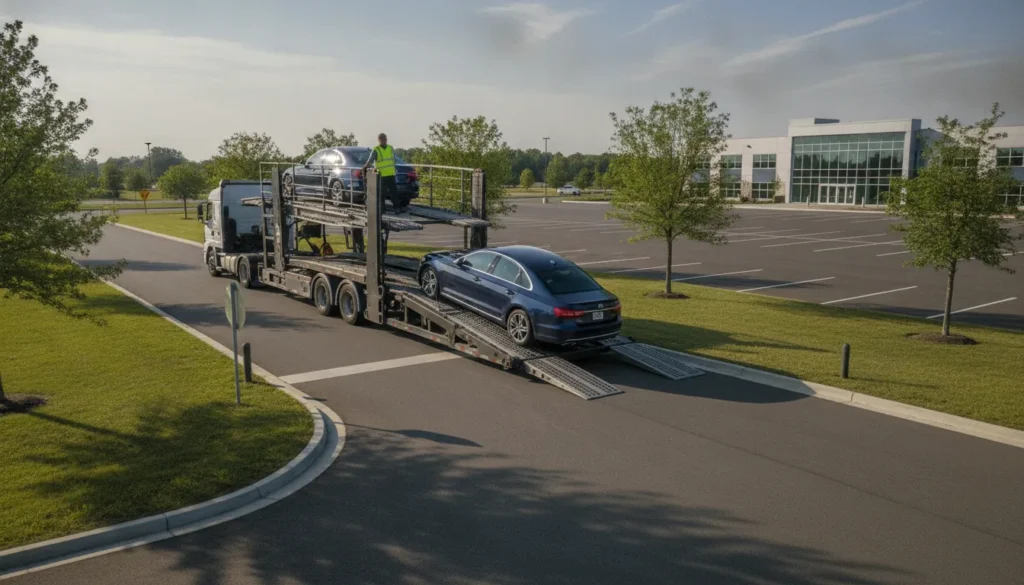
Terminal to terminal vs door to door car shipping comes down to how much travel, handling, and scheduling you want to manage. Terminal service requires you to deliver and collect the vehicle at designated facilities. Door-to-door service arranges carrier pickup and delivery as close to your requested locations as safety and road access allow.
Request a Road Runner door-to-door shipping quote and confirm location access and availability.
The lowest quote is not always the lowest total cost. A useful comparison includes your travel to a terminal, possible storage, the number of handoffs, carrier availability, and how long you can wait. Road Runner Vehicle Transports offers verified door-to-door transport. Terminal-to-terminal shipping is discussed here only as an educational comparison, not as a Road Runner service.
Terminal to terminal vs door to door car shipping at a glance
Door-to-door shipping usually wins on convenience and fewer customer handoffs. Terminal-to-terminal shipping may suit a flexible customer who lives close to operating facilities. Availability matters: terminal networks and schedules vary, while door-to-door pickup still depends on safe carrier access near both addresses.
| Factor. | Terminal-to-terminal. | Door-to-door. |
|---|---|---|
| Pickup. | You drive to a designated terminal. | Carrier meets you at or near the requested location. |
| Delivery. | You collect the vehicle from a terminal. | Carrier meets you at or near the destination. |
| Customer handoffs. | Includes terminal drop-off and collection. | Usually direct meetings with the carrier. |
| Access issue. | Distance and hours of the facility. | Street width, restrictions, and safe loading space. |
| Timing issue. | Terminal hours and possible storage time. | Pickup and delivery windows and carrier route. |
| Cost comparison. | Include travel and possible storage charges. | Quote depends on route, vehicle, timing, and availability. |
Consider an owner moving a sedan from one city to another. If the nearest terminals require two long rides and time away from work, a lower transport rate could lose its advantage. If both terminals are nearby and the owner has a flexible schedule, the method may remain practical. The complete journey, not one line item, determines value.
How does door-to-door car shipping work?
With door-to-door car shipping, the carrier coordinates pickup and delivery near the addresses you provide. The service reduces the need to drive to separate facilities, but it does not guarantee that a large transport truck can enter every residential street. Safe and legal access controls the final meeting point.
Pickup and delivery near your locations
You provide the vehicle, route, contact, and timing details for a quote. Once transport is arranged, the driver coordinates a meeting window. At pickup, you and the driver inspect the vehicle and record its condition. A similar inspection takes place at delivery before you accept the vehicle.
Road Runner describes door-to-door transport as pickup from the customer’s specified location and direct delivery to the destination, subject to access and carrier availability. Customers should provide accurate details, remain available during scheduled windows, and report changes promptly.
When a nearby meeting point is needed
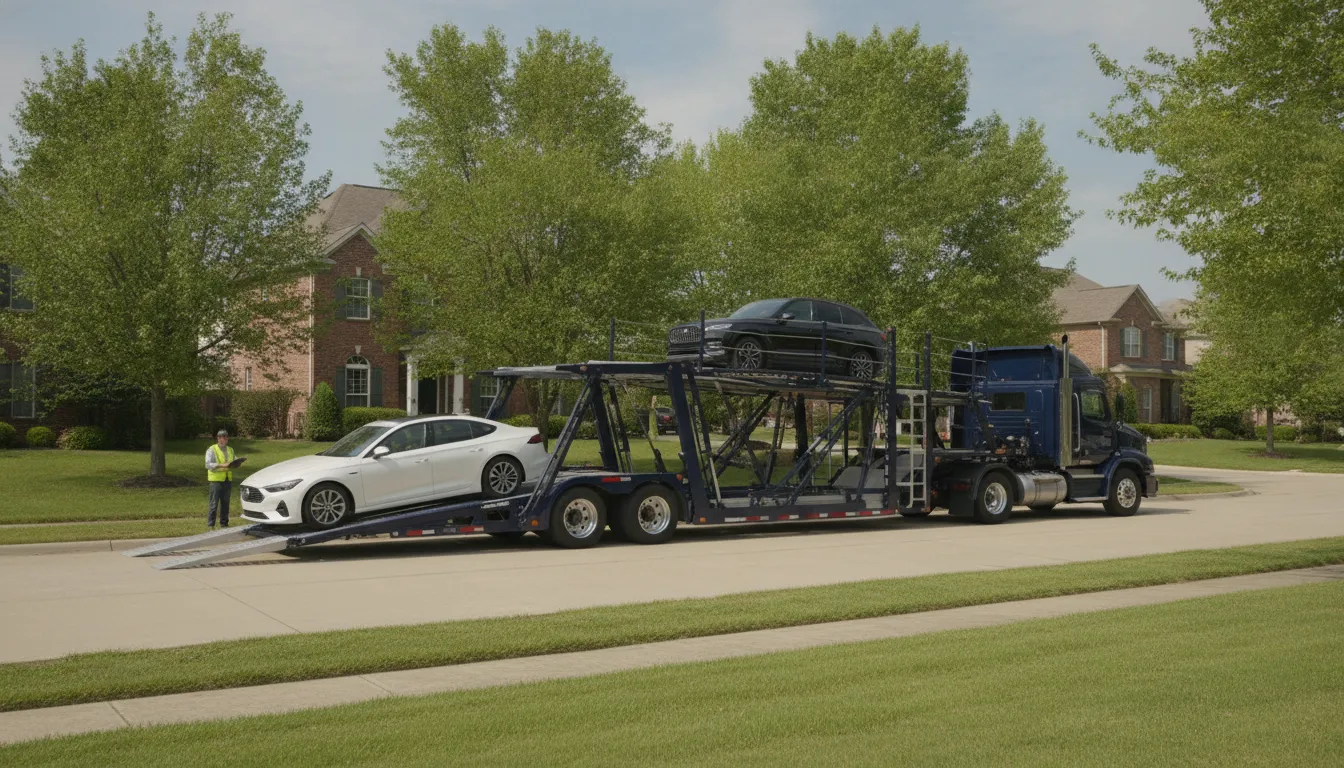
Car carriers need more room than passenger vehicles. Narrow streets, low branches, tight turns, weight limits, gated entrances, and local restrictions can make an exact-address stop unsafe or illegal. In that case, the driver may coordinate a nearby open parking area or wide road where loading can happen safely.
This is still door-to-door service in practical terms: the carrier gets as close as safely possible instead of asking you to travel to a distant terminal. Before booking, identify likely access constraints at both ends and confirm them through the Road Runner quote process.
How does terminal-to-terminal car shipping work?
Terminal-to-terminal shipping requires the customer to deliver the vehicle to a designated facility and collect it from another facility near the destination. The provider and terminal network determine whether the option is available. Road Runner does not claim this service, so confirm it directly with any provider offering it.
Drop-off, storage, and collection
The customer first drives the vehicle to the origin terminal during its operating hours. After check-in, the vehicle may wait until it is assigned to a carrier or route. At the destination terminal, the customer must collect it according to the facility’s process and schedule.
Those added facility steps can help a customer who cannot meet a carrier at home. They can also introduce extra handling, local travel, and possible storage charges. Ask who controls the vehicle at each stage, how condition is recorded, when storage charges begin, and what identification is needed for collection.
Availability is a deciding factor
A terminal option is useful only if facilities operate near the route and fit the customer’s schedule. A distant terminal can turn a seemingly simple shipment into a separate trip requiring fuel, rides, or time off work. Confirm the origin and destination terminal addresses, hours, and current availability before comparing quotes.
Which option is more convenient and accessible?
Door-to-door transport is usually more convenient because it removes separate terminal trips and reduces the customer’s role in moving the vehicle. Terminal service can still work for customers near active facilities. Accessibility differs: door-to-door depends on truck access, while terminal service depends on convenient facility access and operating hours.
Compare the real customer journey
Map every step you must complete. For terminal shipping, include travel to the origin facility, transportation home, travel to the destination facility, and the return drive. For door-to-door shipping, include your availability during the pickup and delivery windows and any short trip to an accessible meeting point.
- Choose for fewer errands: door-to-door typically requires less customer travel.
- Choose for a difficult address: compare a safe nearby meeting point with the distance to a terminal.
- Choose for a flexible schedule: verify facility hours, storage terms, and collection deadlines.
- Choose for a tight move: confirm realistic pickup and delivery windows before booking.
Get a quote based on your exact route, vehicle, timing, and accessible meeting locations.
How do timing and handoffs affect a shipment?
Each additional handoff creates another point that must be scheduled, documented, and coordinated. Door-to-door service usually limits customer-facing handoffs to pickup and delivery. Terminal shipping adds facility drop-off and collection, and the vehicle may wait for routing or pickup. Actual timing depends on route and carrier availability.
Pickup windows are not the same as transit time
Customers sometimes compare quotes using a single estimated date. A stronger comparison separates the pickup window, time in transit, and delivery window. For terminal shipping, also ask how long the vehicle could wait at either facility. For door-to-door shipping, ask how and when the driver communicates arrival updates.
Document condition at every transfer
Before releasing the vehicle, remove personal belongings as instructed, note existing damage, take clear photos, and review the condition record. Repeat the inspection at delivery or collection. The point is not to assume something will go wrong. It is to create a consistent record whenever responsibility changes.

Customers planning a longer route can also review the state-to-state car transport guide for more preparation considerations.
What affects the cost of each shipping method?
Car shipping prices depend on the shipment details and current market conditions, not just the service label. Common quote factors include route, vehicle size and condition, requested timeframe, and carrier availability. A terminal comparison should also include customer travel and any facility or storage charges.
Use a complete-cost checklist
A low advertised transport rate can be misleading when it excludes the work around the shipment. Compare written quotes and ask what can change the final amount. Do not assume terminal-to-terminal is automatically cheaper or door-to-door is always more expensive.
- Compare the quoted transport amount and included services.
- Add travel, rides, fuel, and time required for terminal drop-off and collection.
- Ask whether storage, missed collection, or rescheduling can create charges.
- Confirm whether vehicle size, operability, modifications, or route access affect the quote.
- Review timing expectations and carrier availability for the requested dates.
For more ways to evaluate the full price, read Road Runner’s guide to the cheapest way to ship a car. A quote tailored to the actual vehicle and route is more useful than a generic price estimate.
How to choose the right car shipping option
The right option fits your route, schedule, access, and tolerance for extra handling. Start by verifying which methods are genuinely available. Then compare complete costs and responsibilities. Road Runner offers door-to-door service; customers should confirm pickup and delivery access and carrier availability for their specific shipment.
A practical decision framework
- Verify service availability: do not plan around a terminal or carrier option until it is confirmed.
- Check both locations: identify street restrictions and safe meeting areas near pickup and delivery.
- Count handoffs: decide how much facility handling and customer travel you are comfortable managing.
- Compare complete costs: include transport, travel, storage possibilities, and your time.
- Review the process: confirm inspection, communication, timing, and payment expectations.
An urban customer with no legal space for a carrier may meet the driver at a nearby open lot. A rural customer may have enough space at home but face limited carrier availability. A traveler leaving before pickup may need to appoint a trusted adult, if permitted by the provider. These examples show why the best choice depends on operational details rather than a universal winner.
Frequently asked questions
Which is cheaper: terminal-to-terminal or door-to-door car shipping?
Neither method is automatically cheaper for every shipment. Compare the complete quote, including travel to the terminal, possible storage fees, route demand, vehicle details, and timing. Door-to-door may provide better overall value when it eliminates long facility trips.
Is terminal-to-terminal car shipping still available?
It may be available in some markets, but access depends on the provider, terminal network, route, and schedule. Confirm availability before planning around it. Road Runner Vehicle Transports is presented here only as a verified door-to-door provider.
Does door-to-door mean the carrier stops at my exact address?
Door-to-door means pickup and delivery as close to the requested locations as safe and legally accessible. If a large carrier cannot enter a narrow or restricted street, the driver may coordinate a nearby meeting point.
How many handoffs does each method involve?
Door-to-door usually reduces customer-facing handoffs because the carrier meets you near pickup and destination. Terminal shipping adds facility drop-off and collection steps and may involve storage handling. Ask how condition is documented at every transfer.
What should I ask before booking car shipping?
Ask about service availability, pickup and delivery access, timing windows, quote factors, payment terms, insurance documentation, and what happens if either location cannot accommodate the carrier. Get the answers in writing and review the agreement before booking.
Confirm your door-to-door shipping options
Road Runner Vehicle Transports offers door-to-door shipping designed to reduce customer travel and simplify vehicle pickup and delivery. Exact meeting points and timing still depend on safe access and carrier availability. Share accurate vehicle, route, and scheduling details so the quote reflects the shipment you actually need.
Request your Road Runner quote and confirm door-to-door access and availability for your route.