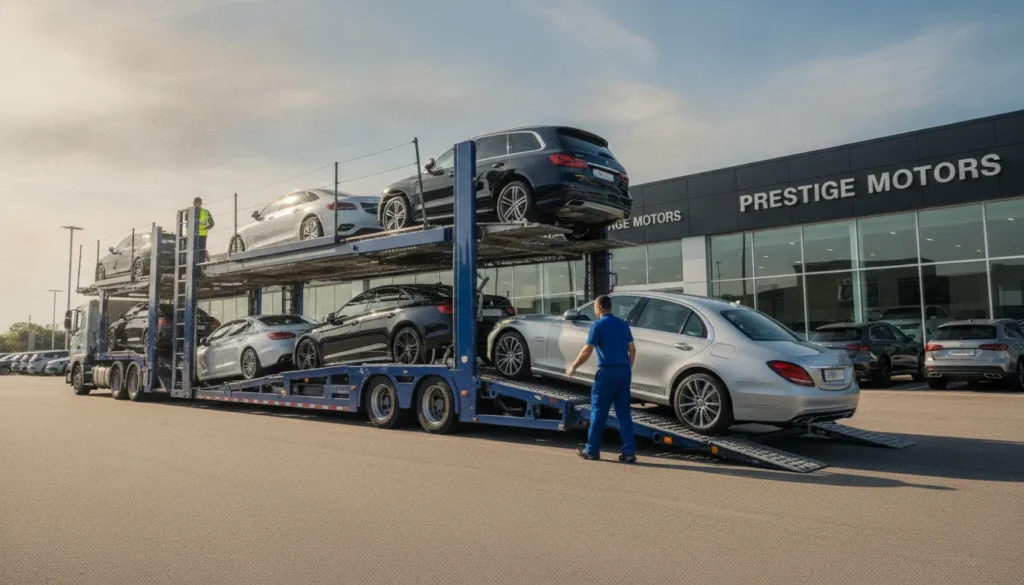
Buying a vehicle from a distant dealer or moving inventory between stores creates one immediate challenge: getting the vehicle to its destination safely, efficiently, and with every handoff documented. Dealership car shipping gives buyers and dealers a practical alternative to adding mileage or sending staff on a long drive.
Request a custom dealership car shipping quote from Road Runner Vehicle Transports.
Road Runner Vehicle Transports coordinates dealership car shipping by matching a buyer or dealer with a vetted independent motor carrier. The process covers scheduling, dealer release requirements, pickup inspection, transport, and delivery acceptance, while the carrier performs the physical move.
This guide explains the decisions and documents that matter for consumers buying from an out-of-state dealership and for dealers moving one vehicle or several inventory units. Use it to assign responsibilities early, prevent avoidable pickup delays, and prepare for a careful delivery inspection.
How does dealership car shipping work?
Road Runner Vehicle Transports starts with the vehicle, route, condition, contacts, and preferred timing. After the order is confirmed, the company coordinates with an appropriate carrier, the dealer releases the vehicle, both parties document its condition, and the recipient inspects it again at delivery.
The shipping process begins before a truck reaches the lot. The person booking the move shares the year, make, model, operating condition, pickup and delivery addresses, and preferred shipping window. Those details help determine the trailer type and equipment the move requires. For a broader overview of the customer journey, review the guide to shipping a newly purchased car home.
Confirm the shipment details
An accurate order should identify whether the vehicle starts, steers, brakes, and rolls. Modified, oversized, or inoperable vehicles can require different loading equipment. Sharing those facts before carrier assignment reduces the chance of a truck arriving without the right setup. Road Runner Vehicle Transports can help coordinate an appropriate option, while the assigned independent carrier performs the physical transport.
- Share the vehicle details, condition, route, and preferred pickup window.
- Review the written quote, transport option, payment terms, and cancellation terms.
- Confirm the dealership’s release process, lot hours, and pickup contact.
- Keep the buyer, dealer, and delivery contact available as pickup approaches.
- Inspect and document the vehicle before it is loaded.
- Inspect it again before signing the delivery paperwork.
Plan for practical pickup and delivery windows
Auto transport schedules depend on route conditions, carrier availability, weather, traffic, and earlier stops. A pickup or delivery estimate should be treated as a window rather than an exact appointment unless the written agreement says otherwise. If timing is unusually important, read the expedited car shipping guide and discuss availability before booking.
Key takeaway: The smoothest shipments have one reachable contact at the dealership and one reachable contact at delivery, each authorized to inspect and sign for the vehicle.
What documents do you need to ship a car from a dealership?
Road Runner Vehicle Transports recommends confirming the dealer’s release authorization, buyer identification requirements, vehicle details, and pickup contact before dispatch. The carrier’s bill of lading records the vehicle’s condition at pickup and delivery and should be reviewed carefully before either party signs it.
Document requirements can vary by dealer and transaction. The buyer should ask the dealership exactly what it needs to release the vehicle to a transport driver. A dealer may require proof that the purchase is complete, the transport order, buyer identification, or written authorization naming the pickup contact. Confirming the process early is especially important when arranging shipping for an out-of-state car purchase.
Create a clean handoff record
The transport order should use the correct pickup address, destination address, vehicle identification number, and contact information. Dealers moving multiple units should include a stock number for each vehicle. Before pickup day, the dealer should place keys and required release documents where the authorized employee can access them.
- Vehicle details: year, make, model, VIN, stock number, and operability.
- Dealer release details: lot hours, named contact, authorization, and key location.
- Transport details: pickup and delivery contacts, addresses, and trailer choice.
- Condition records: dated photos and the signed bill of lading.
Understand the bill of lading
The bill of lading serves as the transport receipt and condition record. At pickup, the driver and dealer representative should walk around the vehicle together and note visible marks. At delivery, the recipient compares the vehicle with that pickup record before signing. Keep copies of both signed records and supporting photos. The car shipping insurance guide explains why careful documentation matters if a damage concern must be reported to the carrier.
Key takeaway: Do not let the vehicle leave until the dealer release is authorized and the pickup condition is accurately recorded.
Coordinate a smooth dealership pickup
Road Runner Vehicle Transports helps coordinate the pickup contact, lot access, vehicle readiness, and carrier communication. Buyers should confirm the dealer can release the vehicle, while dealers should prepare the keys, documents, and a safe area for the driver to inspect and load it.
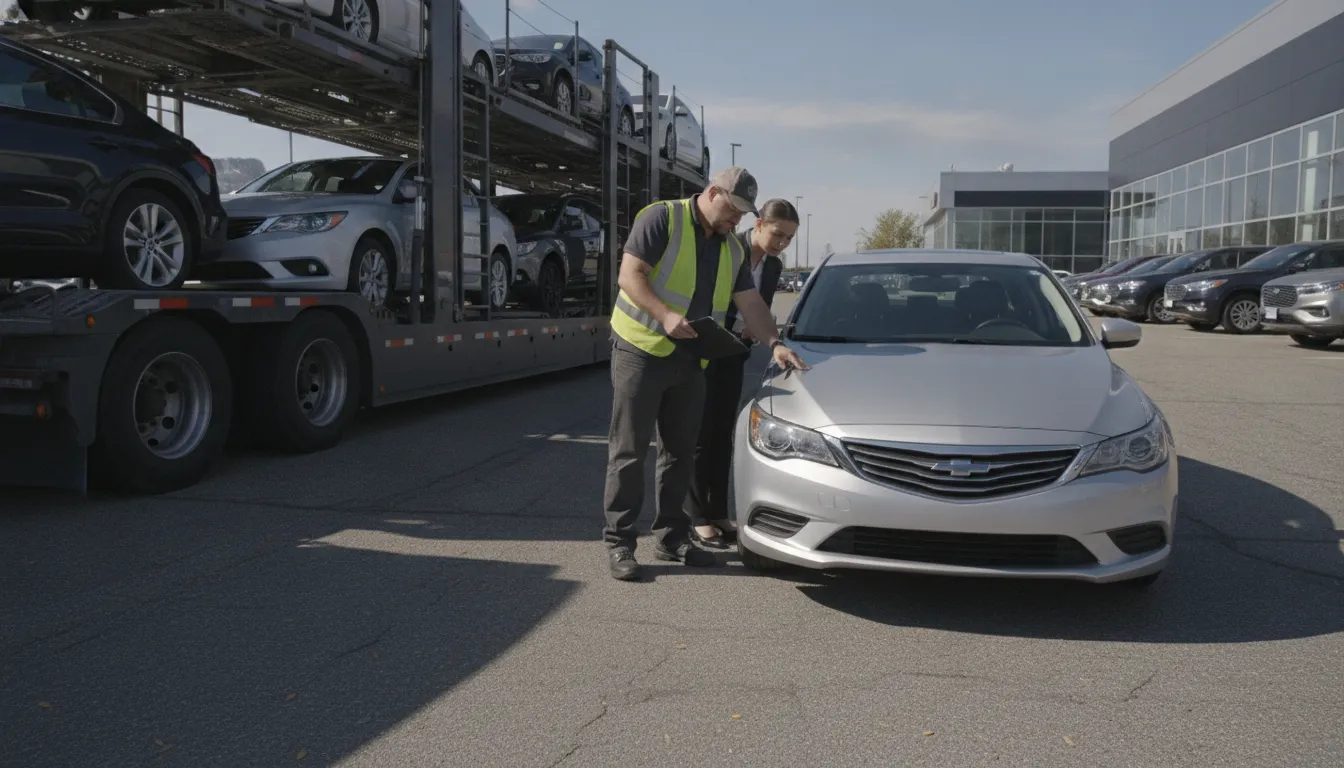
A transport truck may not be able to enter a crowded dealer lot or turn on a narrow access road. The dealer and driver should agree on a safe loading area before arrival. If the property is unsuitable for a large truck, a nearby open meeting point may be necessary. The dealer should never release the vehicle to an unexpected person without verifying the assigned carrier and pickup details.
Prepare the vehicle before the driver arrives
The vehicle should be reasonably clean so existing marks are visible during inspection. Remove loose items unless they have been approved, disable alarms, and leave only enough fuel for loading and unloading. Confirm the battery is charged and tires are properly inflated. If the vehicle does not run, disclose that before booking and use the inoperable car transport guide to understand added preparation needs.
Verify the carrier and pickup record
Buyers and dealers can ask for carrier information before pickup and verify operating authority through official FMCSA resources. Road Runner Vehicle Transports operates as a transportation broker and coordinates shipments with independent motor carriers. For more ways to evaluate a provider, read how to avoid car shipping scams.
Key takeaway: The dealer representative should inspect the vehicle with the driver, keep dated photos, and retain a signed copy of the pickup bill of lading.
Should you choose open or enclosed transport?
Road Runner Vehicle Transports generally recommends open transport for standard dealership vehicles because it is economical and widely available. Enclosed transport adds shielding from weather and road debris and may suit classic, luxury, rare, or otherwise high-value vehicles that need additional protection.
The right trailer depends on the vehicle, the buyer’s priorities, and availability on the route. Open carriers are common and can move several vehicles at once. Enclosed carriers have covered trailers and generally carry fewer units. Buyers should compare the practical protection, scheduling, and quote for each option rather than choosing only by vehicle price.
| Factor | Open transport | Enclosed transport |
|---|---|---|
| Best suited for | Standard daily-driver and inventory vehicles | Classic, luxury, rare, and high-value vehicles |
| Exposure | Vehicle is exposed to weather and road debris | Vehicle is shielded inside a covered trailer |
| Availability | Typically broader carrier availability | More specialized and often more limited |
| Cost position | Usually the more economical option | Usually costs more for added protection |
Match the trailer to the vehicle
Open transport is a practical choice for most new and used dealer inventory. Enclosed transport may be preferable for a collectible vehicle, low-clearance model, or purchase where the buyer prioritizes additional shielding. Anyone moving a collectible can also review the classic car shipping services guide.
Key takeaway: Choose based on the vehicle’s needs and your risk tolerance, then confirm the selected trailer type in writing.
How long does dealership car shipping take?
Road Runner Vehicle Transports estimates dealership car shipping timing from the route, distance, carrier availability, season, and service type. Pickup and delivery dates are normally communicated as windows because traffic, weather, inspections, and other scheduled stops can affect the carrier’s progress.
There are two timing phases to consider: the time required to assign and position a carrier for pickup, and the time the vehicle spends in transit. Longer routes naturally require more driving time, but distance is not the only factor. Remote locations, busy seasons, route demand, truck capacity, and weather can all influence scheduling.
Set expectations before booking
Ask how pickup and delivery windows will be communicated and who will provide updates. Dealers should avoid promising a buyer an exact arrival time unless it has been confirmed. Buyers should remain flexible enough to receive the vehicle safely and should arrange an authorized alternate if they cannot attend. The car shipping timeline guide offers additional planning context.
Reduce avoidable delays
Accurate vehicle information, correct addresses, reachable contacts, and completed release documents prevent many avoidable delays. Inform Road Runner Vehicle Transports promptly if dealership hours change or the destination contact becomes unavailable. A carrier cannot complete pickup if nobody is authorized to release the vehicle.
Get a custom quote and discuss your preferred dealership shipping window.
Inspect the vehicle at delivery
Road Runner Vehicle Transports recommends that the recipient inspect the vehicle in good light before signing the final bill of lading. Compare every side with the pickup record, photograph the vehicle, note any new concern on the delivery paperwork, and keep copies of all signed documents.
Delivery is the final documented handoff, not a formality. The recipient should have the pickup inspection report available and allow enough time for a complete walkaround. Check visible panels, glass, wheels, and other areas documented at pickup. If something appears different, photograph it and write the concern on the bill of lading before signing.
Prepare the recipient
If the buyer cannot attend, the alternate recipient should be authorized and understand the inspection process. Dealers receiving inventory should identify an employee responsible for matching the VIN and stock number, reviewing condition, and storing paperwork. Payment responsibilities should also be confirmed before arrival according to the written agreement.
Respond carefully to a damage concern
Road Runner Vehicle Transports can assist with coordination, but damage claims are handled through the assigned carrier’s insurance and require documentation. Preserve the pickup and delivery bills of lading, dated photos, and communications. Avoid signing a clean delivery receipt if a new visible concern exists.
Key takeaway: Inspect first, document any concern on the delivery paperwork, and sign only after the condition record is complete.
Plan multi-vehicle dealership inventory moves
Road Runner Vehicle Transports helps dealers coordinate inventory moves by aligning vehicle lists, contacts, lot access, route needs, and delivery priorities. A shared manifest with VINs and stock numbers gives the dealer, broker, carrier, and receiving location one reliable reference for every handoff.
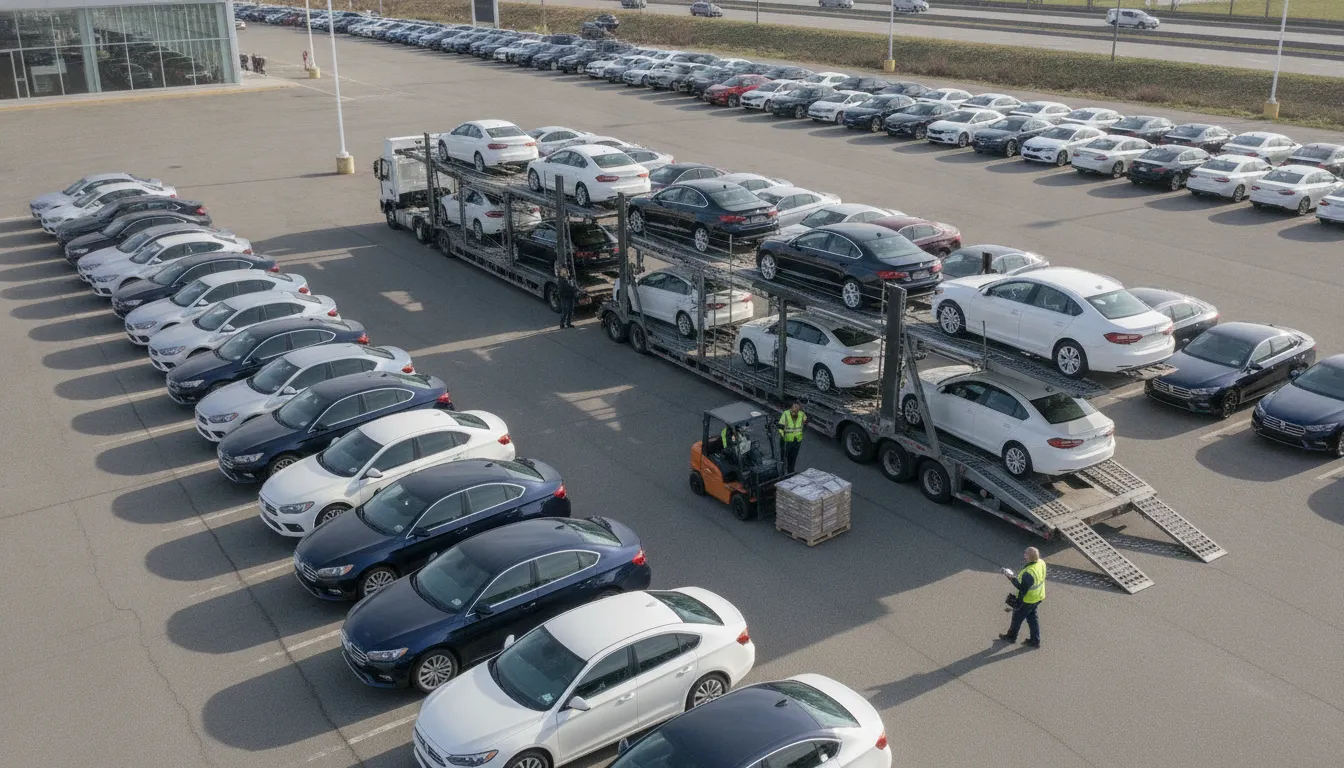
Moving several vehicles requires a repeatable process. Create a manifest showing each unit’s VIN, stock number, operating condition, keys, pickup contact, and destination contact. Separate vehicles that require enclosed service, special loading, or priority delivery. Dealers buying through auctions can also use the auction car transport buyer’s guide to plan another common inventory source.
Assign one coordinator at each location
A single accountable contact reduces conflicting instructions. The pickup coordinator confirms release readiness and the delivery coordinator confirms acceptance. Both should have the latest manifest and know how to report a schedule change. For dealer groups, consistent naming and document storage make it easier to reconcile shipments across stores.
Review every unit at both handoffs
Do not let volume turn the inspection into a shortcut. Each vehicle needs its own condition record and matching VIN. Keep photos and signed documents organized by stock number. After delivery, reconcile the manifest promptly so missing keys, documents, or condition questions can be addressed while the handoff details are fresh.
Key takeaway: Treat every vehicle as an individual shipment inside the larger move, with its own identity, condition record, and delivery acceptance.
Frequently asked questions
Can a buyer arrange shipping before the dealership paperwork is complete?
You can request a quote and discuss timing early, but the vehicle should not be scheduled for pickup until the dealer confirms it can be released. Ask what purchase documents, identification, or written authorization the dealership requires.
Who meets the carrier at the dealership?
An authorized dealership employee usually meets the driver, verifies pickup details, provides keys, participates in the inspection, and signs the pickup bill of lading. Confirm the employee’s name and direct phone number before pickup day.
Can personal belongings stay in a vehicle during transport?
Do not assume personal items are allowed. Ask Road Runner Vehicle Transports about the assigned carrier’s requirements before placing anything in the vehicle. Unapproved items can create weight, safety, or insurance complications.
What if a transport truck cannot enter the dealer lot?
The dealership and driver can coordinate a safe nearby meeting point with enough room for the truck to load the vehicle. Decide who will move the vehicle to that location and confirm the plan with all contacts.
Who handles a damage claim?
Damage claims are handled through the assigned carrier’s insurance. Road Runner Vehicle Transports can assist with coordination. Detailed pickup and delivery bills of lading, photos, and prompt written notice are important.
Request a dealership car shipping quote
Road Runner Vehicle Transports coordinates buyer and dealer shipments across the United States, matching each move with a vetted independent motor carrier. Share the vehicle, route, condition, contacts, and preferred timeframe to receive a custom quote based on your specific transport needs.
A successful dealership shipment depends on clear release instructions, accurate vehicle information, documented inspections, and reachable contacts at both ends. Road Runner Vehicle Transports can coordinate those details for a single out-of-state purchase or a multi-vehicle inventory move.